- Hardwood
- Care
Hardwood Floors in Winter: What Is Normal in Oklahoma
Most of what a wood floor does between November and March is the floor drying out. The damage worth worrying about comes in through the front door.

Most changes a hardwood floor shows in an Oklahoma winter are normal: thin gaps between boards and a few new creaks. They come from heated indoor air drying the wood, and they ease when humidity returns in spring. What actually damages a wood floor in winter is what comes in on boots (grit, ice melt and slush) and dry heat aimed at one spot.
Hold indoor humidity around 30 to 50 percent and stop the weather at the door, and a well installed floor comes through the season fine.
Why winter starts early for a Tulsa floor
The National Weather Service office in Tulsa puts the average first 32 degree night in early November. So the heat comes on in November in most homes, and the average last freeze is not until late March. That is four months of heated air, and heated air is dry air.
Snow is a smaller problem than people expect. The same NWS climate summary says Tulsa’s snow is usually light, falls mostly in January and early March, and rarely stays on the ground long. The winter threat to a wood floor here is less about a snowdrift on the porch and more about the ice melt and grit that go down on steps and driveways when freezing rain is in the forecast.
What is normal for a hardwood floor in winter, and what is not?
Most winter searches about wood floors are one of these symptoms. Here is how we sort them.
| What you notice | Normal in winter? | What to do |
|---|---|---|
| Thin, even gaps between boards | Yes | Nothing. They narrow again by summer. More in why hardwood floors gap in an Oklahoma winter |
| New creaks and squeaks across the room | Usually | Boards that shrank are rubbing. Raising the humidity often quiets them |
| One squeak in one spot that gets louder | No | Often a fastener or the subfloor below. Worth a look |
| Fine cracks along the grain of a board | Common in very dry air | The same dryness inside a board. Bring the humidity up before they grow, since they may not fully close |
| A board split through its full thickness | No | Repair, not a humidity fix |
| Board edges higher than the centers (cupping) | No | Moisture from below, or an engineered floor drying too far. Find the cause first |
| Boards lifting off the floor (buckling) | No | Too much moisture with nowhere to go. Call someone before it spreads |
| Feels cold underfoot | Yes | Wood is one of the warmer hard floors. See the warmest flooring over a concrete slab |
| White haze near the door | No | Salt residue. See the salt section below |
The test that settles most of these is time. Gaps and creaks that came with the cold should fade by early summer. Anything that is still there in August, or that keeps getting worse through the winter, is not seasonal.
What humidity should your house be for hardwood floors in winter?
The National Wood Flooring Association, the standards body for the trade, tells homeowners to keep the house between 60 and 80 degrees and between 30 and 50 percent relative humidity, year round. You will see other ranges online, 35 to 55, even 40 to 60. Some manufacturers and retailers publish their own, and if your floor has a warranty, the range in its care guide is the one that counts.
Measure before you change anything. A small hygrometer sitting at floor level in the main room tells you more than any guess. Put it away from the humidifier, or it will read high.
A whole home humidifier does the real work. One on the furnace treats the air the whole house breathes. A portable unit humidifies the room it sits in, which helps that room and not much else.
Do not overshoot. When it is well below freezing outside, pushing indoor humidity high can fog windows and wet the sills. Aim for the middle of the range, not the top.
This is the conversation we have with every hardwood customer at the final walkthrough, because it decides how flat the floor stays through its first Oklahoma winter.
Salt, ice melt and slush: the winter damage that walks in
The NWFA’s homeowner guidance is blunt about salt: it leaves an abrasive white residue that scratches the finish. Grit does the same thing, and sand spread on an icy driveway is grit. Every boot that crosses the floor drags a little of it along.
Melting slush is the other half. A puddle by the door sits in the joints between boards, and water in a joint is how edges start to swell. The guidance there is just as plain: soak puddles up with a towel instead of leaving them.
Mats on both sides of every exterior door. A rough mat outside knocks off the grit, and one inside catches what is left. The NWFA says to use breathable rugs on wood, since a rubber backed mat holds moisture against the boards.
A boot tray, and shoes off if your house will do it. It is the single most effective rule, and the cheapest.
Clean salt off gently. Sweep or vacuum the dry grit first. Then wipe the haze with a damp, not wet, microfiber pad and the cleaner your floor’s manufacturer recommends, and dry the spot. Never scrub dry salt into the finish, and never use a wet mop or a steam mop on wood.
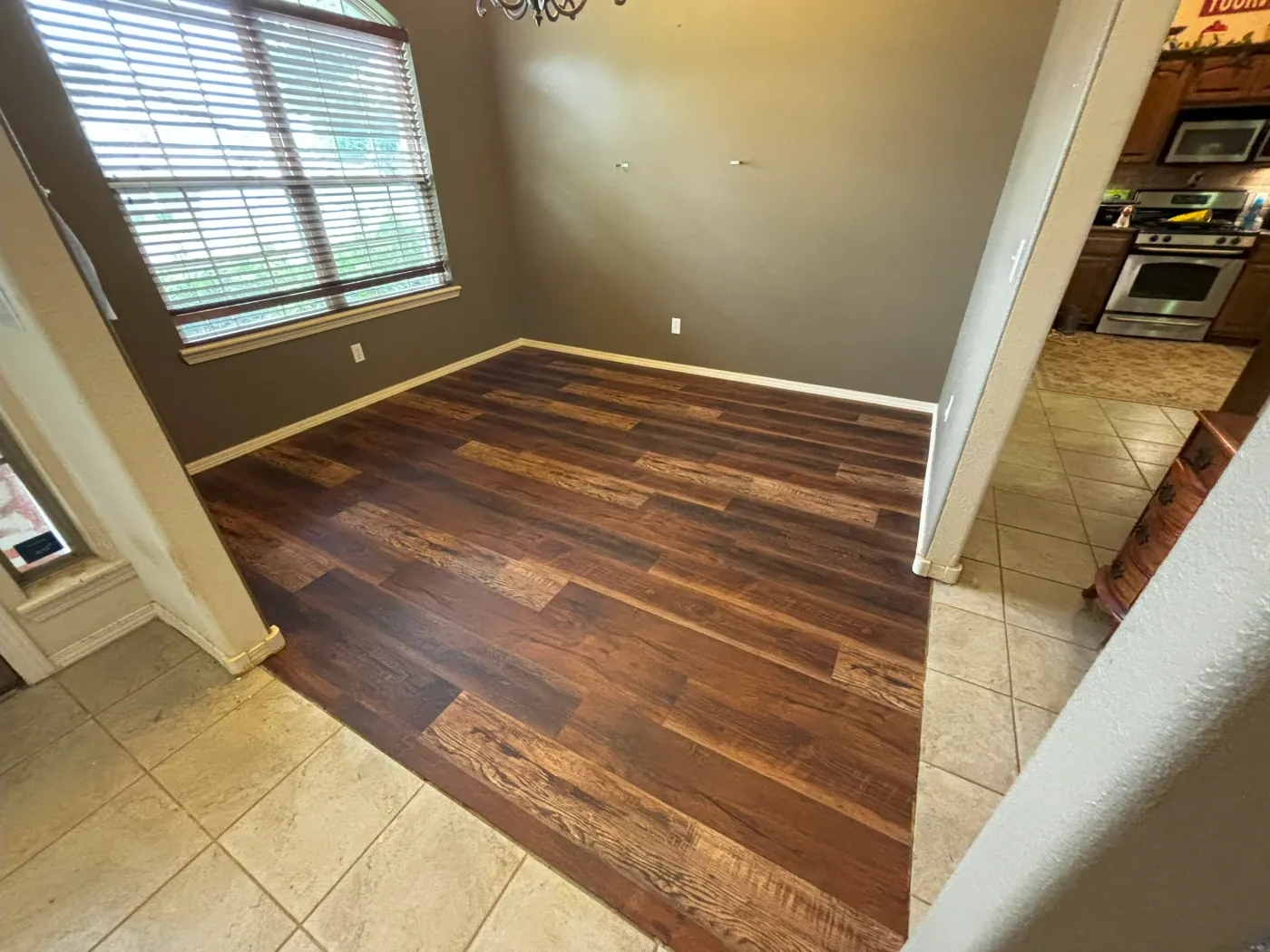
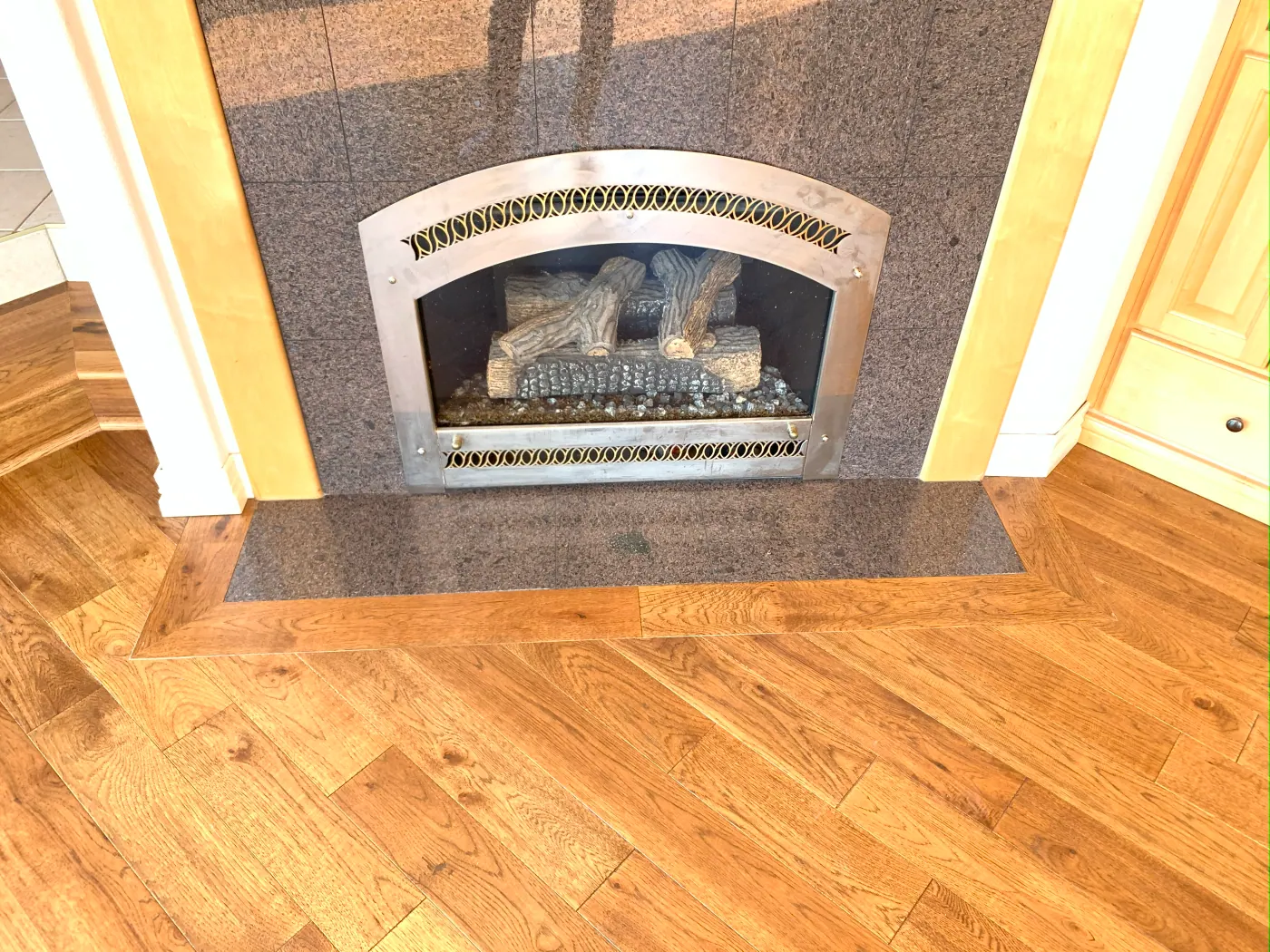
If you are planning a new floor, here is the honest answer that costs us some hardwood: the first few feet inside a door that sees muddy boots all winter are a better job for tile or vinyl plank than for wood. A clean, flush transition like this one between tile and wood is how you get both.
Fireplaces, space heaters and the holidays
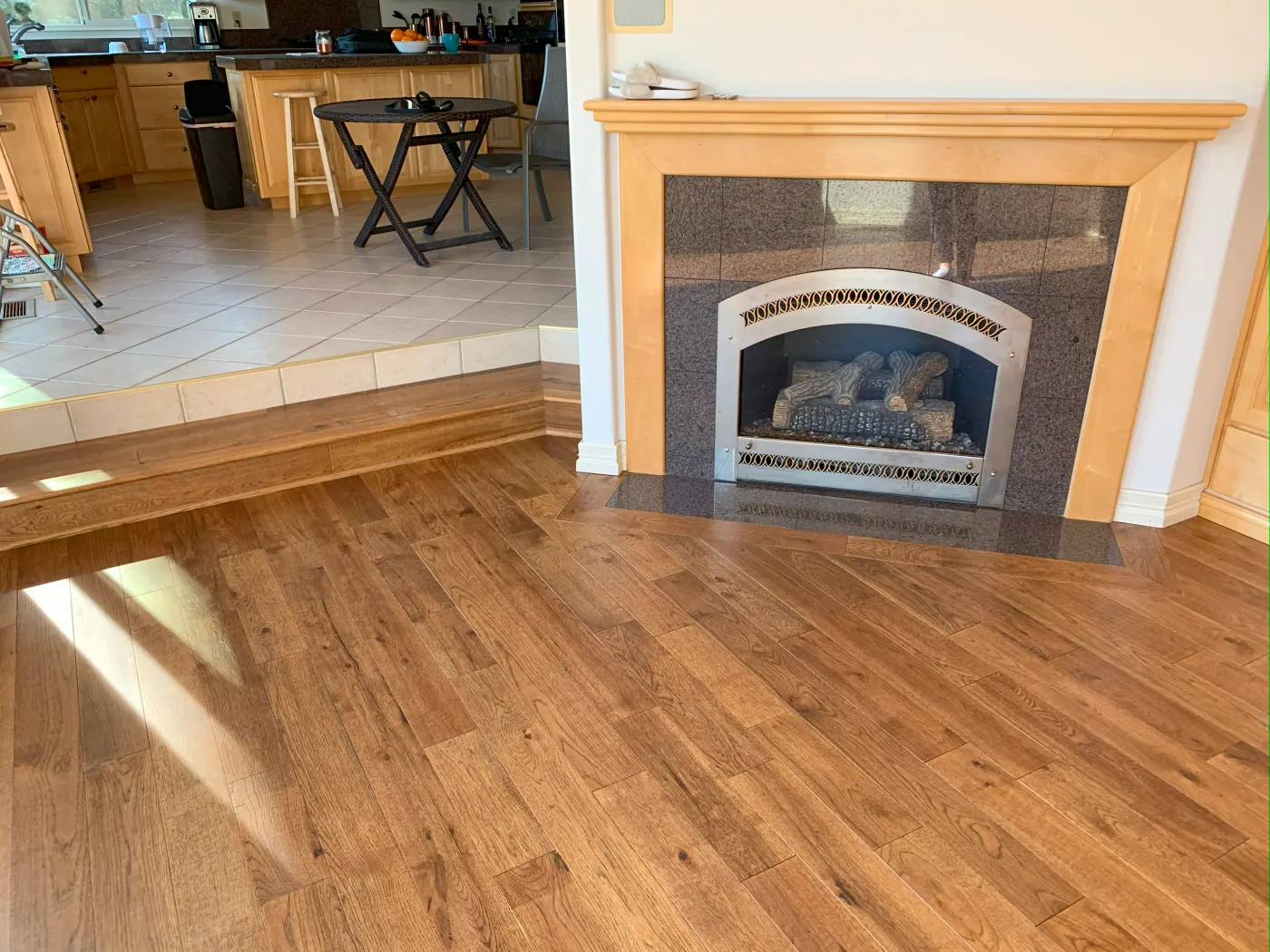
Heat aimed at one patch of floor dries that patch faster than the rest of the room. The angled oak floor at the top of this page runs right up to a fireplace hearth, and the boards near a fireplace tend to show gaps first in a dry winter. That is the wood reacting to heat, not a defect in that section.
Space heaters. Whether one is safe to run on a wood floor is a question for the heater’s own instructions, so follow those first. For the floor’s sake, point the heat away from the boards rather than across them, and do not leave it blowing on the same spot all day.
A real Christmas tree. Put a waterproof tray under the stand. Trees drink a lot in the first days, a top-up that overflows soaks in under the tree skirt where nobody sees it, and a metal stand left sitting in water can leave a ring.
Holiday guests. More chairs pulled out and pushed in over grit that came in on boots. Fresh felt pads on dining chairs before the big meal save the finish in the spot everyone sits.
Which floors handle an Oklahoma winter best?
We install all four main floor types, so here is how each one copes with the things winter throws at it.
| Floor | Dry heated air | Salt and grit | Slush at the door | Underfoot on a cold morning |
|---|---|---|---|---|
| Solid hardwood | Moves the most. Gaps and creaks are likely | Finish scratches, but it can be sanded and refinished | Poor. Water in the joints swells edges | Warm |
| Engineered hardwood | Moves far less, thanks to the cross ply core | Finish scratches. Refinishing depends on the wear layer | Poor, same as solid | Warm |
| Laminate | Little movement | The wear surface resists scratches well | Poor. The core swells at the seams | Warm |
| Luxury vinyl plank | Little effect | Grit wears the clear wear layer over time | Good. The plank itself is waterproof | Fairly warm to cool, depending on the core |
| Porcelain or ceramic tile | Not affected | Very good | Very good | Coldest |
None of this is a reason to give up on hardwood. It is the only floor in the table that gets sanded back to new instead of replaced. But it is a reason to match the floor to the room. Wood in the living areas, something tougher at the door, and engineered rather than solid if the house runs dry in winter or sits on a slab. We go further into that choice in engineered vs solid hardwood for Tulsa slab homes.
Can you install hardwood in the winter?
Yes, as long as the installer measures rather than guesses. Wood acclimated in January is at its driest and narrowest, so it has to go down with a real expansion gap at every wall to leave room for summer.
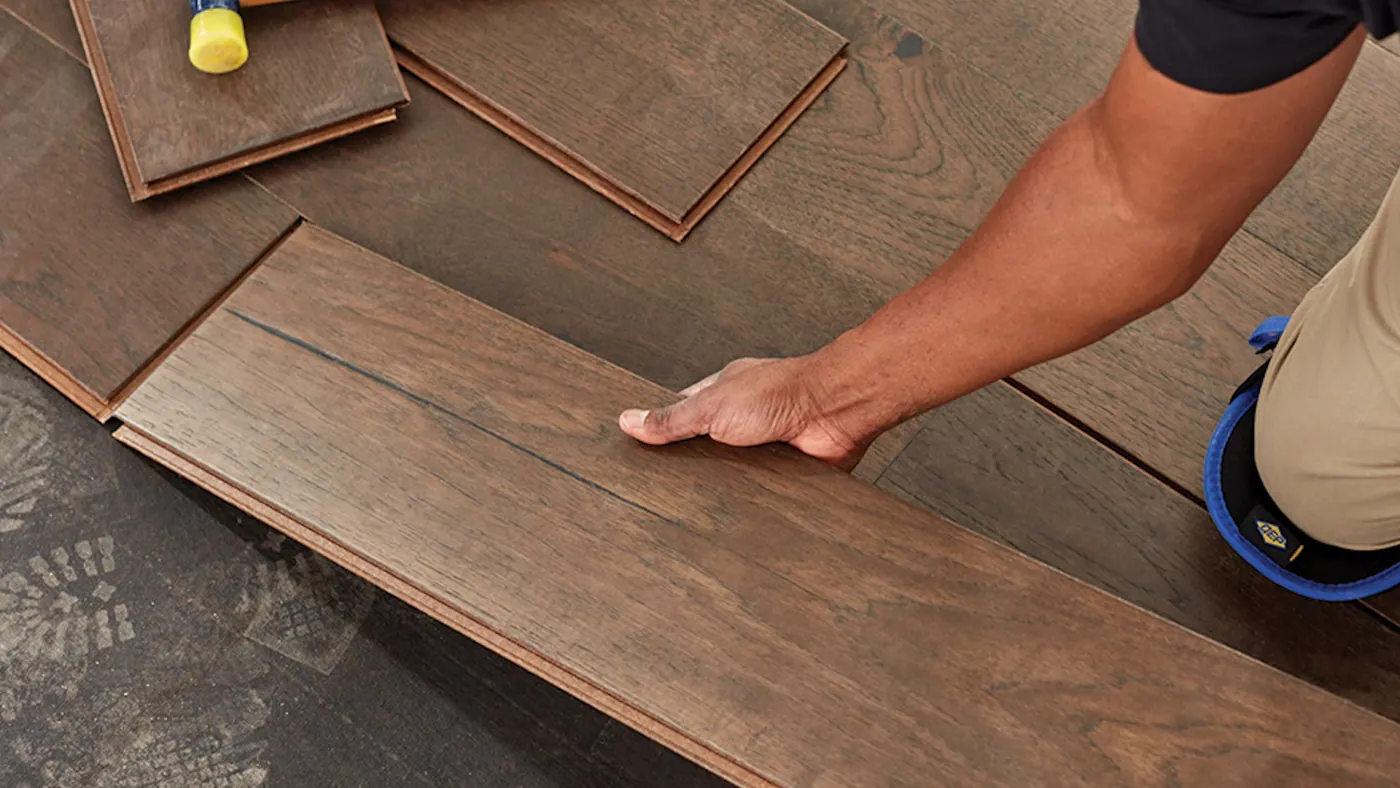
On our jobs that means moisture readings on both the wood and the subfloor before anything goes down, acclimation in the actual room until the readings stop changing, and the perimeter gap hidden behind the baseboard. If you can choose your timing, fall is easier, and we explain why in the best time of year to install flooring in Oklahoma.
When should you call someone?
Most winter changes need nothing but humidity and patience. These do not:
- Cupping or buckling at any time of year
- A board split through its full thickness
- Gaps still open in August, or wider than they were last winter
- One squeak that keeps getting louder in the same spot
- Dark or soft patches near a door or under a window
If your floor is doing something you are not sure about, call (918) 219-4848 or get in touch and we will tell you honestly whether it needs work. We install rather than refinish, so if the answer is that your floor needs sanding rather than replacing, we will say so. You can see the wood floors we put in on our hardwood flooring page.