- Buying Advice
- Local
The Warmest Flooring Over a Concrete Slab in Tulsa Homes
A cold floor is rarely a colder floor. It is a floor that pulls heat out of your feet faster, and that is something you can choose.

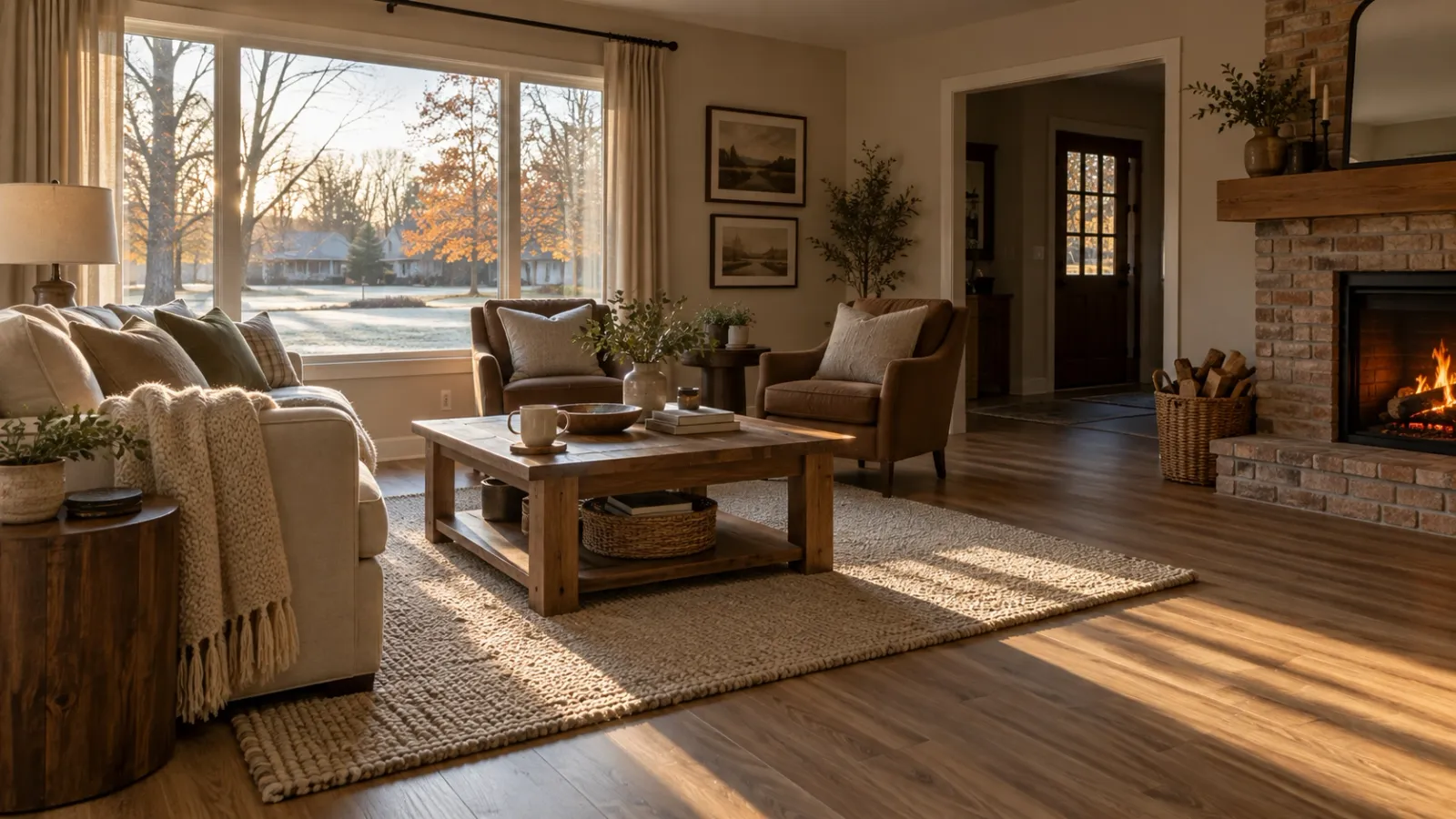
Carpet is the warmest floor you can put on a concrete slab. If you want a hard floor, wood and softer core vinyl plank feel noticeably warmer than tile, and tile feels coldest of all unless it is heated.
That is the short answer. The longer one is more useful, because the reason floors feel cold is not quite what most people think, and once you know it you can choose a floor that feels warmer without paying for anything you do not need.
The floor is not colder. It takes your heat faster.
Here is the part that surprises people. In a house that has been heated all night, the tile in your kitchen and the rug in your living room are close to the same temperature. Leave a thermometer on each and the readings come back within a few degrees.
They feel nothing alike, because your foot does not feel temperature. It feels how fast heat is leaving it.
Tile and stone are dense and conduct heat well, so the moment your bare foot lands, heat flows out of it quickly and your skin reads that as cold. Wood, wood fiber and the softer vinyl cores conduct heat far more slowly, so the same foot loses heat more gently and the floor reads as warm. Carpet and pad are mostly trapped air, which is about as poor a conductor as anything in a house, and that is why carpet feels warmest of all.
This is the whole decision in one idea: you are choosing how quickly the floor pulls heat out of you, not how warm the floor is.
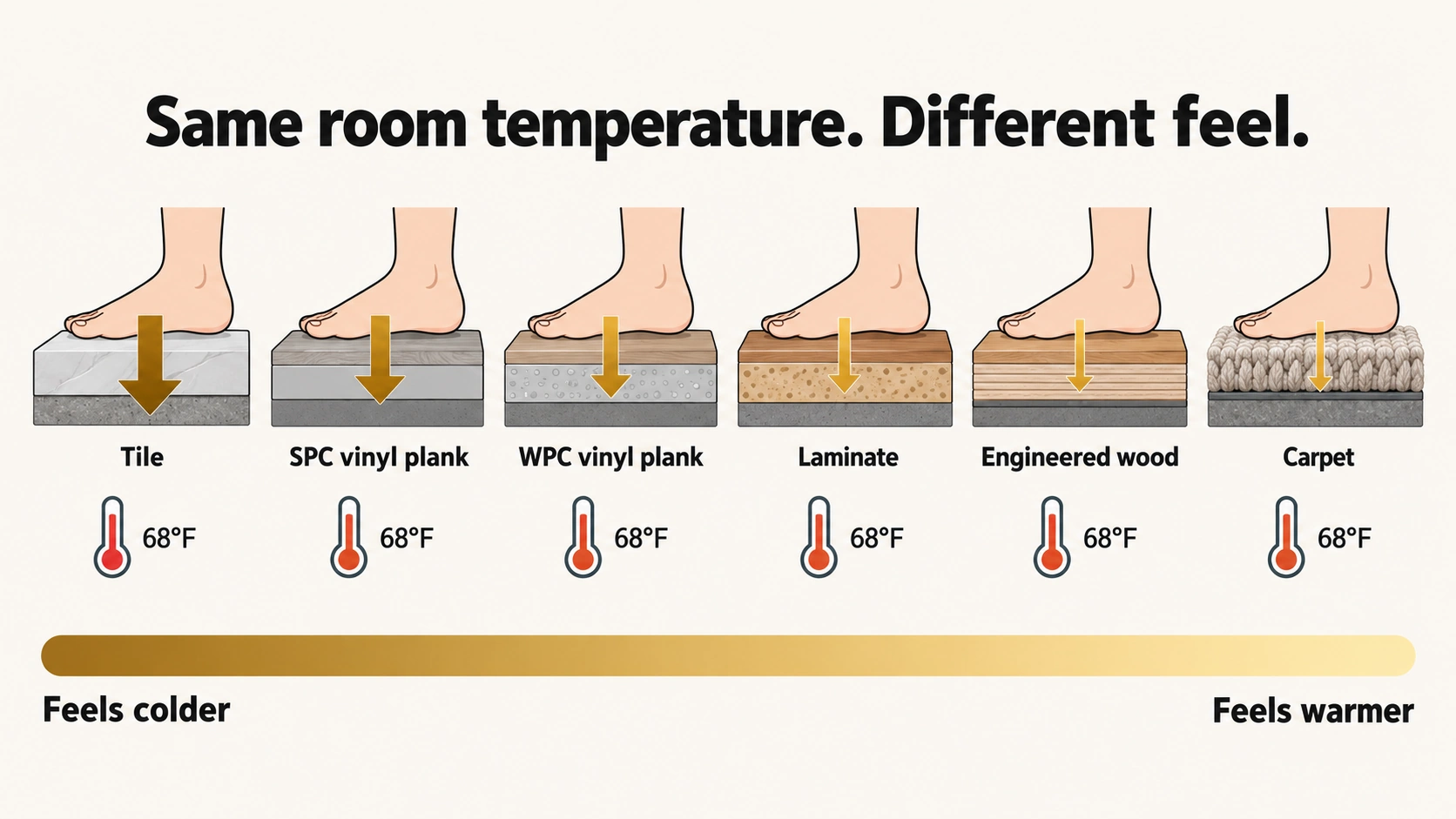
| Floor | How it feels on a winter morning | Why |
|---|---|---|
| Carpet with pad | Warmest | Mostly trapped air, the slowest path for heat |
| Engineered hardwood | Warm | Real wood conducts heat slowly |
| Laminate | Warm | The core is compressed wood fiber |
| LVP with a WPC core | Fairly warm | A softer, less dense core than SPC |
| LVP with an SPC core | Cool | A denser, stone based core moves heat faster |
| Porcelain or ceramic tile | Coldest | Dense and highly conductive, unless heated |
None of this means tile is a bad choice. It means tile on a slab is a deliberate trade, and it is worth making with your eyes open.
What a Tulsa slab actually does in winter
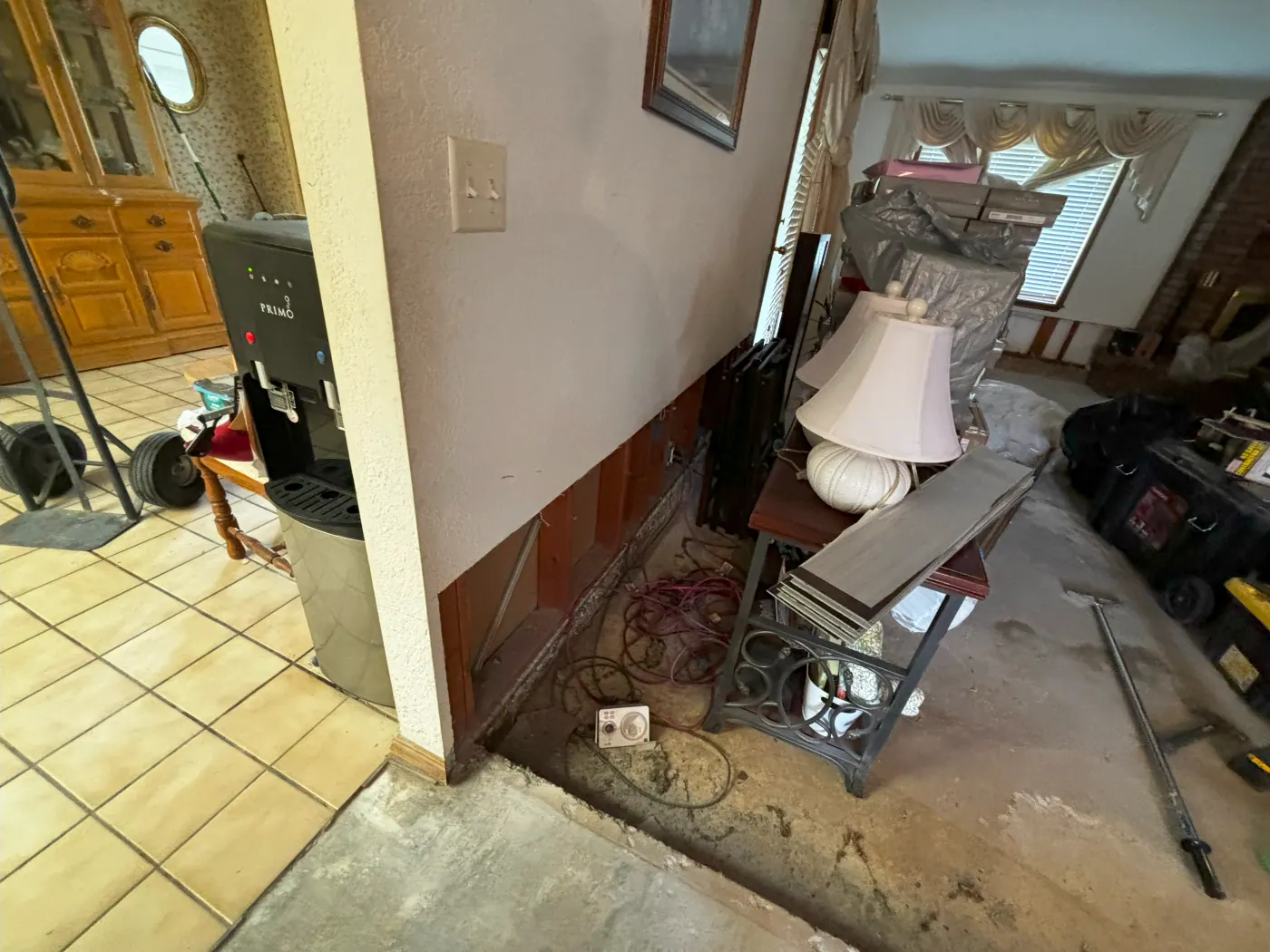
A concrete slab sits on the ground, and the ground a few feet down stays close to the area’s average yearly temperature, which in Tulsa is around 60 degrees. Under a heated house, the middle of the slab settles a few degrees below the room air and stays there. It is cool, not cold.
The edges are a different story. The outer band of a slab, along the exterior walls, meets the outside air. That is where most of a slab’s heat loss happens, and it is why the strip of floor along a front wall or a sliding door feels colder than the middle of the room.
Most Tulsa slabs have no insulation at that edge, and that is not an oversight by your builder. Tulsa sits in climate zone 3 of the energy code, and the code does not require slab edge insulation in zone 3. So nearly every slab home in the metro, new or old, has an uninsulated perimeter.
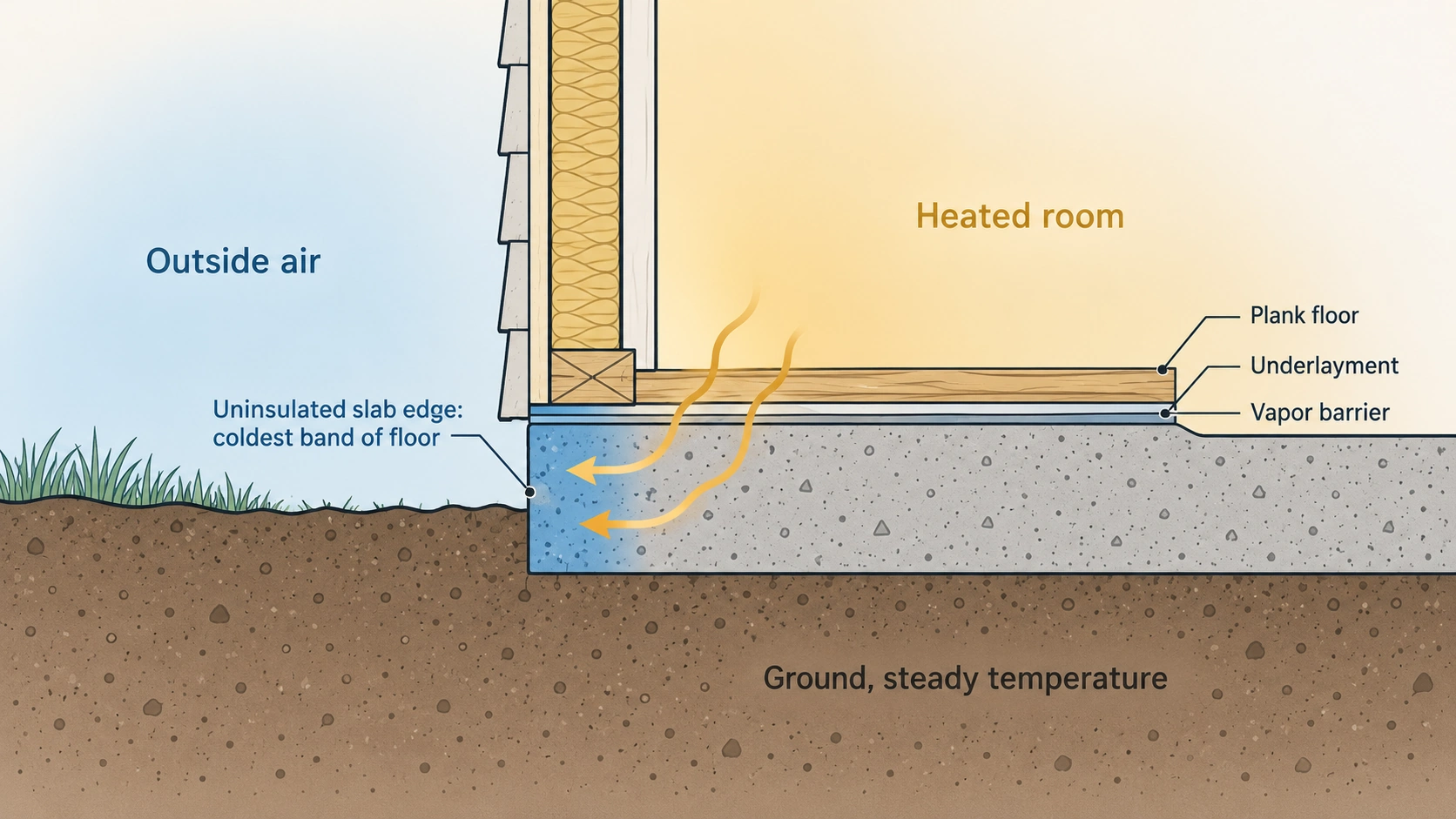
Two things follow from that.
First, a new floor will not fix a cold band along an outside wall. It changes how that band feels underfoot, and the right material makes a real difference to that, but the heat is still leaving through the edge of the concrete. Drafty door thresholds and a supply vent blowing at the wrong angle cause the same complaint, and none of them are flooring problems.
Second, basements are uncommon across the Tulsa metro, so most of what you read online about warm basement floors does not apply here. A slab home is the normal case, not the exception.
Which hard floor we would point you to
If warmth underfoot is the priority and you do not want carpet, here is how we would think about it.
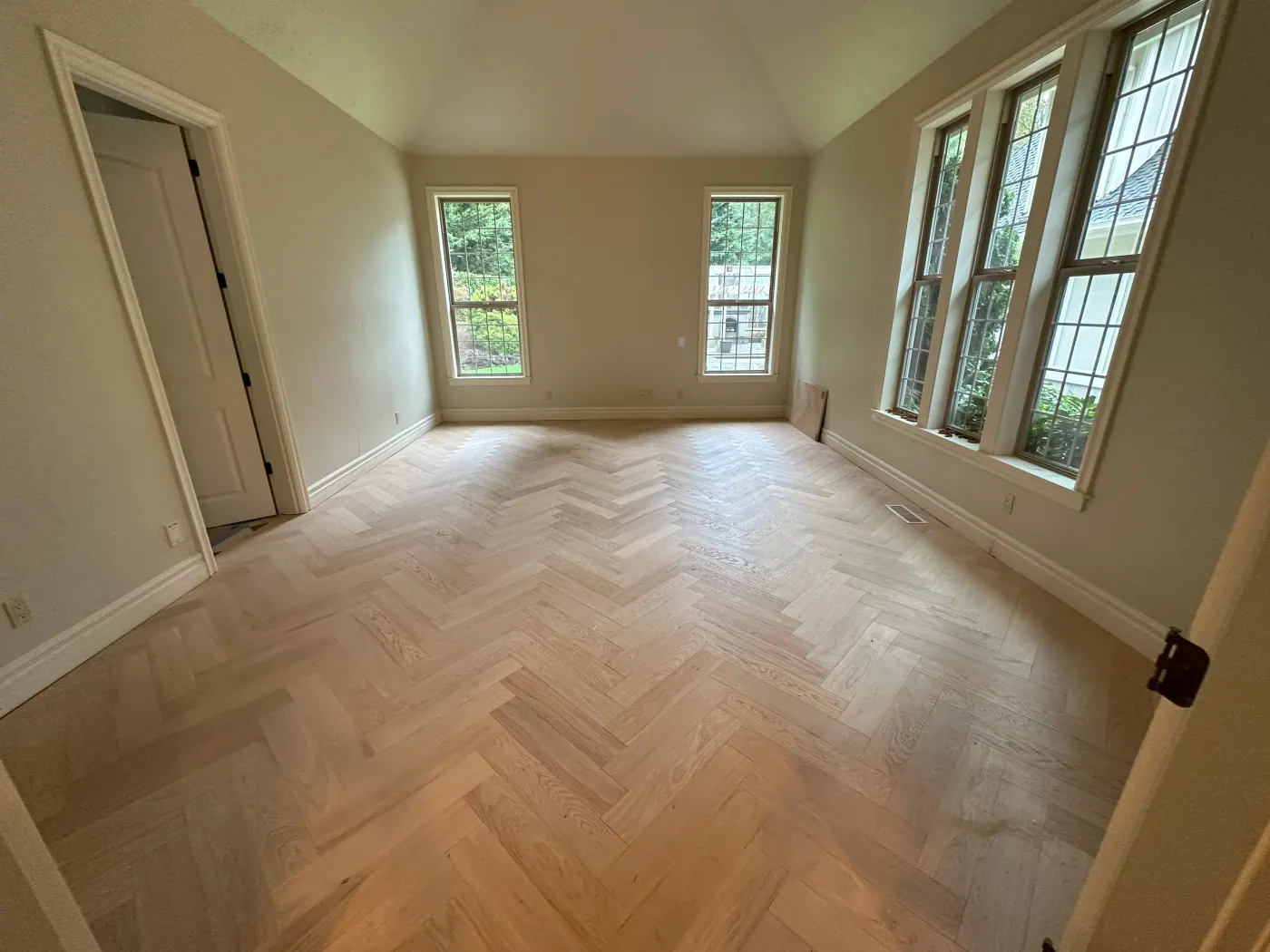
Engineered hardwood, floated. The warmest feeling hard floor you can put on a slab. Solid hardwood is not the right product directly over concrete, which is a large part of why engineered exists. Our comparison of engineered vs solid hardwood for Tulsa slab homes covers that properly.
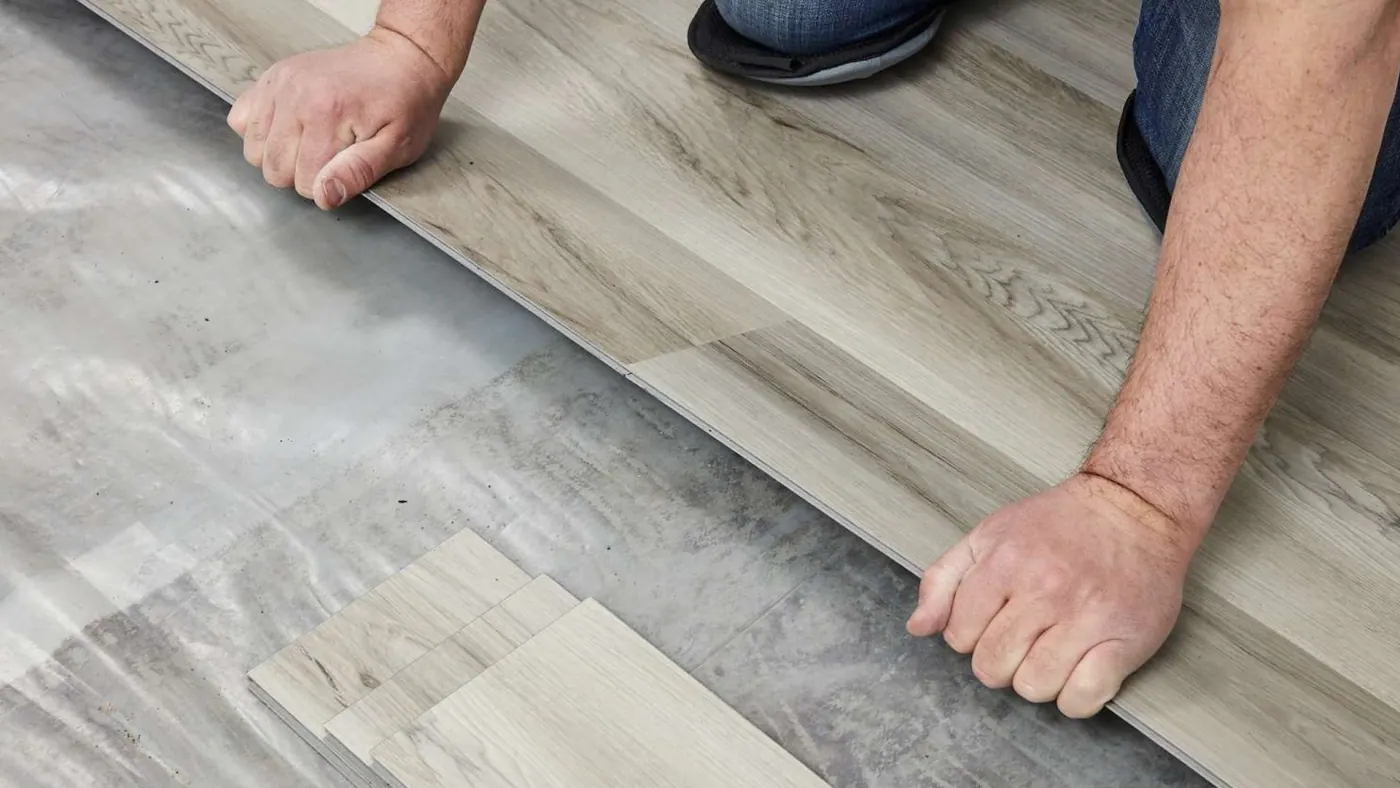
Luxury vinyl plank with a WPC core. The practical favorite. It is waterproof, it handles a slab well, and the softer core feels warmer and quieter than the rigid stone based version. If you are comparing two LVP samples and one feels noticeably softer when you press it, that is usually the one that will feel warmer barefoot. There is more on the two core types on our luxury vinyl plank page.
Laminate. It feels about as warm as wood because its core is wood fiber, and it costs less. The catch is water. Keep it out of kitchens, baths and entries, and the reasons are in our LVP vs laminate comparison.
Tile, if you want tile. It will feel cold on bare feet on a January morning, and that is just physics. If you want tile and warmth both, electric radiant heat under the tile is the answer, but it is a separate system that has to be planned with an electrician before any tile goes down. Raise it at the estimate so it is part of the plan rather than an afterthought.
What goes under the floor matters as much as the floor
On a slab, the layer between the concrete and the plank does two jobs.
The first is moisture. Concrete keeps releasing moisture long after it is poured, and a floor laid straight onto it can trap that moisture underneath. That is why we take a moisture reading on the slab at the estimate, and why the vapor barrier or underlayment follows the flooring manufacturer’s instructions for concrete rather than whatever is cheapest. Our guide to subfloor prep explains what we check and why.
The second is warmth, and it is modest. An underlayment adds a thin layer of separation from the concrete, which takes some of the chill out. It helps. It does not turn a cool floor into a warm one, and a package that promises otherwise is overselling it.
One mistake to avoid: if the plank already has a pad attached to the back, do not put a second foam underlayment under it. Many manufacturers prohibit it, because a floor sitting on two soft layers flexes at every joint and the locking edges work loose. It can also void the product warranty. Warmer for a season is not worth a floor that separates in two years.
The cheapest warm floor is still a rug
This is the advice that does not sell any flooring, so it is worth saying plainly. If you love the look and durability of a hard floor but your feet are cold in the bedroom, a good area rug over a hard floor gives you most of carpet’s warmth exactly where you stand, and you can take it up in May.
Use a rug pad made for hard floors. Some rubber backed rugs and mats can stain vinyl plank over time, so check the label before you put one down on LVP.
And if you genuinely want the warmest possible floor in a bedroom or a playroom, that is carpet. We do not install carpet, and we would still rather you hear that from us than be talked into a hard floor that is wrong for the room.
So what should you choose?
You want the warmest hard floor: engineered hardwood, floated over the right underlayment.
You want warm, waterproof and practical: luxury vinyl plank with a WPC core.
You want warm on a budget in a dry room: laminate.
You want tile: go in knowing it will feel cool, and plan radiant heat before the tile goes in if that matters to you.
Your floor is coldest along one wall: that is the slab edge or a draft, and a new floor will change how it feels but not why it happens.
If you want a straight read on your house, we will come look. We measure the rooms, check the slab for flatness and moisture, and give you a written line item quote. Call (918) 219-4848 or request a free estimate, and you can see every material we install on our flooring services pages.