Hardwood Floor Installation in the Tulsa Metro Area

The Only Floor You Can Sand Instead of Replace

Real wood floors planned and installed with care, from species selection to the final transition.

  • Free in home estimate
  • Written line item quote
  • Our own crew, no subs
  • Most jobs done in 1 to 5 days
Call (918) 219-4848

Get Your Free Estimate

Tell us the rooms and we will send a written quote. No obligation.

We respect your privacy and never sell your information.

Hardwood Flooring in the Tulsa Metro

Installed by Our Own Crew, Start to Finish

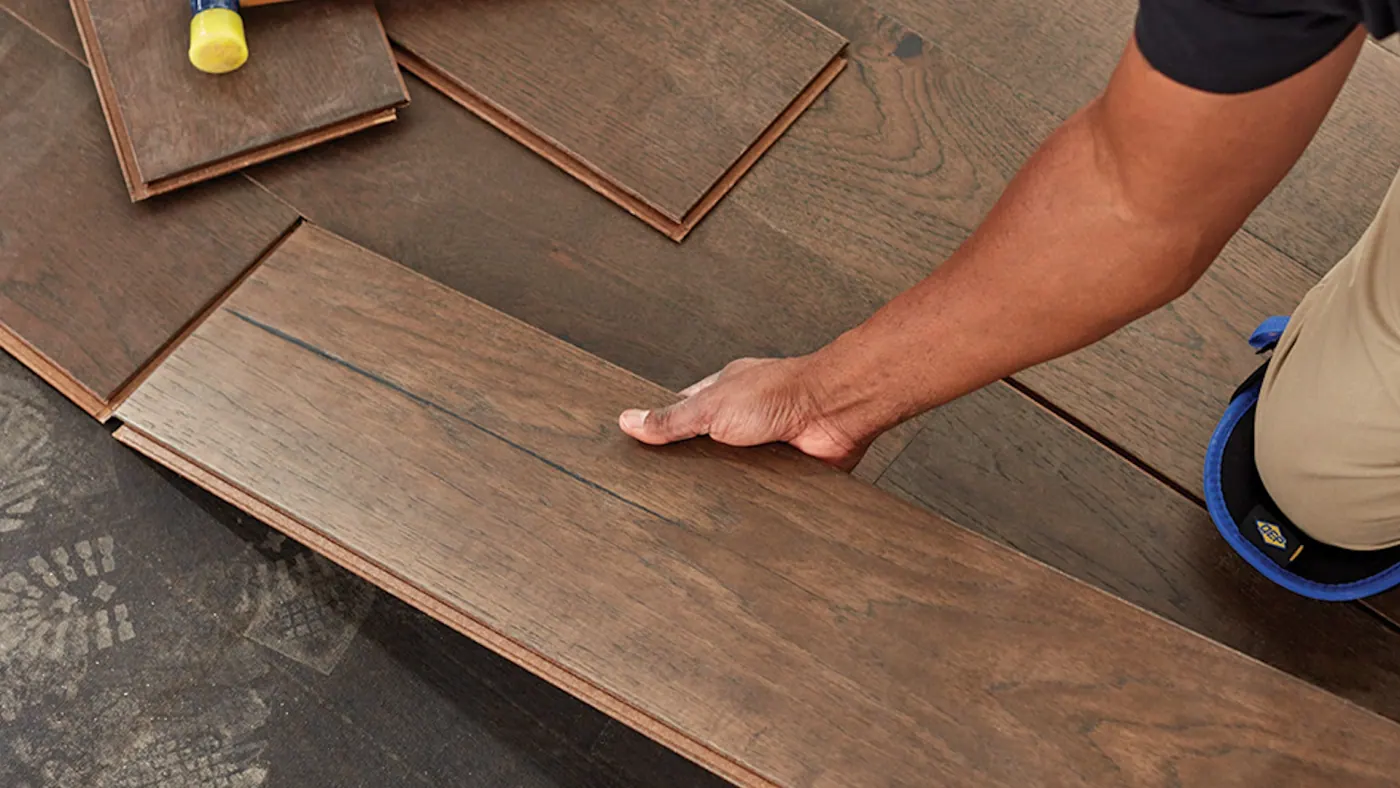
Hardwood is the only floor on this list you can sand and refinish instead of replace, and it is the one that still moves the needle on resale. It is also the least forgiving to install. Wood expands and contracts with the moisture in the air, and Oklahoma swings hard between humid summers and dry winters.

That is why we acclimate material in the house before install and take moisture readings on both the wood and the subfloor rather than working to a calendar. We plan the layout so boards run with the longest sight line and the room reads balanced, then install nail down, glue down, or floating depending on the subfloor and the product. Solid or engineered, the decision usually comes down to what is under the floor and whether the space is over a slab or a crawlspace. Call (918) 219-4848 for a free in home estimate.

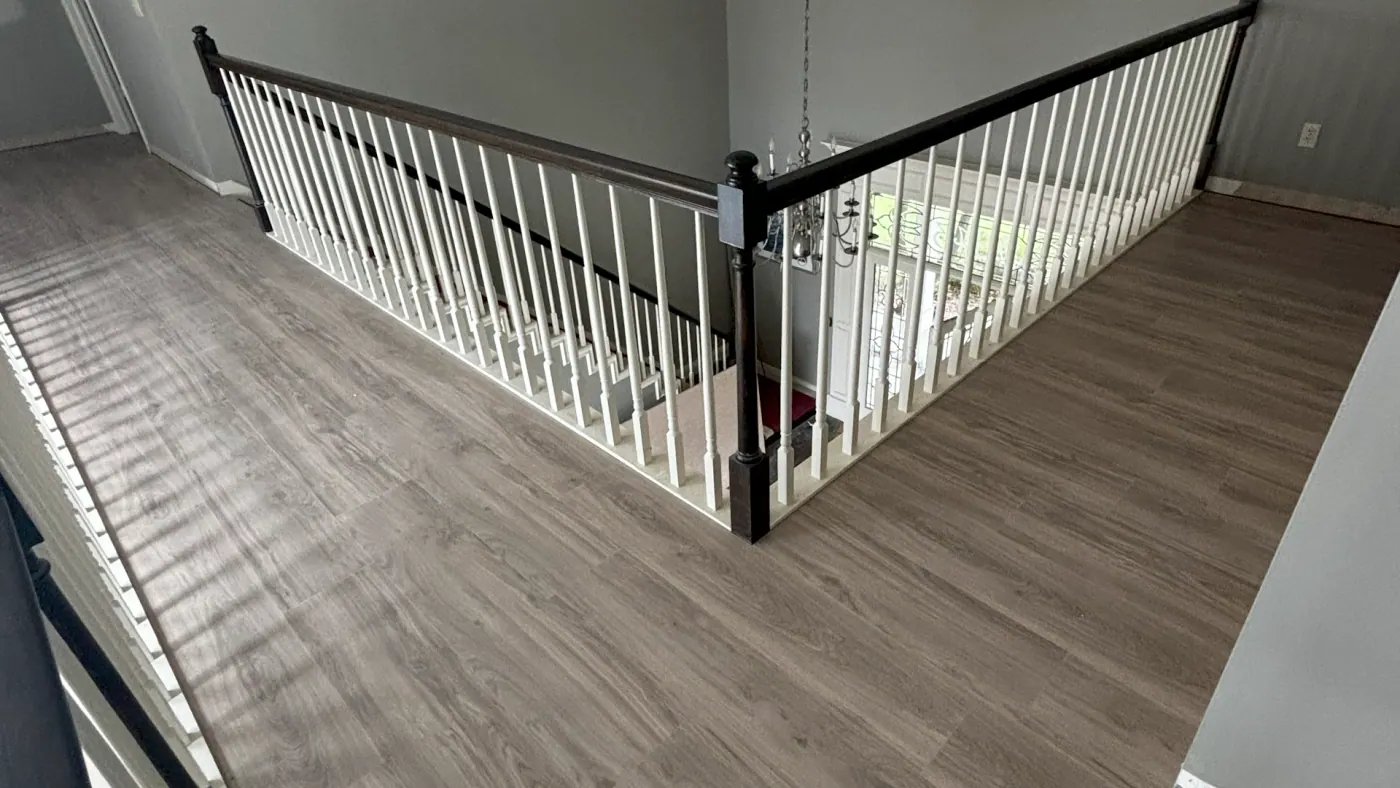
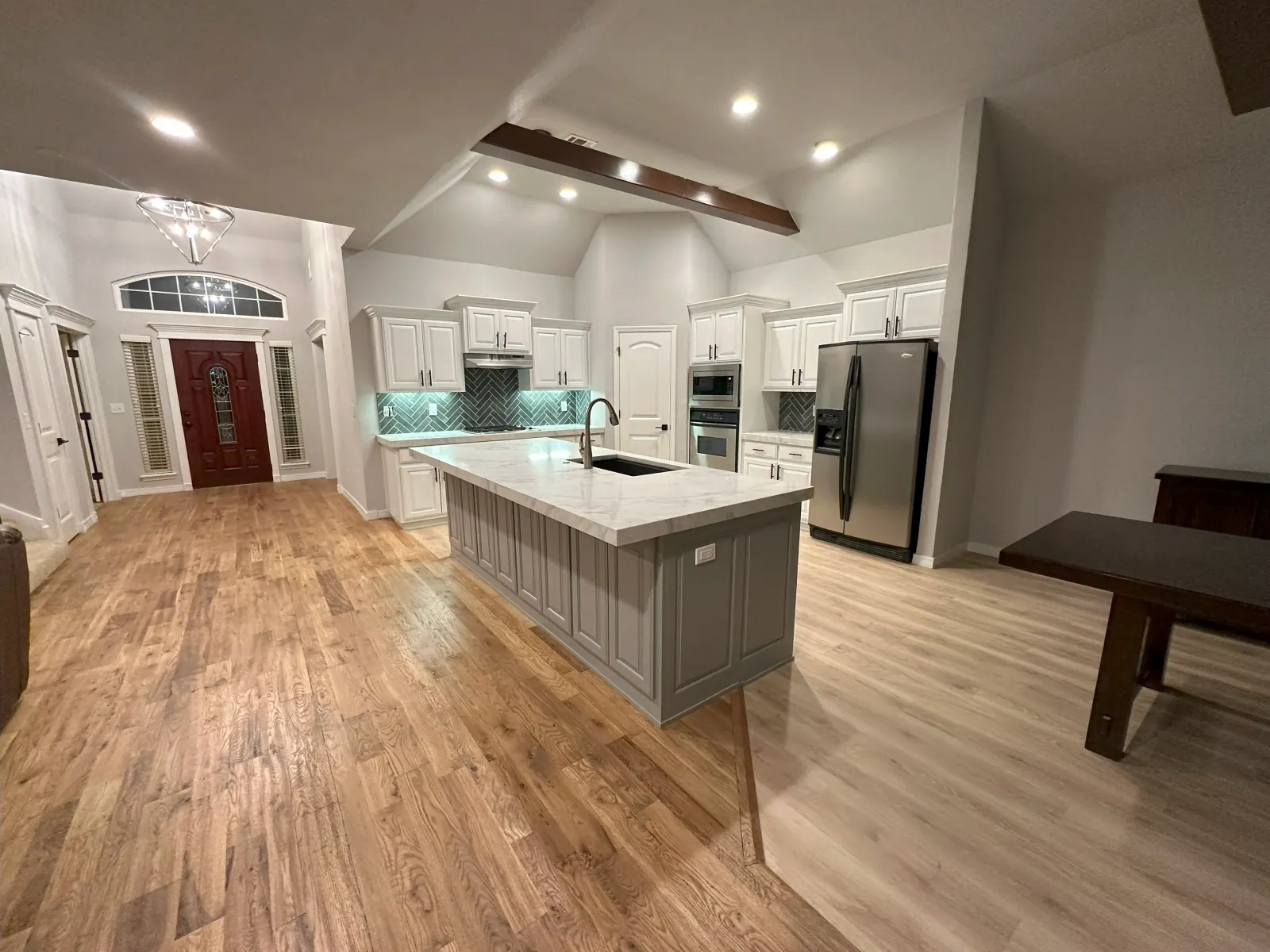
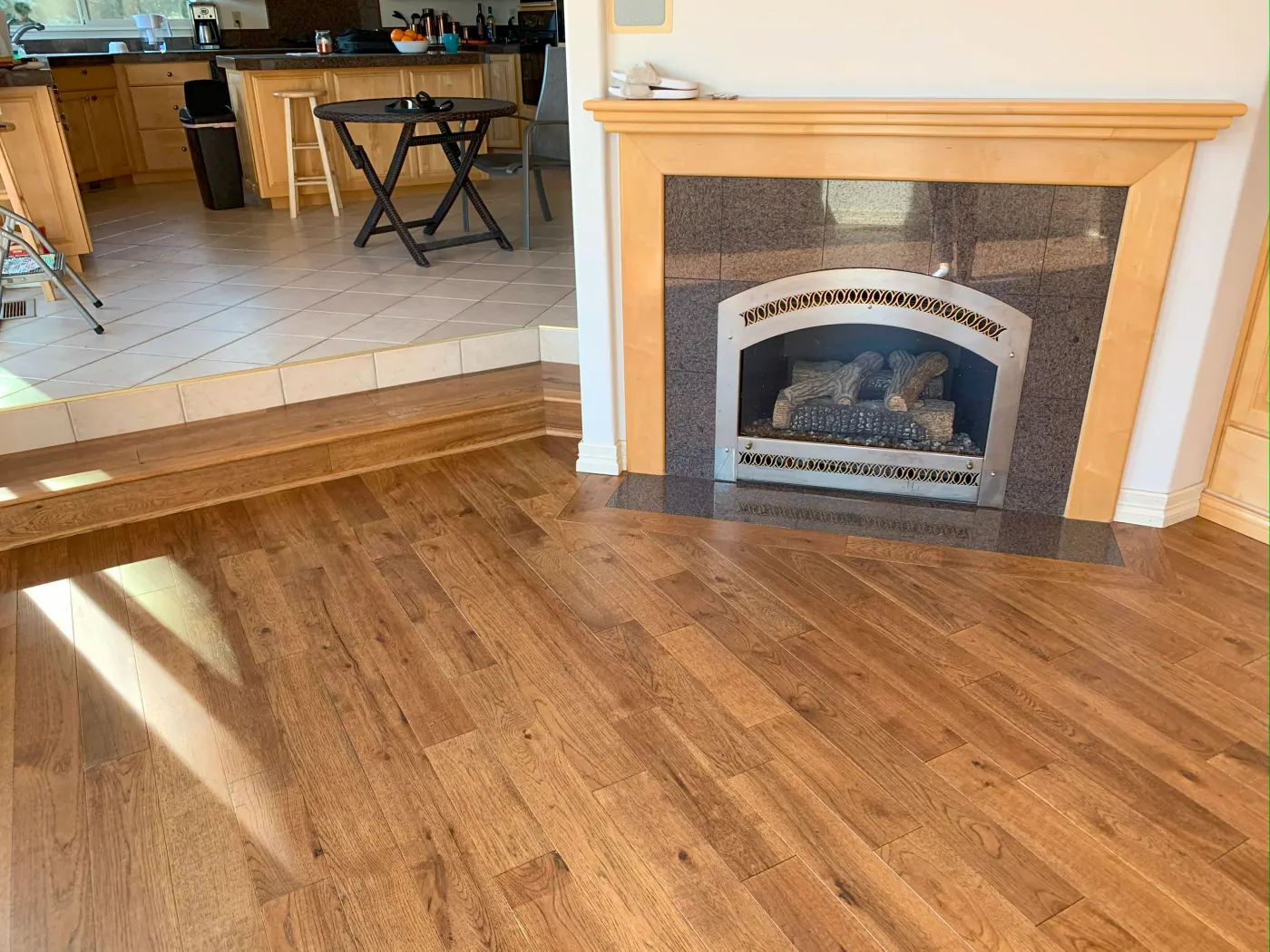
Hardwood floor installation on an upstairs landing in a Tulsa metro home

How It Is Built

What Is Inside an Engineered Hardwood Plank

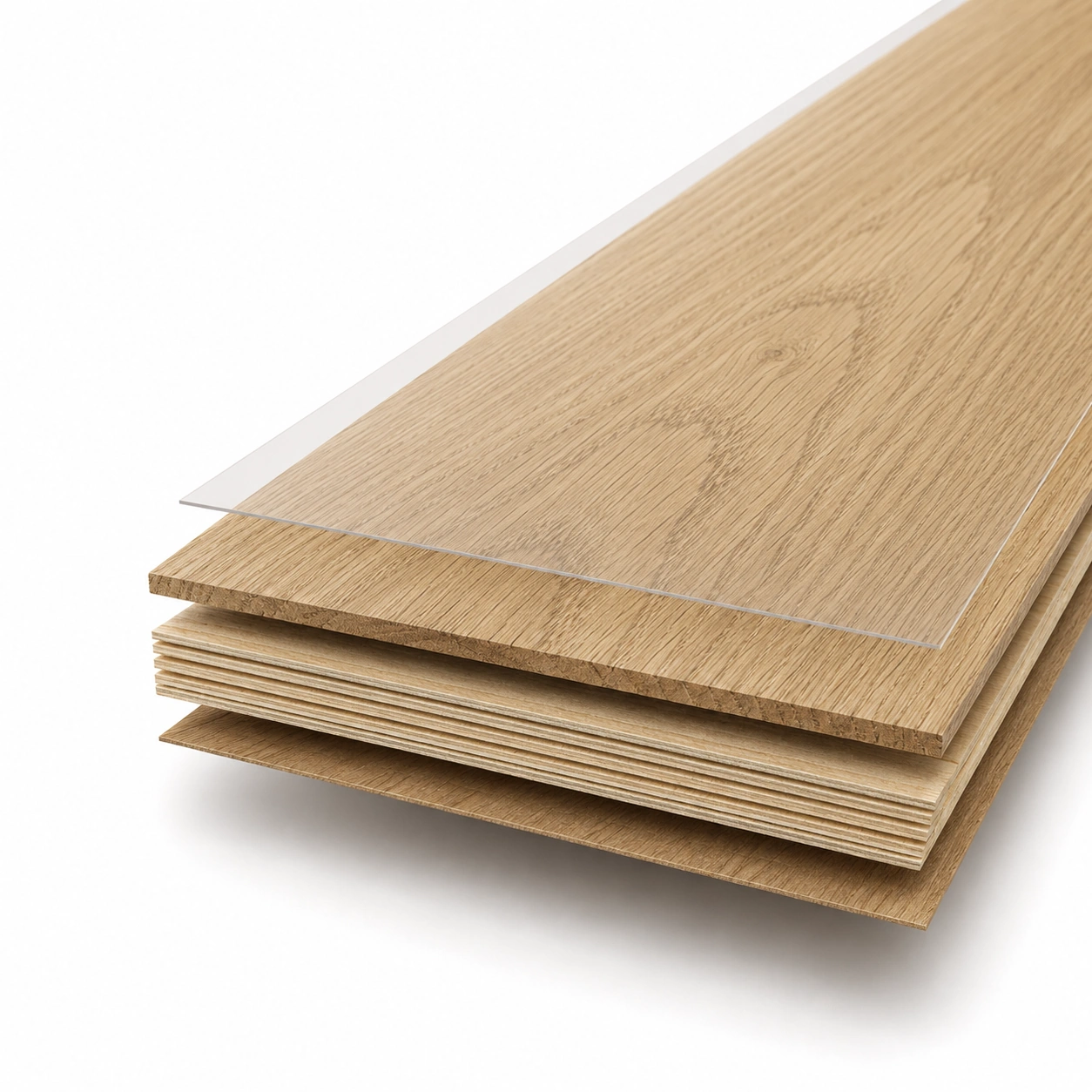
Solid hardwood is one piece of wood, so there is nothing to explain. Engineered hardwood is where the questions are, and where most of the money either gets well spent or wasted. Two of these four layers decide everything: the wear layer, which is the only part you can ever sand, and the core, which is why the plank can go over a Tulsa slab when solid wood cannot.

Cutaway render of an engineered hardwood flooring plank showing the finish coats, real oak wear layer, cross ply core, and backing veneer, the build we install in Tulsa, OK homes
  1. Finish coatsFactory applied

    Several coats of UV cured urethane, usually with aluminium oxide in them. Factory finish is harder than anything that can be applied on site, and it is why prefinished floors can be walked on the day they go down.

  2. Wear layer0.6mm to 6mm

    A slice of genuine hardwood. This is the whole floor as far as looks and refinishing go, and it is the number nobody volunteers. Under 2mm, the floor can never be sanded.

  3. Cross ply corePlywood or HDF

    Layers of wood stacked at right angles to each other. Wood moves across the grain, so alternating the direction cancels most of that movement out. This is what makes engineered stable enough for slabs and humidity swings.

  4. Backing veneerBalancing layer

    A final layer under the core that balances the pull of the top. Without it the plank would cup as the seasons change. Cheap planks skip or thin it, and you find out in year two.

The Number That Actually Matters

How Thick the Wear Layer Needs to Be

This is the number that separates a floor you can refinish from a floor you will one day throw away, and it is almost never on the showroom tag.

0.6 to 1mm

Builder grade, rentals, flips

Can never be sanded, so one bad scratch is permanent. If you are keeping the house, this is not real hardwood value.
2mm

Normal residential, one refinish

The realistic minimum if you want the option to sand it back once, fifteen or twenty years from now.

3mm Recommended

Long term family homes

Where we point most Tulsa homeowners. One to two refinishes, and the price step up from 2mm is smaller than people expect.

4 to 6mm

Closest thing to solid

Two to three refinishes and a genuine fifty year floor. Worth it if you are staying put.

Overall plank thickness is not the same number. A 12mm plank with a 0.6mm veneer can never be sanded. A 10mm plank with a 3mm veneer can be sanded twice. Always ask for the wear layer, not the plank.

Solid Or Engineered Hardwood Flooring

Solid or Engineered: Which Hardwood Belongs in Your House

Both are real wood on the surface. What is underneath decides which one your house can actually take.
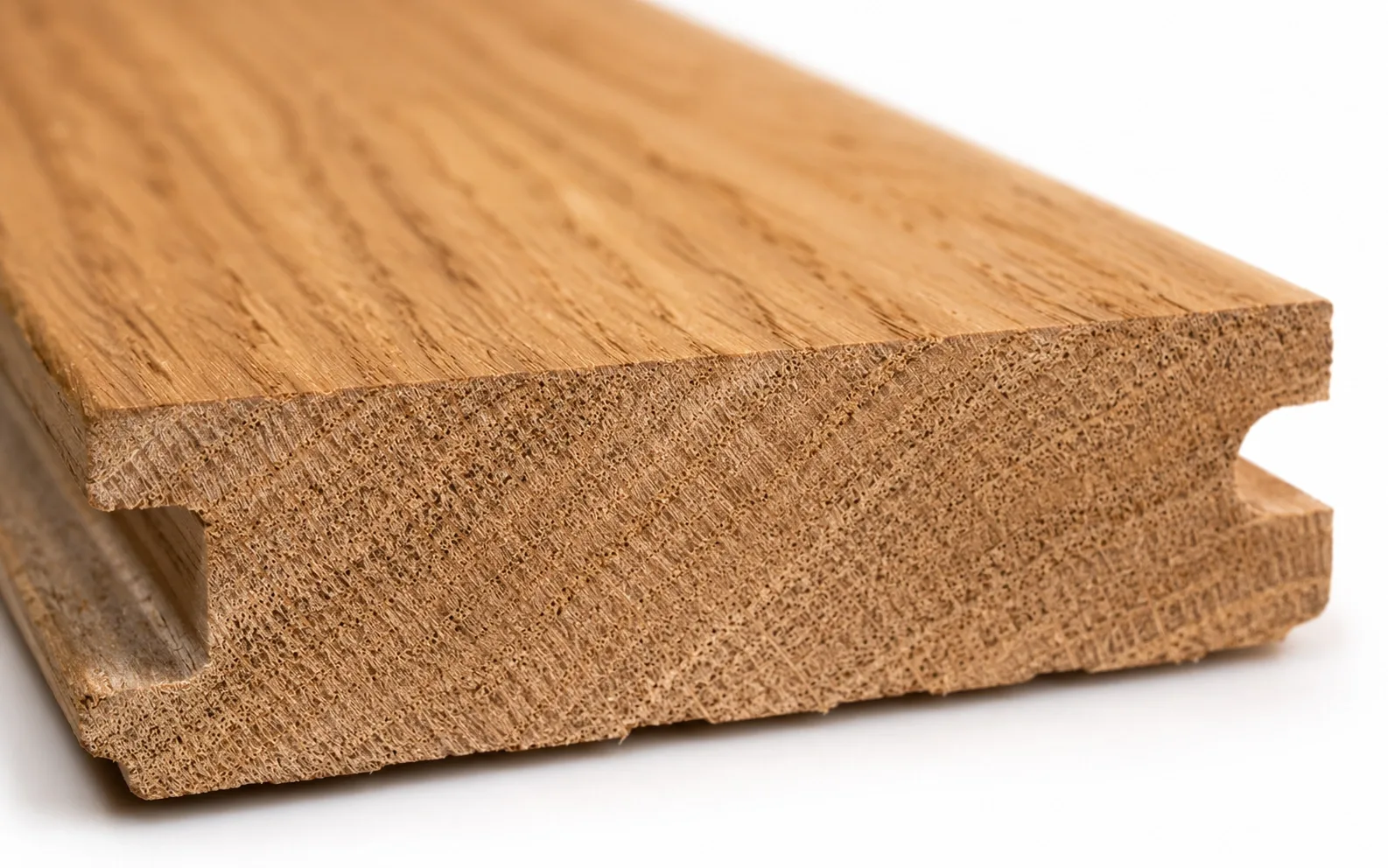
Close up of a solid oak hardwood flooring plank edge showing one continuous piece of wood through the full thickness with a machined tongue One piece of wood, top to bottom
Refinishes the most times

Solid hardwood

Strengths

  • Three quarter inch of solid wood, so it sands back four or five times
  • Genuinely a fifty year floor if it stays dry
  • The strongest resale story of any floor we install
  • Can be sanded and restained to a completely different colour later

Trade offs

  • Moves with humidity, so Oklahoma summers and dry winters both show
  • Cannot go directly over a concrete slab or in a basement
  • Higher material cost and a longer install

Best for: Upper floors and main levels over a wood subfloor, in homes you plan to keep.
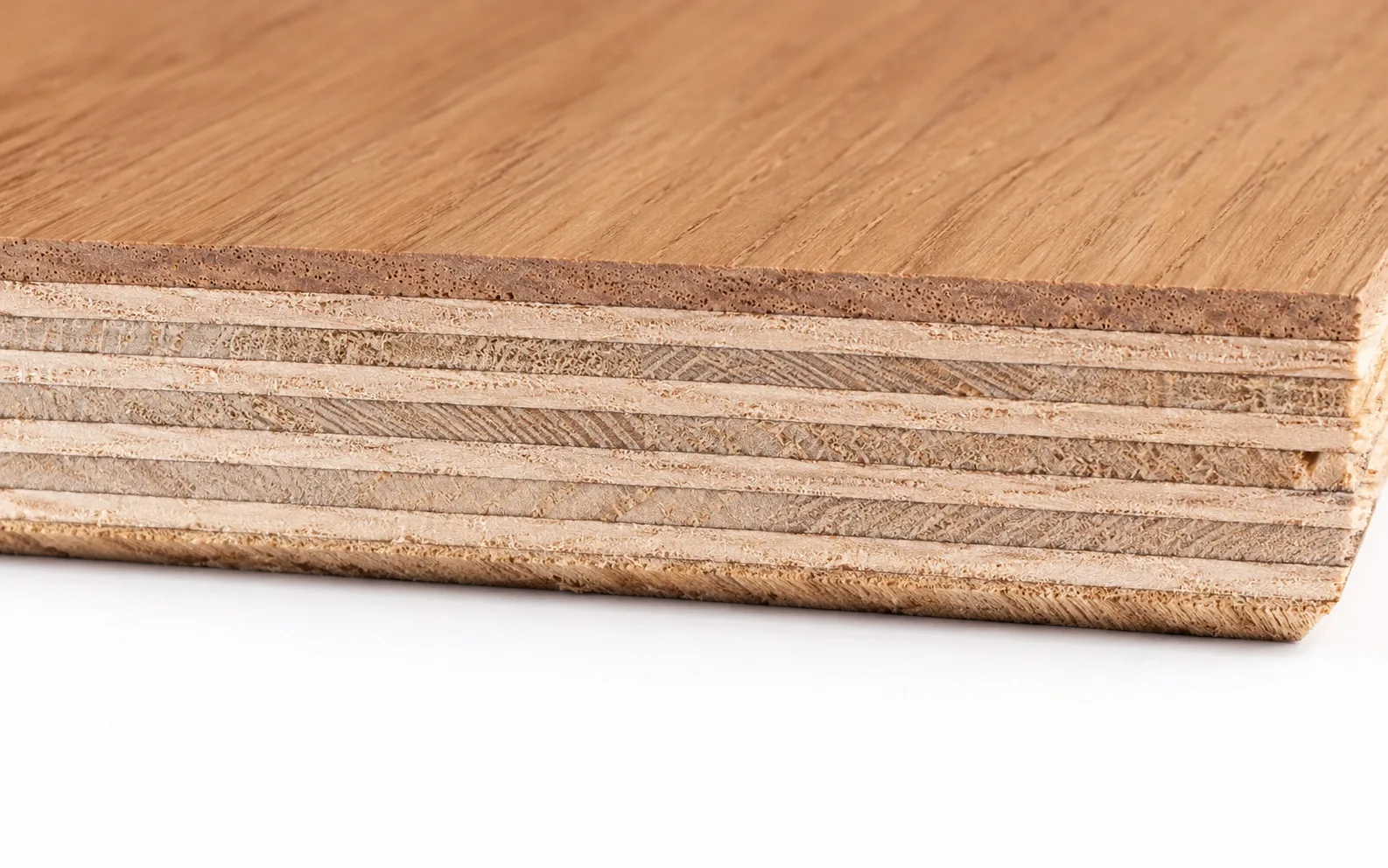
Close up of an engineered hardwood flooring plank edge showing the real oak wear layer over a cross ply core of alternating veneers Real wood wear layer over a cross ply core
Handles slabs and humidity

Engineered hardwood

Strengths

  • Cross ply core barely moves, so seasonal gapping is far smaller
  • Goes over concrete slabs, basements and radiant heat
  • Wider boards stay flat, where solid wide plank tends to cup
  • Usually costs less per square foot for the same species and look

Trade offs

  • Refinishes once or twice at best, and not at all under 2mm
  • Quality varies enormously between brands at the same price

Best for: Slab built Tulsa homes, basements, wide plank looks, and anywhere humidity swings hard.

Cross Shopping

Hardwood vs Laminate

People cross shop these two constantly because a good laminate photographs almost identically. The differences are real, and only some of them favour hardwood.

  Hardwood Laminate
Cost per sq ft Highest of the four floors we install Lowest of the four
Refinishing Sands back to new, repeatedly Never. Worn means replaced
Scratch resistance Dents and scratches, then gets sanded Better surface hardness out of the box
Lifespan Thirty to fifty years and beyond Ten to twenty years
Water Poor. Standing water cups the boards Poor. The core swells at the seams
Resale value Named in listings and appraised for Reads as budget conscious
Repairs A damaged board can be cut in and blended Hard to match a discontinued run

Laminate wins on price and on day one scratch resistance. Hardwood wins on everything measured in decades. If you are staying in the house, hardwood is the cheaper floor over thirty years even though it is the expensive one today.

The Honest Answer

So, Is Hardwood Right for Your Home?

The honest summary: hardwood is the only floor here that gets renewed instead of replaced, and the only one buyers name in a listing. It is also the least tolerant of water and the most demanding to install correctly. Get the install right and it outlives everything else in the house. Get it wrong and it gaps, cups, or squeaks, and no finish coat hides that.

Choose hardwood if

  • You plan to stay in the house long enough to refinish it at least once
  • The rooms are living areas, dining rooms, bedrooms or hallways
  • Resale value and appraisal matter to you
  • You are matching or extending hardwood that is already in the house
  • You want a floor that can be restained to a different colour later

Choose something else if

  • The room takes real water: bathroom, laundry, mudroom or basement. That is tile or LVP
  • You are covering a large area on a tight budget. Laminate gets you the look for far less
  • You need the job finished in two days. Acclimation alone takes longer than that
  • The house is a rental or a flip. The refinishing advantage never gets used

What We Handle

Hardwood Flooring Work We Take On

Solid hardwood

Three quarter inch solid wood over a wood subfloor. It sands and refinishes multiple times over its life, which is what makes it a fifty year floor rather than a fifteen year one.

Engineered hardwood

A real wood wear layer over a dimensionally stable plywood core. It handles slabs, basements, and humidity swings better than solid and can still be refinished once or twice depending on the wear layer thickness.

Nail down installation

The standard over a wood subfloor. Fast, solid underfoot, and the method most solid hardwood is designed for.

Glue down installation

Used over concrete slabs and where sound transfer matters. Requires a flat substrate and the right adhesive and moisture mitigation for the slab.

Floating installation

Engineered planks over an underlayment with no fasteners into the subfloor. Useful over radiant heat and where the substrate cannot take fasteners.

Species and finish

Oak takes stain evenly and hides wear. Maple runs lighter and shows stain unevenly without proper prep. Hickory is the hardest of the common species and the right call for big dogs. We walk through the trade-offs before you commit.

Our Hardwood Flooring Process

From First Call to Final Walkthrough

  1. Free estimate

    We measure, test the subfloor for moisture and flatness, and talk through species, finish and install method. You leave with a written line item quote.

  2. Acclimation

    The wood sits in your house until its moisture content matches the rooms it is going into. Skipping this is the single most common cause of gaps and cupping later.

  3. Prep

    Old flooring out, subfloor flattened and refastened, and moisture readings recorded on both the subfloor and the wood before a single board goes down.

  4. Install

    Layout set from the longest sight line, boards racked for colour and grain so no two similar planks land side by side, tight joints, clean transitions.

  5. Walkthrough

    We check every room with you, touch up, clean the site, and cover humidity control so the floor stays flat through an Oklahoma winter.

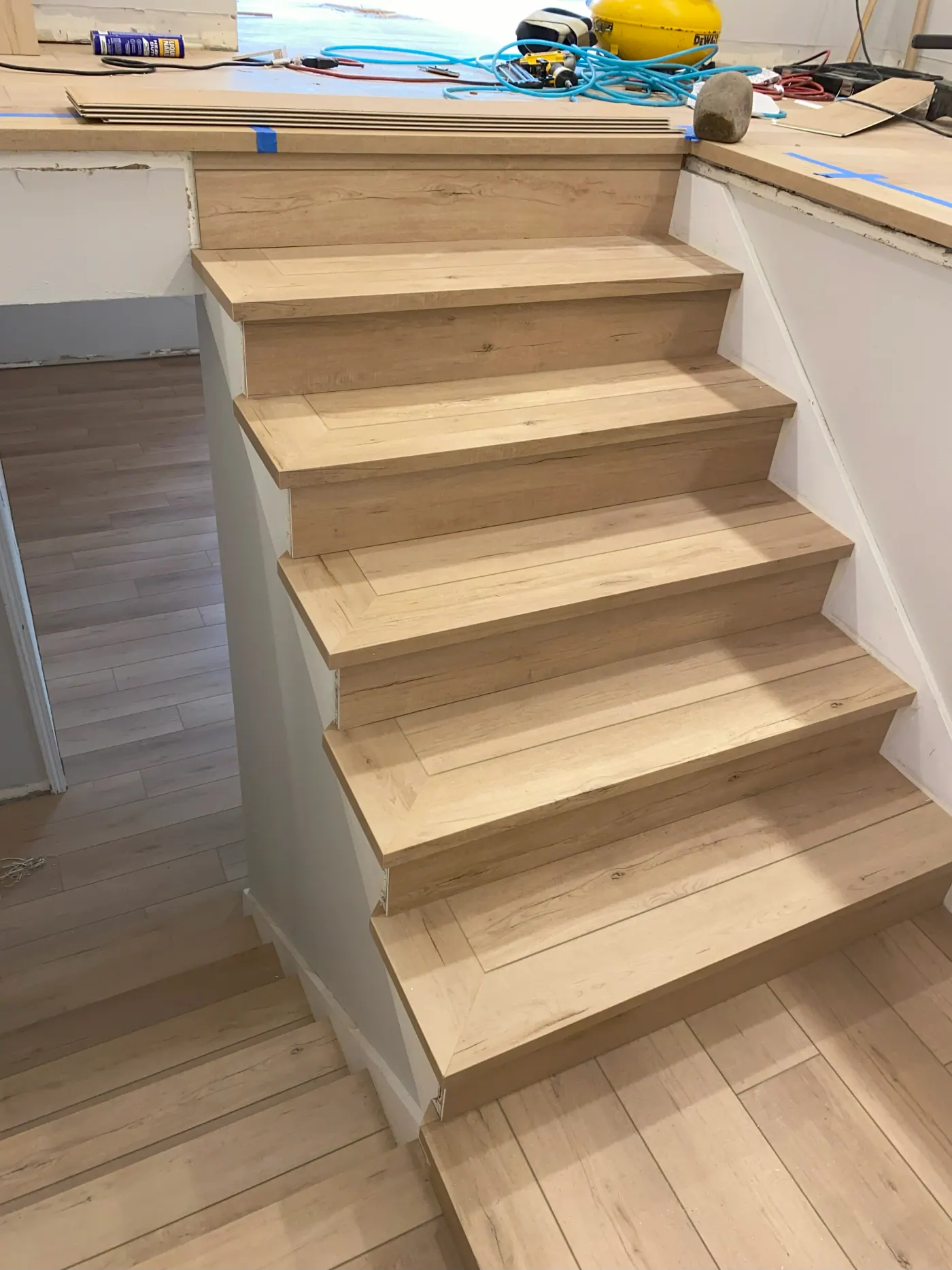
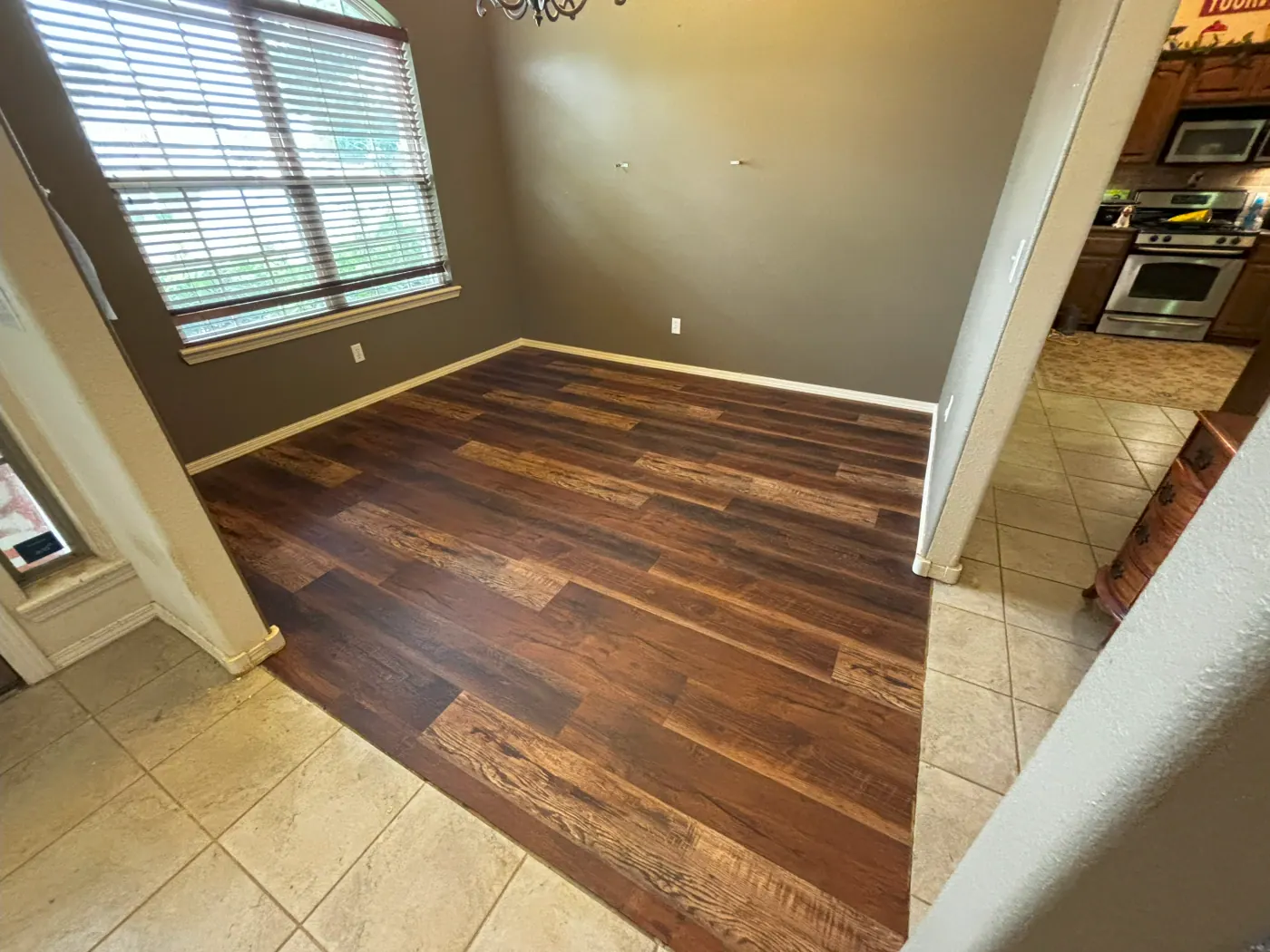
Recent Hardwood Flooring Projects

Hardwood Flooring Questions

What Homeowners Ask Us Most

Solid or engineered hardwood?
It usually comes down to what is underneath. Over a wood subfloor on an upper level, solid hardwood is a strong choice and refinishes the most times. Over a concrete slab, a basement, or anywhere humidity swings hard, engineered hardwood flooring is the more stable floor and still gives you a genuine wood surface. A lot of Tulsa homes are slab built, which is why we specify engineered more often than not.
How many times can engineered hardwood be refinished?
It depends entirely on the wear layer. Under 2mm it cannot be sanded at all. At 2mm you get one light refinish. At 3mm, one to two. At 4mm to 6mm, two to three. Solid hardwood at three quarter inch has around a quarter inch of usable wood above the tongue, which is four or five refinishes. Ask for the wear layer thickness before you compare prices, because that is the number that decides it.
How long does hardwood floor installation take?
The install itself typically runs one to five days depending on square footage and layout. Acclimation happens before that and we schedule it during the estimate rather than rushing it. Site finished floors need extra days for sanding and finish coats, and the house needs to stay off the floor while they cure.
Can hardwood go over a concrete slab?
Engineered hardwood can, glued down or floated, with the right moisture mitigation for the slab. Solid hardwood is not the correct product directly over concrete and we will not install it that way, because the failure is guaranteed rather than possible.
Will gaps open up in the winter?
Some seasonal movement is normal in any real wood floor. Oklahoma swings from humid summers to dry winters, so it shows here more than in a milder climate. Proper acclimation, moisture readings taken before install rather than assumed, and keeping indoor humidity in a reasonable range through winter keep it to hairlines rather than gaps you can feel.
Is hardwood or laminate better?
Laminate is cheaper per square foot and actually resists scratches better on day one. Hardwood wins on everything measured in decades: it sands back to new, it lasts thirty to fifty years, and buyers and appraisers name it. If you are staying in the house, hardwood is the cheaper floor over thirty years. If you are covering a lot of square footage on a budget, laminate is the honest answer and we will say so.
Which hardwood species holds up best with dogs?
Hickory is the hardest of the common species and the one we recommend for big dogs. White oak is next and takes stain more evenly. Red oak has enough grain movement to hide wear well even though it is slightly softer. Maple looks beautiful and is the worst choice for a house with dogs, because it dents easily and blotches when stained.
White oak or red oak?
White oak runs cooler and more neutral, takes grey and natural finishes cleanly, and is slightly harder. Red oak has warmer pink undertones and stronger grain, costs a little less, and hides scratches better because of that grain. If you are matching existing hardwood in the house, we identify what is already there first rather than guessing.
Do you remove the old flooring and move furniture?
We can include removal and furniture moving in your quote. We protect nearby areas, haul away debris, and keep the job site tidy from start to finish.

Call Now for Your Free Tulsa Flooring Estimate

Get Durable Floors Installed by Trusted Tulsa Pros

Free estimate, clear written pricing, and most installs finished in one to five days. Tell us about your project and we will send a clear written quote for luxury vinyl plank, laminate, hardwood, or tile. No obligation and no pressure.
  • Free, no pressure in home estimates
  • Written line item quotes before any work starts
  • Subfloor prep and moisture checks included
  • Clean job sites and a final walkthrough with you
Call (918) 219-4848

Request Your Free Estimate

We respect your privacy and never sell your information.