- Comparisons
- Buying Advice
Wood Look Tile vs Real Hardwood for Tulsa Kitchens
Porcelain has gotten good enough to fool people at eye level. The kitchen is where the two materials actually behave differently.

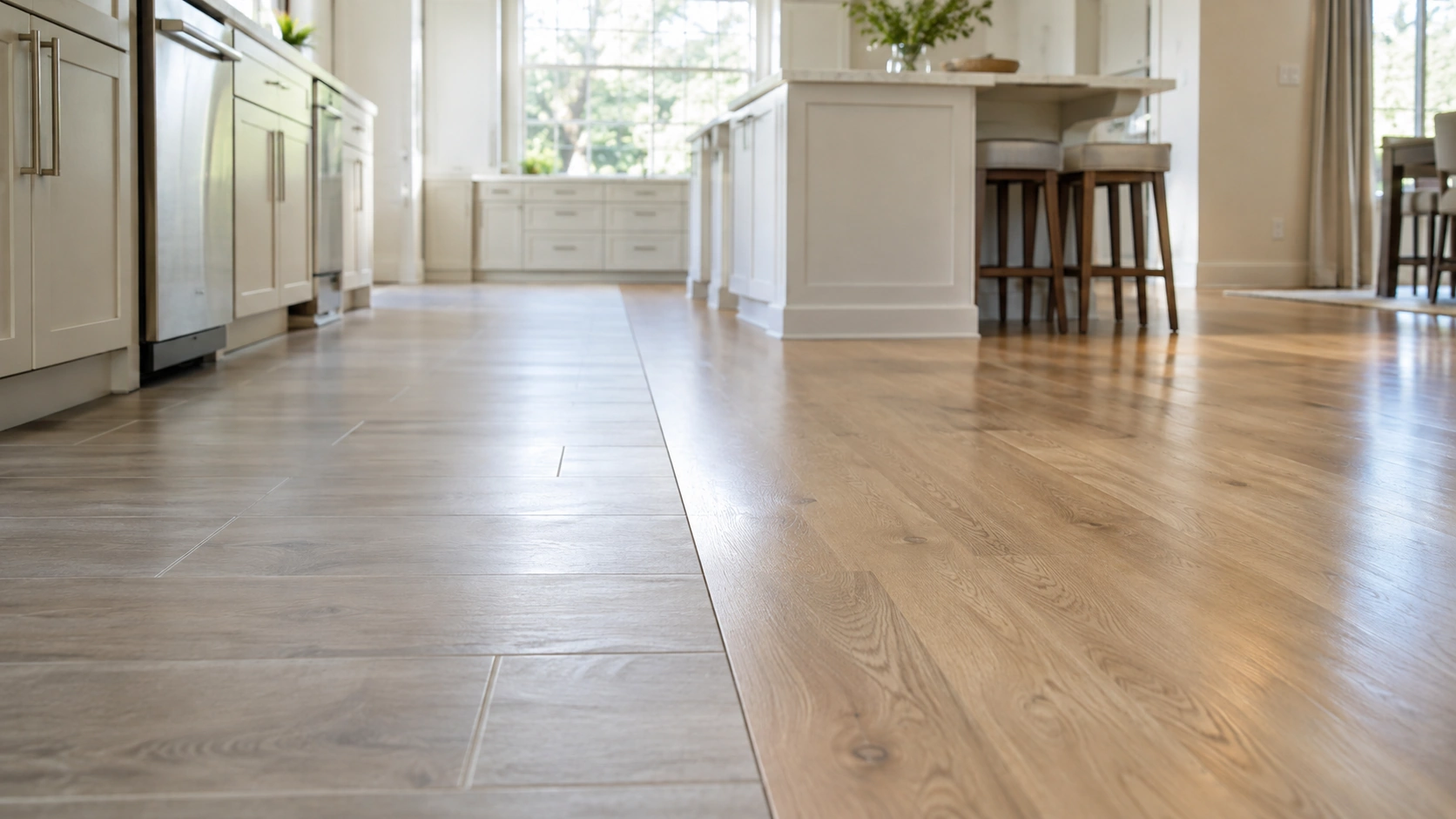
Porcelain that looks like wood has gotten good. Ten years ago you could spot it from the doorway. Now we install kitchens where people walk in, look down, and ask whether it is real oak.
So here is the honest answer to the question you came for.
In a kitchen, wood look tile is the more durable floor and real hardwood is the more valuable one. Tile shrugs off water, dents and dog nails. Hardwood is warmer underfoot, easier on your back, and it still moves appraisers in a way tile does not.
Neither of those is a tiebreaker on its own. What decides it is how you actually use the room.
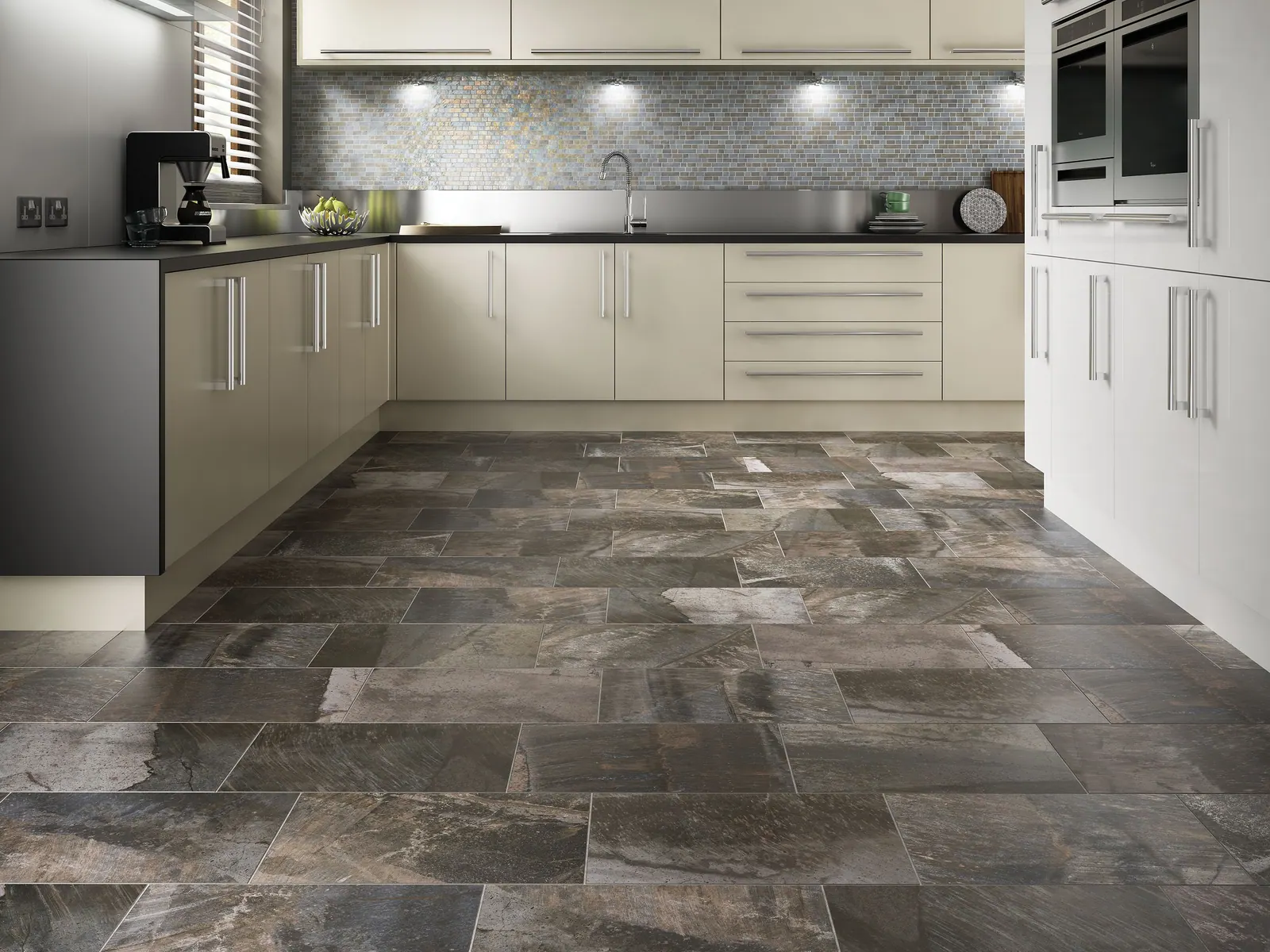
What wood look tile actually is
Nearly all of it is porcelain, and that matters more than the picture printed on it.
Porcelain is fired denser and harder than ceramic, absorbs almost no water, and carries its color through more of the body. Ceramic versions of tile flooring that looks like wood exist and cost less, but the wear surface is a thinner glaze over a softer bisque. In a kitchen, that is the wrong place to save.
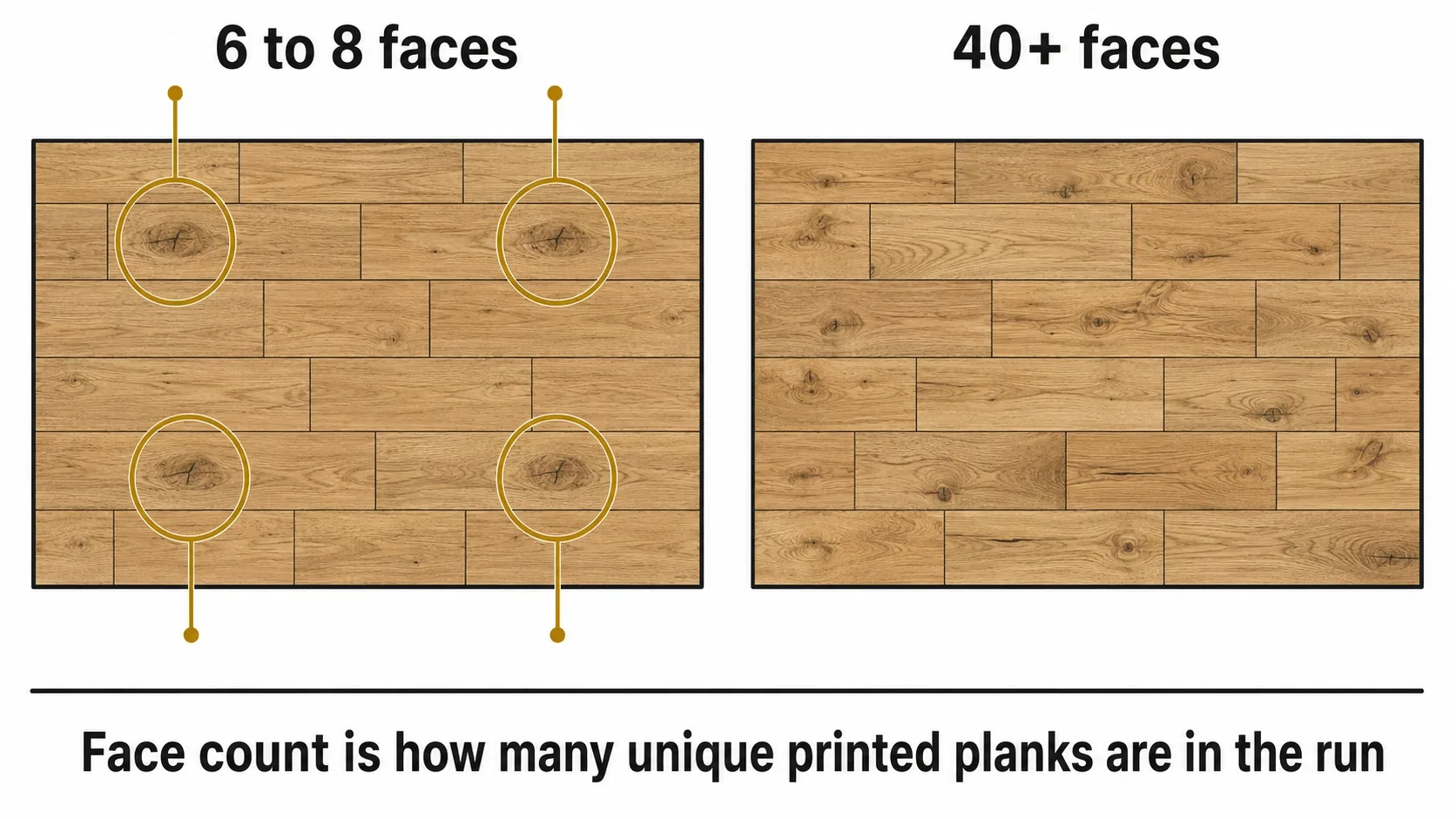
The wood grain itself is digitally printed before firing. The quality difference between a convincing plank and an obvious one comes down to one spec almost nobody asks about: how many unique faces the tile has.
A cheap plank tile has six to eight distinct printed faces. Lay a kitchen floor with it and the same knot shows up four times in a row along one wall. Your eye catches the repeat even when you cannot name what is wrong. Better lines run twenty, forty, sometimes more than fifty faces, and the floor stops looking like a pattern.
Ask for the face count. If the supplier does not know it, that tells you something about the tile.
What a kitchen floor is actually up against
Kitchens are not hard on floors the way people assume. The threats are specific.
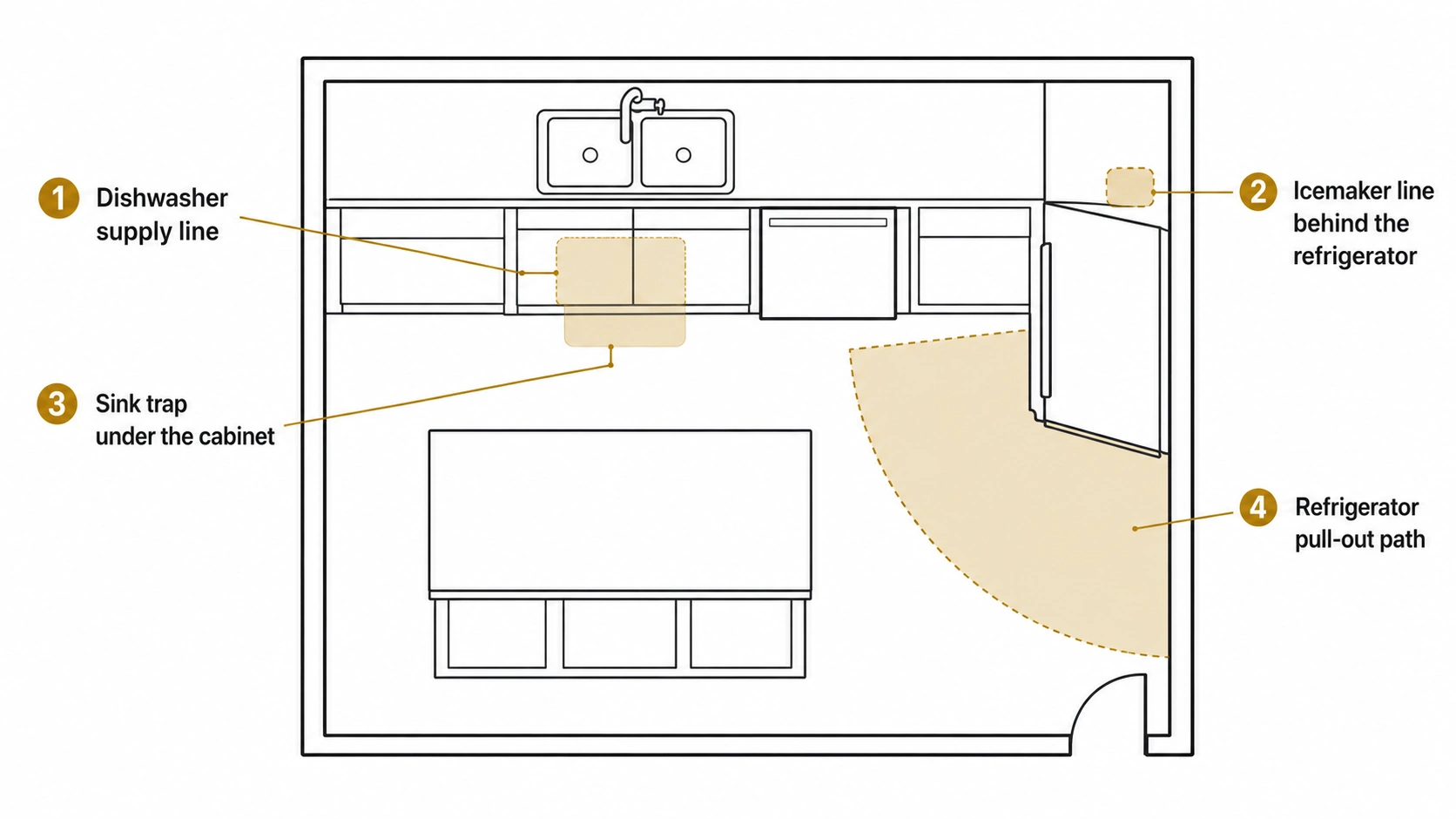
Standing water that nobody sees. The dishwasher supply line, the icemaker line behind the refrigerator, the trap under the sink. These do not flood. They weep, slowly, into the floor at the back of a cabinet for weeks before anyone notices.
Dropped objects with corners. A cast iron pan off the counter, a can out of the pantry. This is the single most common source of damage we see in kitchens.
Furniture and appliances on the move. Pulling a refrigerator out to clean behind it is how most kitchen floors get their worst scar.
Hours of standing. Not damage to the floor, damage to you. Whoever cooks in your house is on that surface for long stretches.
Those four line up almost perfectly with where the two materials separate.
Side by side, for a kitchen specifically
| Wood Look Porcelain Tile | Real Hardwood | |
|---|---|---|
| Slow leak behind a cabinet | No damage, water reaches the membrane and stops | Cups and crowns, usually needs replacing |
| Cast iron pan dropped on it | Can chip or crack that tile | Dents, but the dent reads as character |
| Refrigerator dragged across it | Scratch resistant, hard to mark | Scratches through the finish |
| Dog nails | No effect at all | Visible on softer species within a year |
| Refinishing | Not possible, damage is permanent | Sand and refinish, several times over its life |
| Repair of one damaged spot | Cut out and reset a single tile | Board replacement blends, or refinish the room |
| Underfoot after two hours of cooking | Hard and unforgiving | Noticeably easier on knees and back |
| Temperature in January | Cold without radiant heat | Warm |
| Sound | Harder, more echo | Warmer, quieter |
| Resale impression | Reads as a nice finish | Reads as a material upgrade |
| Works directly over a slab | Yes, ideal | Engineered yes, solid no |
| Lifespan in a kitchen | Decades, often outlives the cabinets | Decades, and renewable |
Where real hardwood still wins
We install a lot of tile. We are still going to tell you when wood is the better call.
Resale. This is the honest one. Buyers and appraisers treat hardwood as a material upgrade and treat tile as a finish, no matter how convincing the tile looks. If you are selling in the next few years, that gap is real money and it usually outweighs the durability argument.
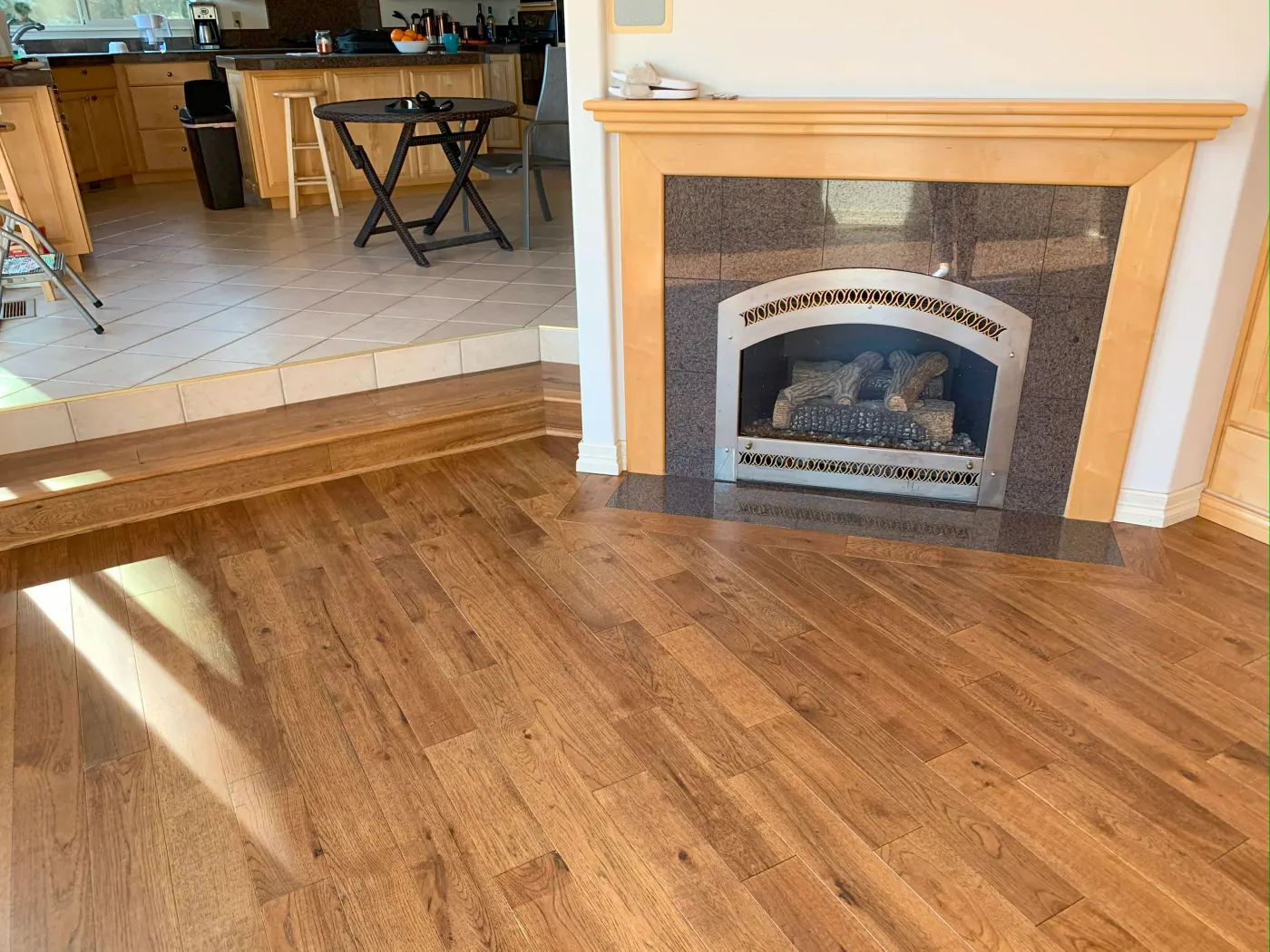
You already have hardwood elsewhere. If oak runs through the rest of the main floor, introducing a second material at the kitchen doorway almost always looks worse than continuing what you have. Matching into an existing floor is one of the more common jobs we do, and a continuous run reads as intentional in a way a transition strip never does.
You cook a lot. Two hours on porcelain and you feel it. Nobody puts this in a brochure and everybody notices it in year one.
You want the damage to be fixable. Hardwood’s real advantage is not that it resists wear. It is that wear is reversible. A kitchen floor that looks tired after twenty years can be sanded back to new. Tile that chips is chipped.
Where wood look tile is the better decision
You are on a slab. Most homes we work in around Tulsa, Broken Arrow, Bixby and Jenks sit on concrete. Solid hardwood does not belong directly on a slab, which narrows you to engineered wood or tile. Porcelain over a slab is the most trouble free floor in that situation, and it is why so many kitchen tile flooring jobs here end up as plank tile.
You have dogs. Nails do nothing to porcelain. On softer wood you will see the traffic lanes inside a year.
The kitchen opens to a back door or a mudroom. Wet boots, grass clippings, red Oklahoma dirt. Tile does not care.
You want it done once. A correctly installed porcelain kitchen floor will outlast the cabinets above it.
There is a real water risk. Older supply lines, a history of leaks, a dishwasher you do not trust. Tile removes that worry entirely.
The install detail that decides whether it looks like wood
This is the part that separates a floor that reads as oak from one that reads as tile pretending, and it has nothing to do with which tile you bought.
Long plank tile is not flat. Every plank over about 18 inches has a slight bow along its length, built in at the factory and permitted by the product standards. Lay two bowed planks alongside each other with a big offset and the high point of one sits next to the low point of the other. That height difference at the joint is called lippage, and you feel it with a bare foot before you ever see it.
The fix is in the layout, and it is written into the standard. ANSI A108.02 caps the running bond offset at 33 percent for tiles longer than 18 inches, unless the manufacturer says otherwise. Not the 50 percent brick pattern people picture when they think of staggered planks. A third, or a random stagger that never approaches half.
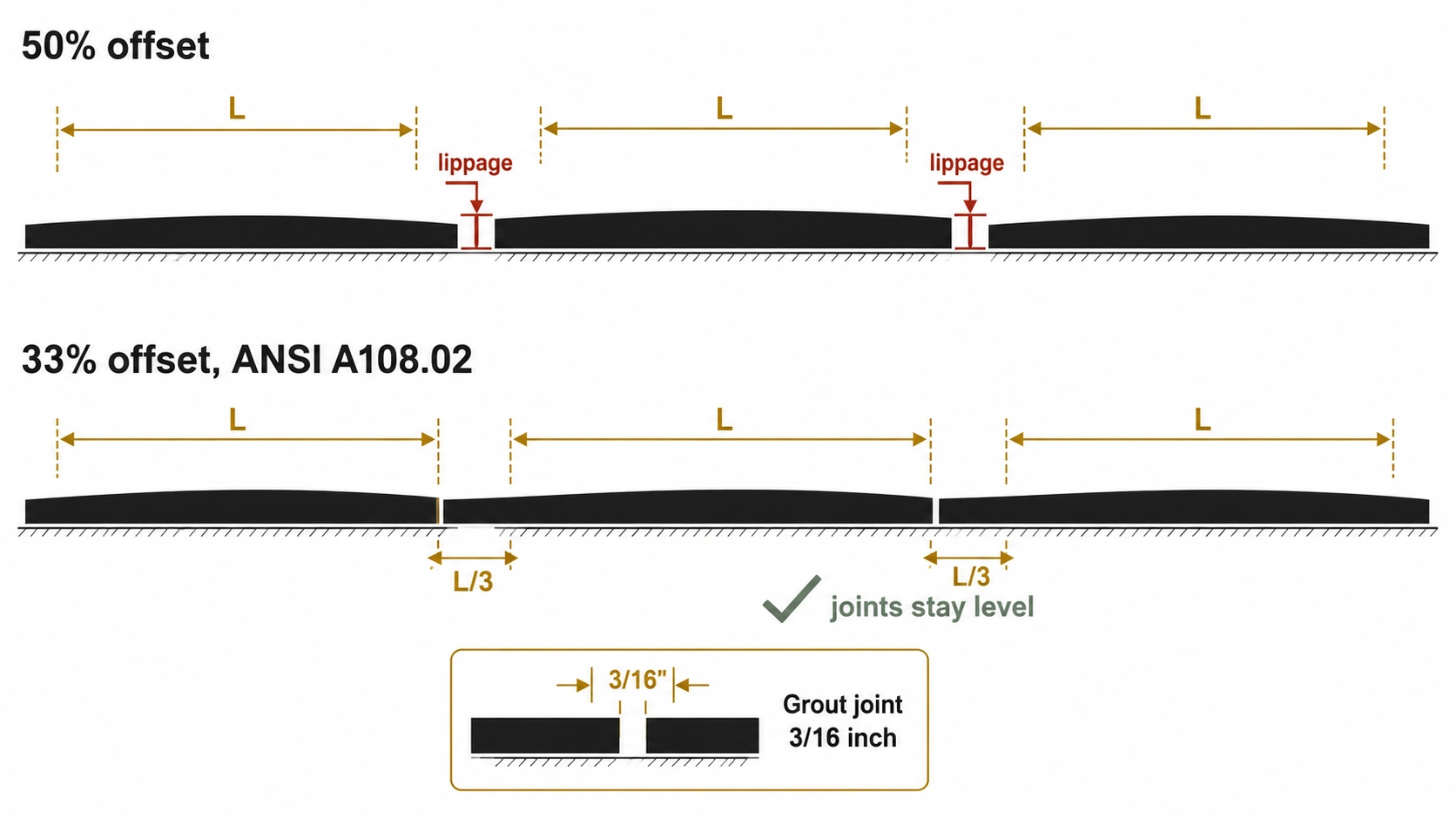
Three more things we hold to on plank tile:
A real grout joint. We generally set 3/16 of an inch. People ask for the tightest joint possible, thinking it will look more like wood. It does the opposite, because a narrow joint has no room to absorb the bow and every height difference telegraphs.
Grout matched to the tile. Contrasting grout on wood look plank is the single fastest way to make a floor announce itself as tile. Matched grout lets the eye read the planks as continuous.
A flatter subfloor than you think. Long plank tile is the least forgiving material we install. A slab that would be perfectly acceptable under luxury vinyl plank will produce lippage under 48 inch porcelain planks. We check flatness before quoting rather than on install day, because leveling is a line item and finding it late is how a job goes sideways. There is more on that in our guide to subfloor prep.
We dry lay the room before anything gets set in mortar. On plank tile that step is not optional.
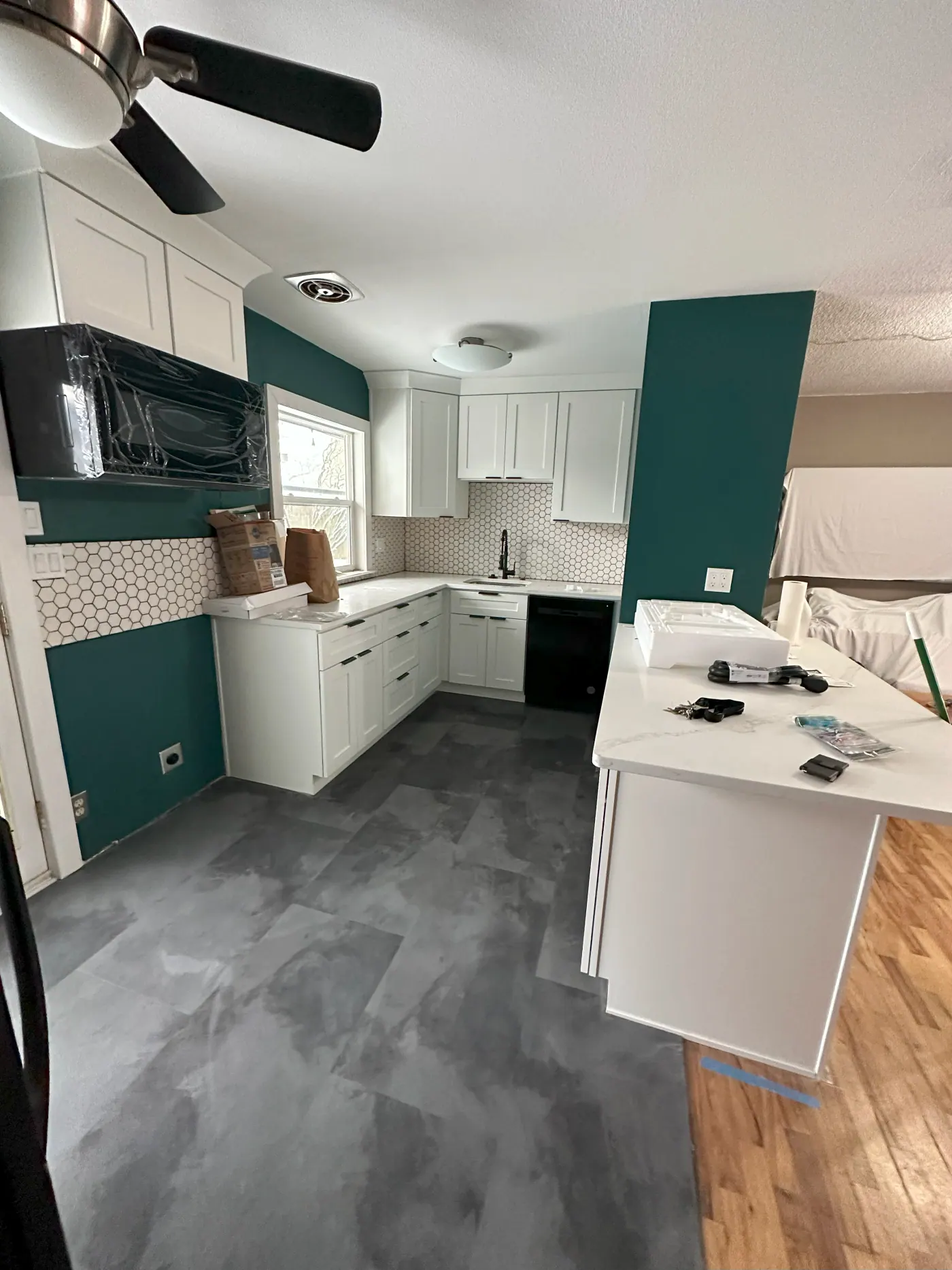
Is wood look tile going out of style?
It comes up enough that it deserves a straight answer rather than a reassuring one.
The category is not going out of style. The bad execution of it is, and it is dating fast.
What looks dated: narrow planks, heavy repeating grain, orange toned wood prints, and wide grout lines in a contrasting color. That combination was everywhere from roughly 2014 to 2019 and it is the reason the question gets asked at all.
What still looks current: wide planks, low pattern repeat, muted and natural tones, a rectified edge so the joints can be tight and even, and grout matched to the field. Done that way it does not read as a trend, because it is not trying to be one.
So judge the specific tile in front of you, not the category. A good plank tile chosen well will look fine in fifteen years. A bad one looked dated the week it went in.
The Oklahoma part
Two local realities push this decision more than anything on a spec sheet.
Slab construction. Concrete slab is the norm across most of the metro. That rules out solid hardwood on the main floor, and it makes porcelain the low risk choice. If you want real wood over a slab, engineered is the answer, and we go through why in engineered vs solid hardwood.
The humidity swing. Oklahoma runs humid in summer and dry through winter, and wood responds to that all year. Solid hardwood moves the most, engineered moves less, and porcelain does not move at all. In a house that sits empty during the day with the HVAC cycling hard, that swing is bigger than people realize, and it is why gaps open between boards in February and close again in July.
Neither of these makes hardwood a mistake. Plenty of Tulsa kitchens have beautiful wood floors. It just means the wood has to be the right construction, acclimated properly, and installed with the right expansion allowance.
What it costs, honestly
We do not publish per square foot pricing, because the number would be wrong for most of the homes we quote.
Here is what actually moves it on this particular decision:
- Subfloor flatness. The single biggest swing on a plank tile job. A flat slab needs almost nothing. A wavy one needs self leveler, and that is real material and real labor.
- Tile size. Longer planks look better and cost more to set, because the flatness tolerance tightens as the plank gets longer.
- Removal of what is there now. Pulling tile set in mortar is a different job from pulling carpet.
- Transitions, trim and stairs. These are where quotes quietly differ from each other.
- For hardwood specifically: species, solid versus engineered, prefinished versus site finished, and whether it has to match an existing floor.
Two floors in the same house, same square footage, can land far apart on any of those. That is why we measure, check the subfloor, and put it in writing as line items rather than quoting a rate over the phone.
The short version
Cooking kitchen, staying put, on a slab, dogs or kids: wood look porcelain. Wide planks, high face count, rectified edge, matched grout, 33 percent offset maximum.
Selling within a few years, or hardwood already runs through the house: real hardwood. The resale gap is genuine and matching an existing floor beats introducing a second material.
Want wood over a slab without the movement: engineered hardwood sits between the two and is the compromise we recommend most often.
Comparing tile against luxury vinyl plank instead of hardwood: that is a different trade off, and we broke it down in tile vs LVP.
Whichever way you lean, the floor only performs as well as what is under it. That is true of tile far more than any other material we install.
If you want a straight opinion on your kitchen, we will come look at it. We measure the room, check the subfloor for flatness and moisture, and give you a written line item quote with no pressure attached. Call (918) 219-4848 or request a free estimate, and we will tell you honestly which of these two your house is better suited to. You can see both materials on our tile flooring installation and hardwood flooring installation pages.