- Comparisons
- Buying Advice
Tile vs Luxury Vinyl Plank in a Bathroom: What Actually Lasts
Both materials shrug off water. Only one of them is waterproof as a whole floor rather than one plank at a time.

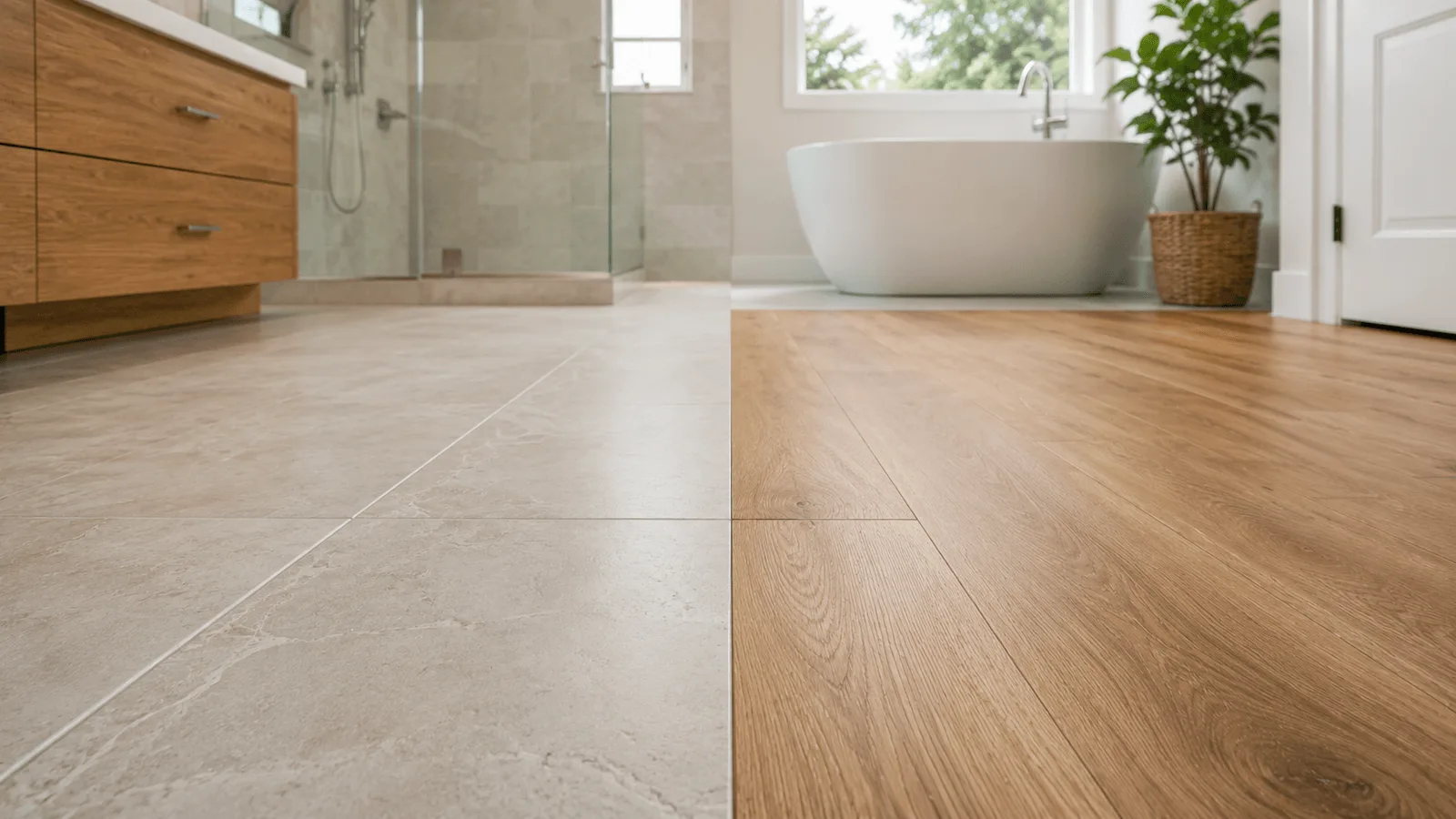
Both tile and luxury vinyl plank are waterproof, so the reasonable expectation is that either one is fine in a bathroom. In a powder room, that is true. In a full bathroom with a shower or a tub, it is not, and the reason is a distinction that almost nobody explains at the counter.
LVP is a waterproof plank. Tile over the right membrane is a waterproof floor.
Those are different products, and a bathroom is the one room in the house where the difference actually gets tested.
Where a waterproof plank stops being waterproof
Luxury vinyl plank has a plastic core. Submerge one in a bucket for a month and it comes out unchanged. That part is genuinely true.
But LVP is installed as a floating floor. The planks click together tightly, and tight is not the same as sealed. Water that pools on the surface will eventually find a seam, run through it, and end up on the subfloor underneath.
The plank does not care. The plywood under it does, and it has no way to dry out because there is a waterproof floor sitting on top of it.
In a kitchen, that is a rare event. In a bathroom it is Tuesday. Water comes off a shower curtain, drips off a body walking to the towel rail, condenses on a cold floor during a hot shower, and sits at the base of the toilet where nobody looks. Not a flood, just a small persistent amount, every day, for years.
What tile does differently
A properly built tile floor is not just tile. It is an assembly, and the tile is the part that matters least.
Under the tile sits an uncoupling membrane or a waterproofing membrane bonded across the whole floor, seams and corners included. That layer handles moisture and it handles movement, so the slab beneath can crack, or the subfloor can flex a little, and the tile above stays intact.
Water that gets through a grout joint hits the membrane and stops. It never reaches the subfloor.
Four of those five layers are invisible once the room is finished, which is exactly why they are the first thing a low bid removes. When you compare two tile quotes and one is noticeably cheaper, this is almost always where the difference is, and you will not find out for six years.
Side by side, for a bathroom specifically
| Tile | Luxury Vinyl Plank | |
|---|---|---|
| Waterproof as a plank | Yes | Yes |
| Waterproof as a floor | Yes, over a membrane | No, seams are unsealed |
| Standing water for hours | No issue | Reaches the subfloor eventually |
| Lifespan in a wet room | Decades, often outlives the bathroom | Fifteen to twenty five years |
| Feel underfoot | Hard and cold without radiant heat | Warmer, softer, quieter |
| Install time | Longer, prep plus mortar and grout cure | Fast, often one day for a bathroom |
| Cost installed | Higher, mostly labour and prep | Lower |
| Repairs | One cracked tile cuts out and replaces | Awkward to swap a plank mid floor |
| Resale impression in a primary bath | Reads as a finished bathroom | Reads as a budget choice |
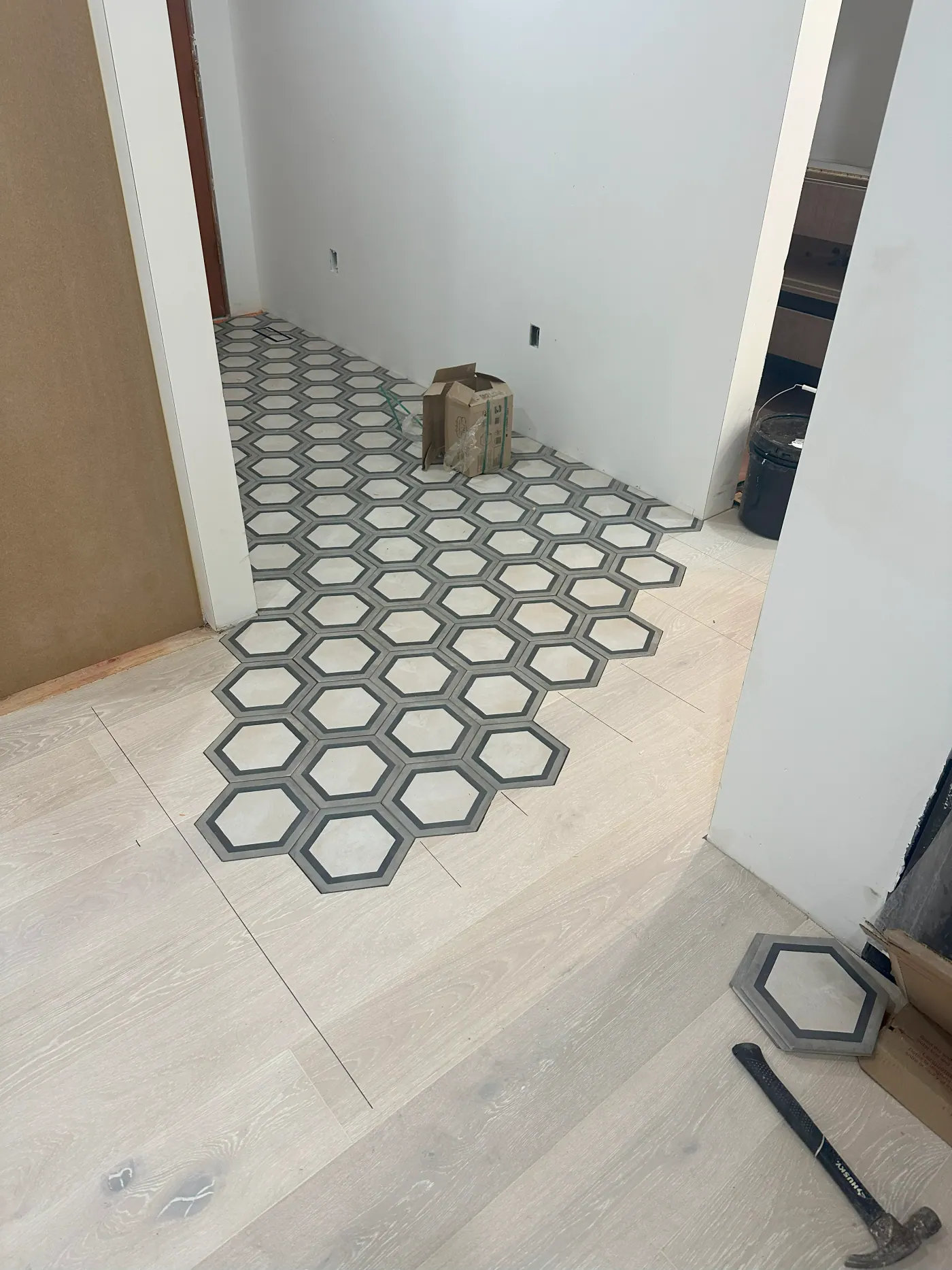
| Continuous run from the hallway | Needs a transition | Runs straight through |
When LVP is genuinely the right call
We are not against LVP in bathrooms. We install it in them regularly, and there are four situations where it is the better decision:
A powder room or half bath. No shower, no tub, one sink. The water risk is a hand splash. Tile is overkill and LVP looks the same for less.
A secondary bathroom on a budget. If the choice is LVP now or tile in three years, take the LVP now. It will do the job for well over a decade.
A continuous run through the house. If you are laying plank through the hallway and you want it to carry straight into the bathroom with no threshold strip breaking the line, that visual continuity has real value. Tile forces a transition.
A rental or a house you are selling soon. The refinishing and longevity arguments for tile only pay off if you are there to collect.
If you go this route, do two things. Choose a matte or textured finish, because a wet gloss floor in a bathroom is a hazard. And seal the perimeter with silicone where the floor meets the wall instead of leaving the expansion gap open behind the trim. That one step closes off the most likely route water takes to the subfloor, and it is very often skipped.
When it has to be tile
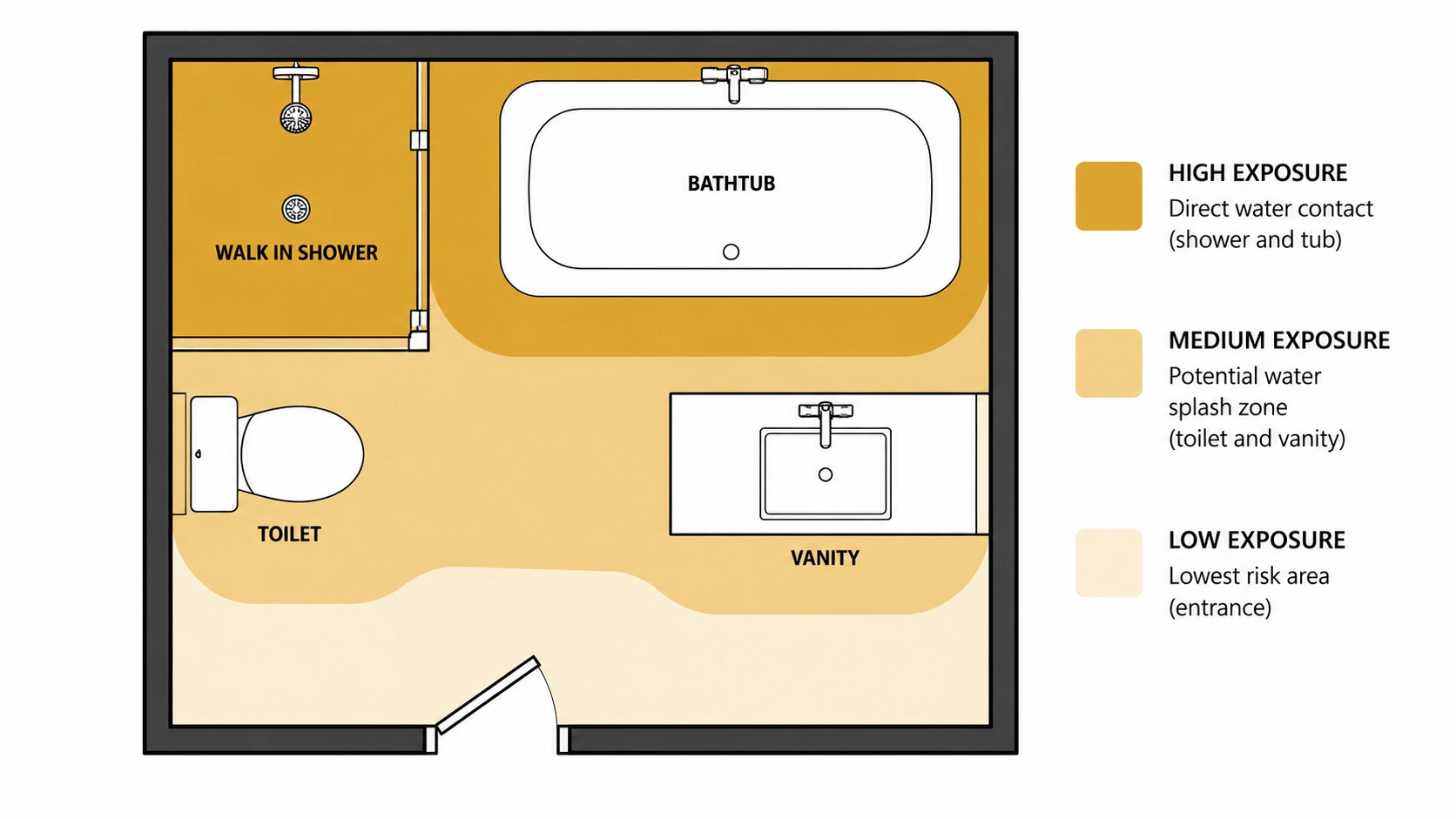
A primary bathroom with a walk in shower. The floor outside a curbless or glass shower gets genuinely wet every day.
Anywhere the floor is continuous with a shower base. If the shower floor and the room floor are the same surface, that surface is tile.
A bathroom over a finished room. A leak here damages the ceiling below. The membrane pays for itself the first time it does its job.
If you want it done once. A tile bathroom floor built correctly will outlast the vanity, the fixtures, and probably the next renovation.
The wood look question
Plenty of people want the warmth of wood in a bathroom, which is what drives the LVP choice in the first place. There is a third option worth knowing about.
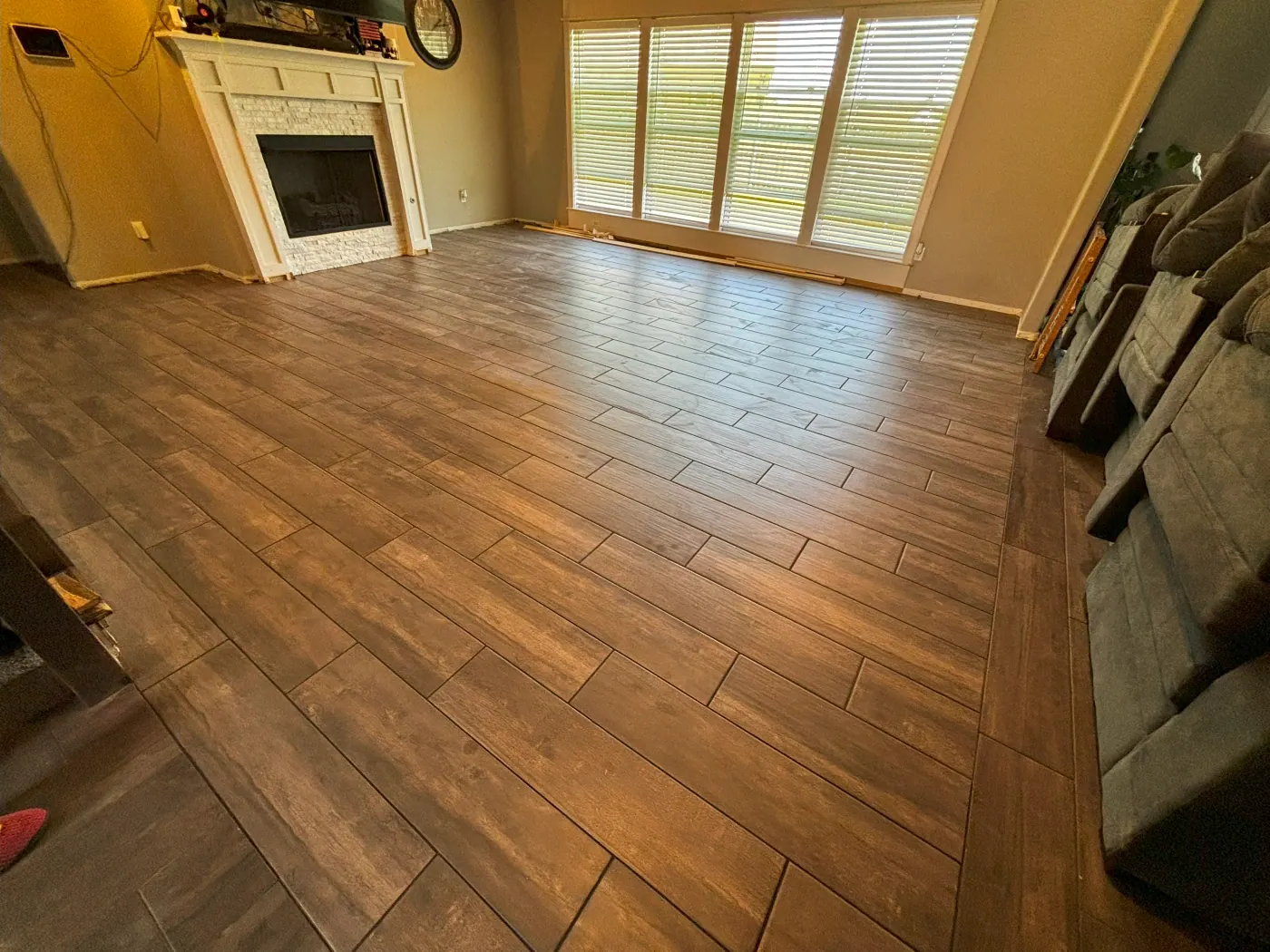
Wood look plank tile gives you the appearance of a plank floor with the performance of porcelain. It is the answer to “I want wood in a room where wood would fail,” and it is one of the most requested floors we install in Tulsa kitchens and baths.
It comes with a real requirement. Long format plank tile needs a flatter substrate than square tile and a proper offset pattern, usually a third rather than a half. Get the pattern wrong and the corners of adjacent planks sit proud of each other, which you feel with bare feet before you see it. That is a workmanship issue, not a product one, and it is the reason we dry lay the room before setting anything.
The kitchen flips the answer
Worth saying, because people assume the two rooms behave the same way.
In a kitchen we usually recommend LVP. Kitchen water is spills, and spills get wiped up. What a kitchen has that a bathroom does not is you, standing in it for an hour at a time. Tile is unforgiving on your back and knees, and warmth underfoot in January is not a small thing.
Tile is still the more durable kitchen floor and it will outlast the cabinets. That is the trade, and it is a genuine one rather than a right answer.
The short version
Full bathroom with a shower or tub: tile over a membrane. This is the one room where we push hard, and it is not because tile is the bigger job.
Powder room, secondary bath, budget, or a continuous plank run: LVP is a sound choice. Use a matte finish and seal the perimeter.
Want wood in a wet room: wood look plank tile, laid on a properly flattened substrate with a third offset.
Kitchen: usually LVP, unless longevity beats comfort for you.
We will walk your bathroom, check what is under the floor, and tell you which one we would put in our own house. Request a free in home estimate.
More detail: tile flooring installation and luxury vinyl plank installation. Related reading: Waterproof vs Water Resistant Flooring: What the Labels Actually Mean