- Buying Advice
- Materials
Waterproof vs Water Resistant Flooring: What the Labels Actually Mean
Two words that look interchangeable on a showroom tag and describe completely different products underneath.

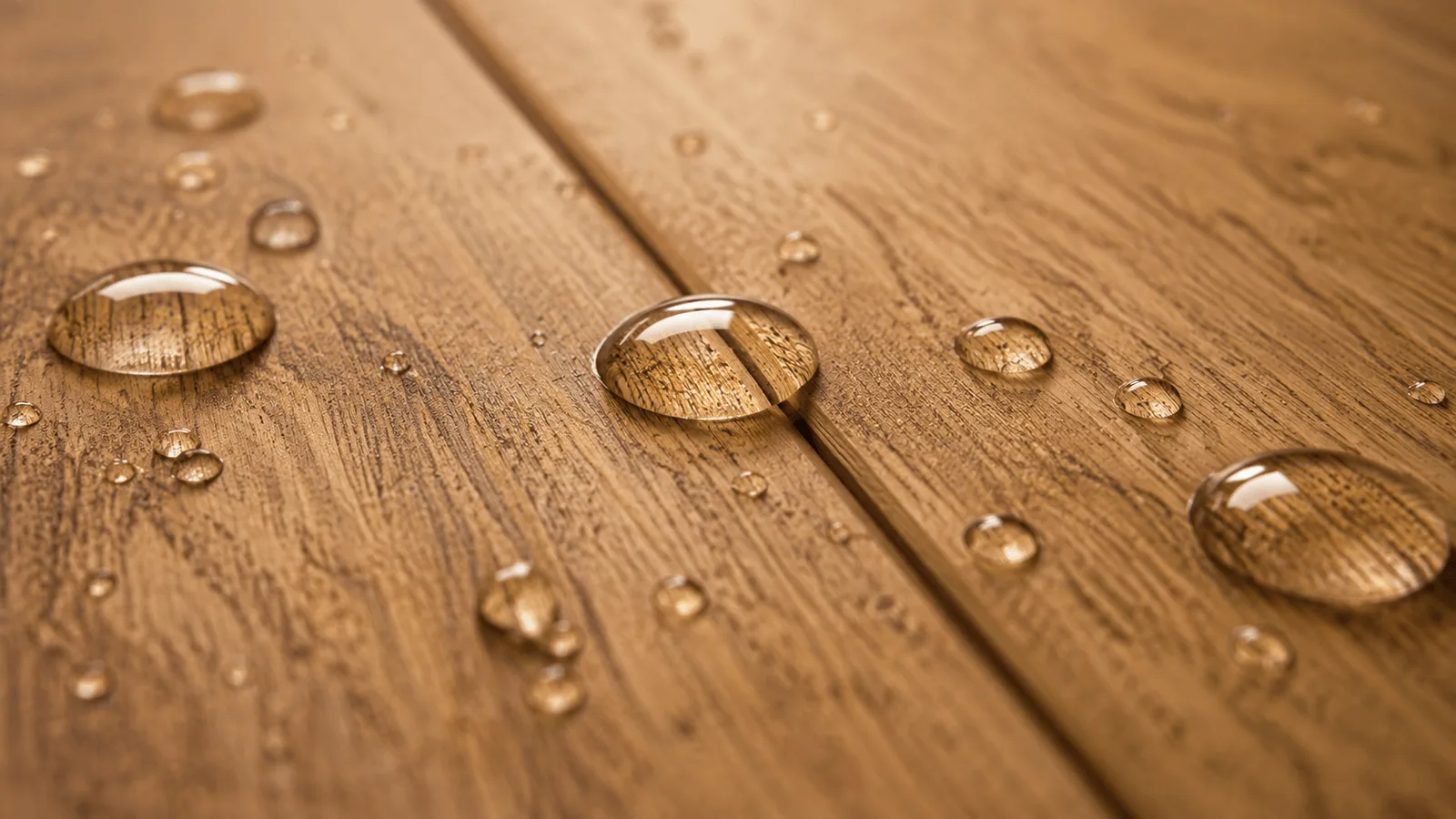
Waterproof means water cannot get into the material. Water resistant means water is held off the surface for a while, usually a few hours, and then it gets in. That is the entire difference, and it is worth about one ruined floor.
Both words sit on showroom tags in the same font, in the same place, next to the same photo of a puddle. One of them is a material property. The other is a time limit that nobody prints.
What each word actually promises
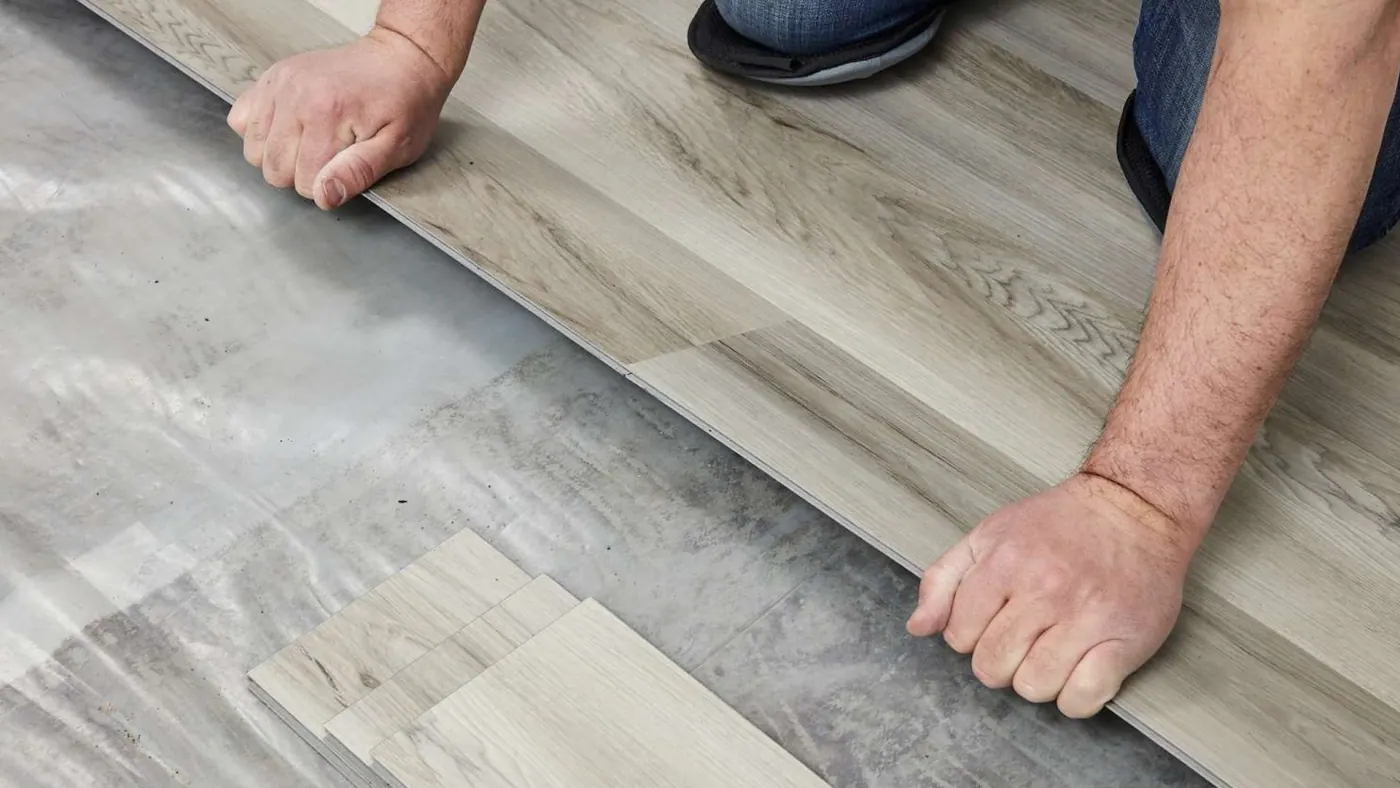
Waterproof describes the plank. The core cannot absorb water because it is not made of anything that absorbs water. A luxury vinyl plank with a stone polymer core can sit in a puddle for a week and come out unchanged. Porcelain tile absorbs under half a percent of its own weight in water.
Water resistant describes the surface treatment. The top layer and often the edges are sealed, so liquid beads up rather than soaking in. That buys you time, and time is genuinely valuable, because most household water events are a spill that somebody notices and wipes up.
What it does not buy you is a margin for the water event you do not notice. The dishwasher that weeps at the back for three weeks. The toilet supply line that lets go while you are at work. The dog bowl that gets tipped on a Friday night in a room nobody enters until Sunday.
A water resistant laminate edge does its job well for a while. The bead sits on the surface rather than wicking into the seam, and if you wipe it up that afternoon nothing has happened at all. Leave the same bead there over a weekend and the seal is no longer the thing in charge.
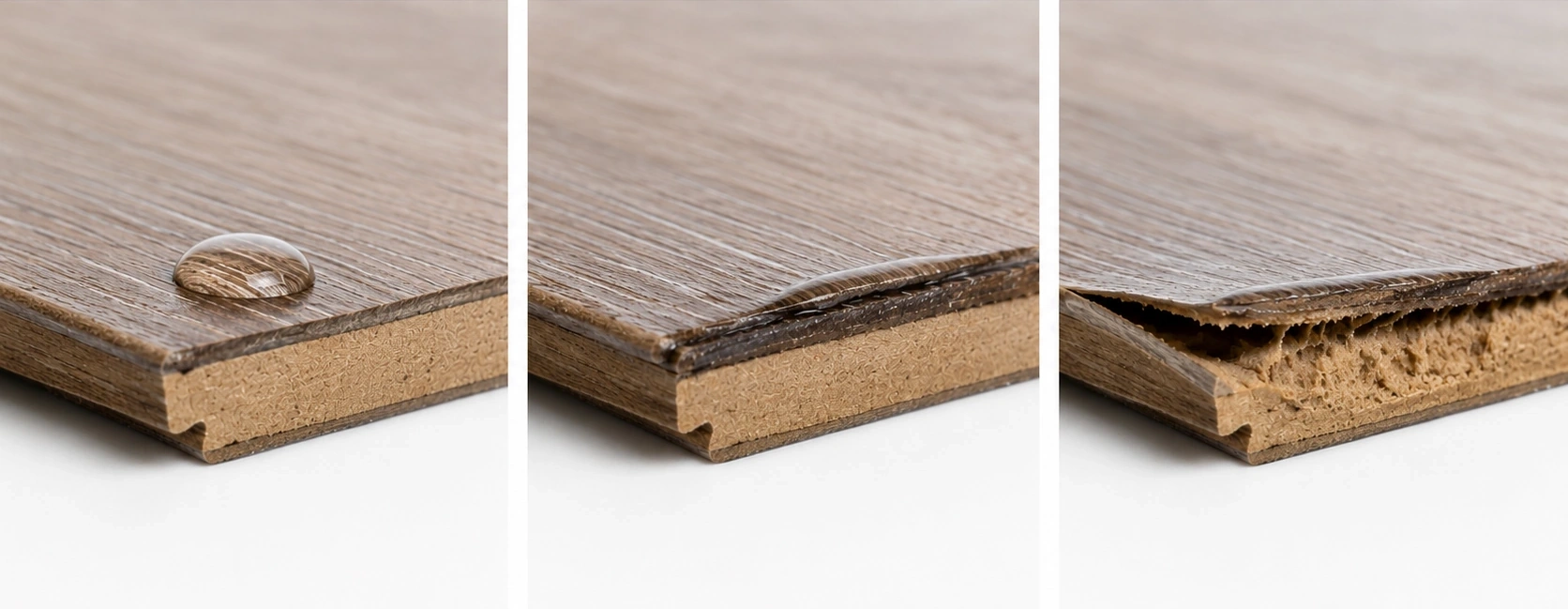
Nothing sands that out. The plank swells from the inside and the edge lifts permanently. Once one board goes, the boards locked to it usually have to come up too, which is why a small leak turns into replacing a whole room.
The loophole nobody explains at the counter
Read a water resistant warranty closely and you will usually find a number in it. Twenty four hours. Seventy two hours. Sometimes twelve.
That number is the actual product claim. “Water resistant” on the front of the box is the marketing summary of it. The warranty is also generally written to cover surface spills, not water that reaches the plank from underneath or through the locking joint.
This matters in an Oklahoma slab home. Moisture moves up through concrete. It is slow, it is invisible, and it does not care what the surface of your floor is rated for. That is a subfloor and underlayment problem, not a plank problem, and no amount of surface water resistance solves it.
Which rating each room actually needs
| Room | What we specify | Why |
|---|---|---|
| Bathroom | Tile over a membrane, or LVP | Standing water is routine, not accidental |
| Laundry room | Tile or LVP | A washer supply line is the most common flood we get called about |
| Mudroom and entry | Tile or LVP | Snowmelt, rain, and grit tracked in daily |
| Basement | LVP only | Below grade moisture comes up through the slab |
| Kitchen | LVP, or water resistant laminate if you accept the risk | Spills get wiped up; appliances occasionally do not cooperate |
| Bedrooms | Standard laminate is fine | Paying for waterproof here buys nothing |
| Hallways and office | Standard laminate is fine | Same |
| Living room | Either, depending on pets and traffic | Scratch resistance usually matters more than water here |
The pattern worth taking from that table is that waterproof everywhere is usually a waste of money. Bedrooms do not flood. If a salesperson is pushing the highest rated product into every room of the house, they are selling from a price list rather than walking your floor plan.
Waterproof plank does not equal waterproof floor
This is the distinction that catches even careful buyers.
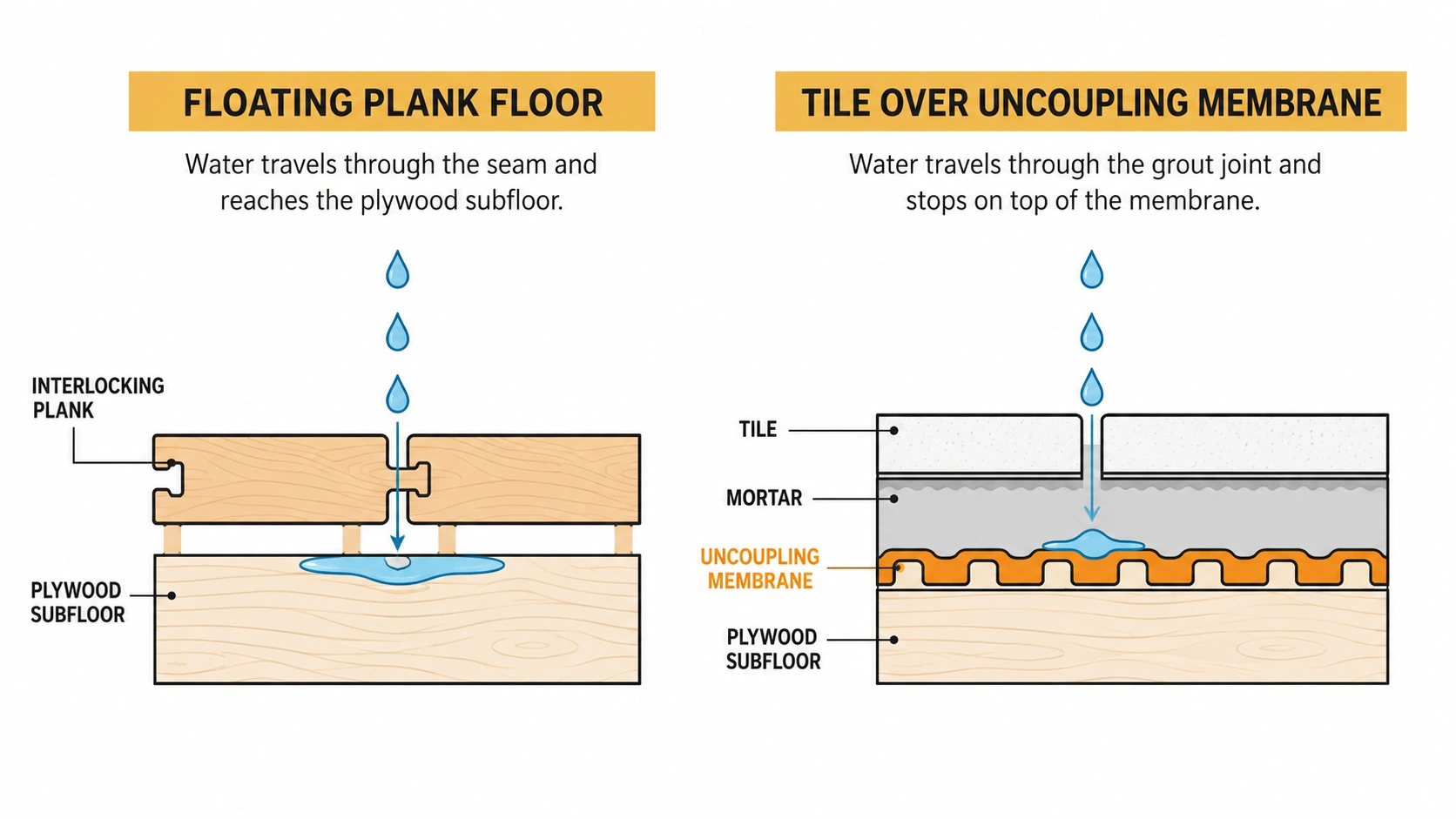
Luxury vinyl plank is a waterproof material. Laid as a floating floor, the seams are tight but they are not sealed. Water on the surface will find those seams eventually and end up on the subfloor beneath, where it can sit against plywood or a slab with nowhere to evaporate.
The plank is fine. The subfloor might not be.
A tile floor set over an uncoupling membrane with grouted joints is waterproof as an assembly. The membrane manages moisture and movement across the whole floor, not just at the surface of each piece. That is why a full bathroom still gets tile from us whenever the budget reaches.
Four of those five layers disappear the moment the job is finished, which is precisely why they are the first lines a cheap bid deletes. You can see the full build up on our tile flooring installation page.
The questions worth asking in the showroom
- Is that waterproof or water resistant? Make them say the word.
- How many hours does the warranty actually cover? The number will be in the document even when it is not on the tag.
- Does the warranty cover water from underneath, or surface spills only? Almost always surface only.
- What is the core made of? Plastic core means waterproof. Fiberboard core means water resistant, whatever the front of the box says.
- What underlayment does this need over a slab? If the answer is “none needed” for a below grade or slab install, ask again.
What we tell Tulsa homeowners
We install laminate happily and often, and we say plainly on our laminate flooring page that we will not put it in a bathroom, laundry room, or basement at any AC rating. That costs us the easier sale sometimes. It also means we have never had to go back and tell somebody their eight month old floor is finished because of a leak the product was never built to survive.
The right way to spend this budget is almost always mixed: waterproof where water lives, water resistant or standard where it does not, and a clean transition between them.
Walk us through your floor plan and we will tell you which rooms need which, in writing, before anybody talks about material. Request a free in home estimate and we will check the subfloor and the moisture while we are there.
Related reading: LVP vs Laminate: Which Holds Up Better in an Oklahoma Home?