- Cost
- Buying Advice
Carpet Removal Before New Flooring: Cost, Who Does It, and What Is Underneath
Pulling carpet is the easy part. What you find under it decides how smoothly the new floor goes in.

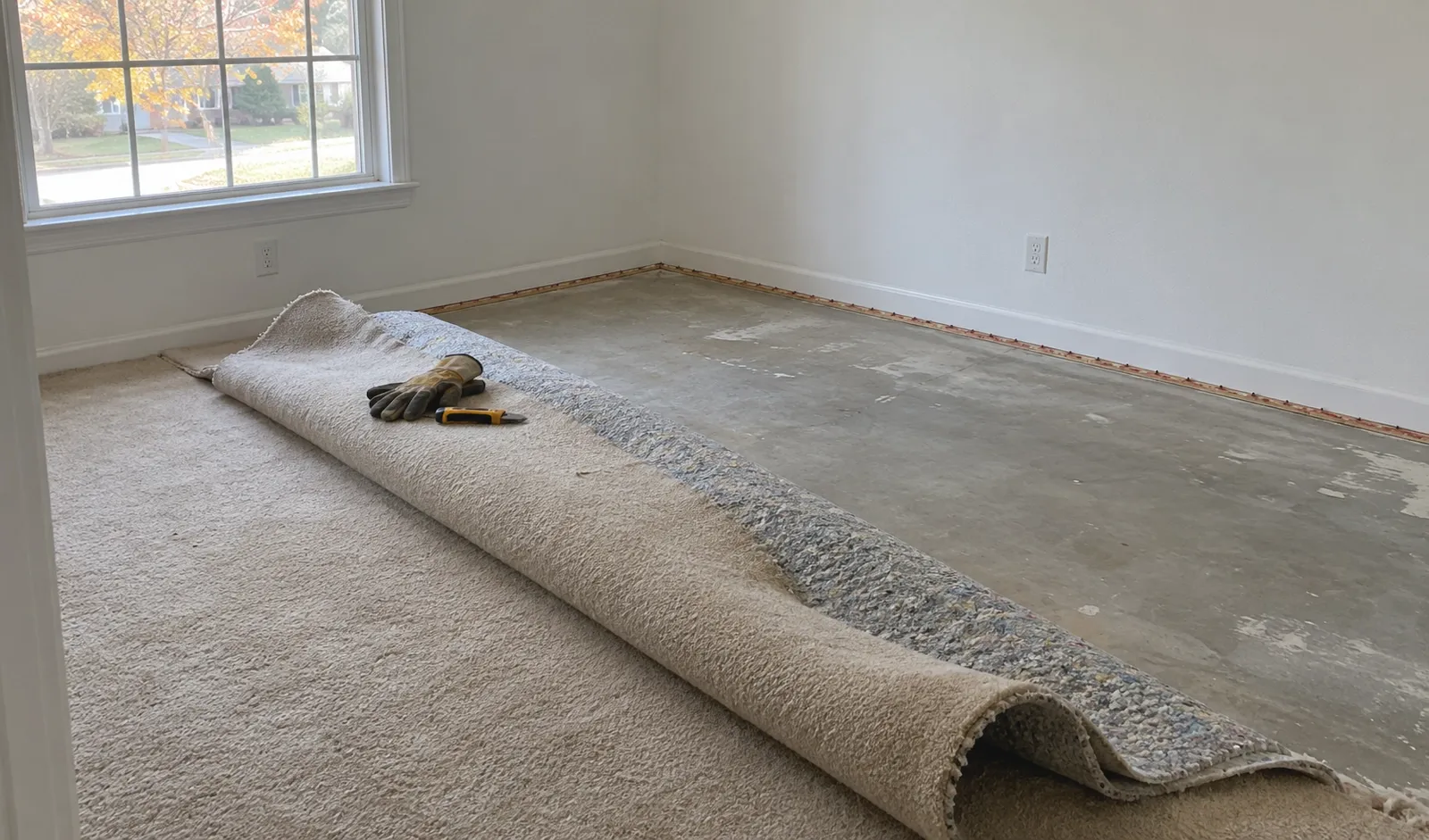
We charge $1 per square foot to tear out carpet. On a 500 square foot area that is $500, plus a separate $50 to $150 to haul it and the other waste away. You can also pull it up yourself and save that, which is a perfectly reasonable thing to do.
The more useful question is what comes after. Carpet hides the floor under it for years, and what you find when it comes up decides how smoothly the new floor goes in.
What carpet removal actually involves
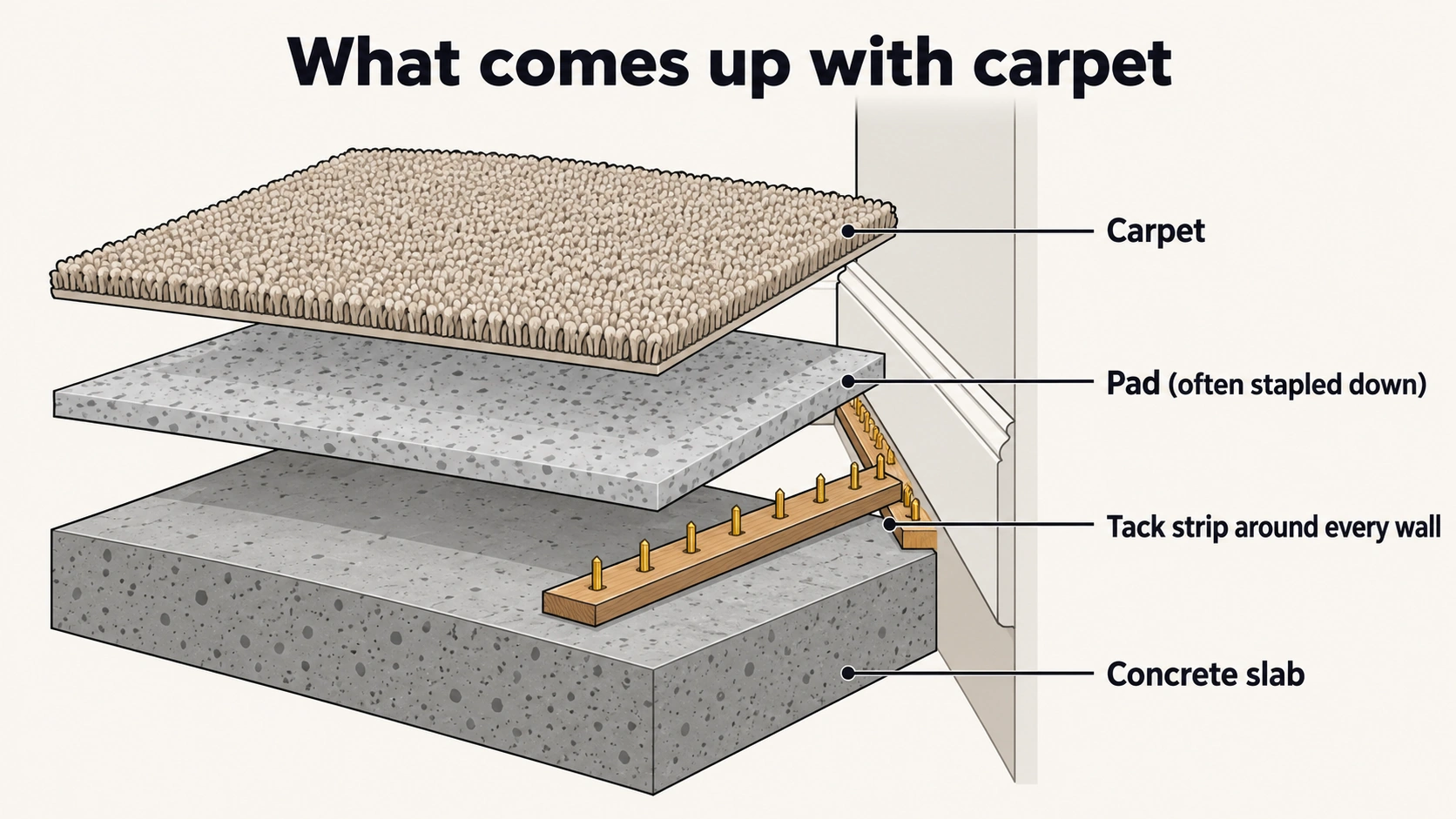
Taking out carpet is three layers, not one.
The carpet itself, cut into strips so it can be rolled and carried out.
The pad underneath, which on a wood subfloor is held down with a lot of staples.
The tack strip, the thin wooden strips with upward pointing pins nailed or glued around the edge of every room. That is what holds a carpet tight, and it has to come up before a hard floor can go down, along with every staple left behind by the pad.
None of it is complicated. It is dusty, it is sharp, and on a whole house it is a lot of material to get out the door.
What it costs, line by line
These are our real prices, from the same sheet that runs the cost calculator on our luxury vinyl plank page:
| Item | Price |
|---|---|
| Carpet tear-out | $1 per sq ft |
| Waste removal | $50 to $150 per job |
| Furniture moving | $100 per room |
| Stairs, if they are getting new flooring too | $75 per step |
| Anything under the carpet that needs work | Quoted at the estimate |
So replacing 500 square feet of carpet across three rooms, the removal side of the job looks like this:
| Line | Cost |
|---|---|
| Tear out 500 sq ft of carpet | $500 |
| Move furniture, 3 rooms | $300 |
| Waste removal | $50 to $150 |
| Removal side total | $850 to $950 |
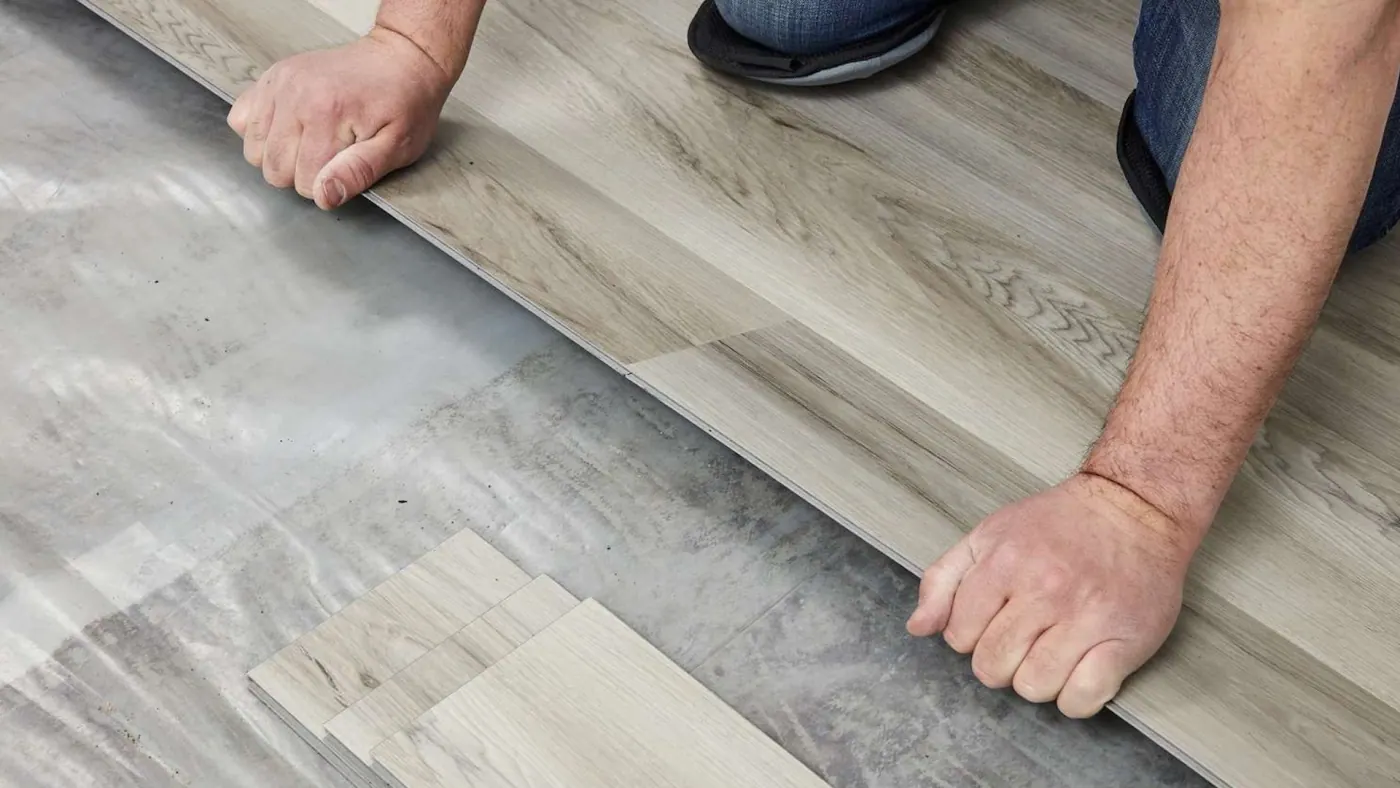
The new floor is priced separately. Luxury vinyl plank and laminate are both $4.50 to $6.50 per square foot installed with us, labor and material together, and the full breakdown is on the LVP and laminate pages.
What is usually under carpet in a Tulsa home
This depends mostly on how the house was built.
Concrete slab. Most single story homes across the Tulsa metro sit on a slab, so when the carpet comes up you are looking at bare concrete, with nail or glue marks around the edges where the tack strip was. A slab is a good base for luxury vinyl plank and laminate, as long as it is flat enough and dry enough.
Plywood or OSB subfloor. Second floors, and homes built over a crawlspace, have a wood subfloor. Expect a lot of staples from the pad, and look for soft spots or squeaks, which are much easier to fix while the floor is open.
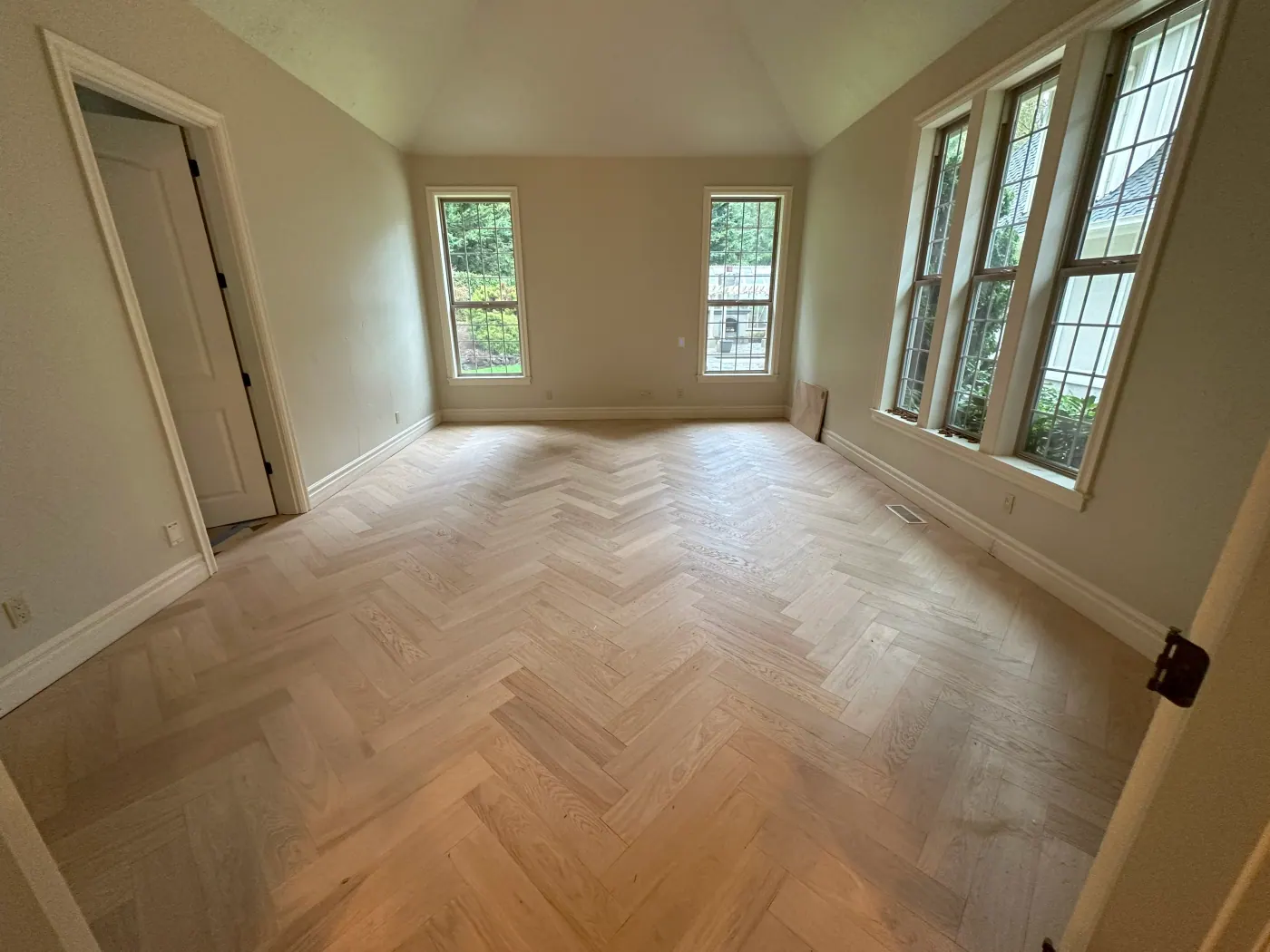
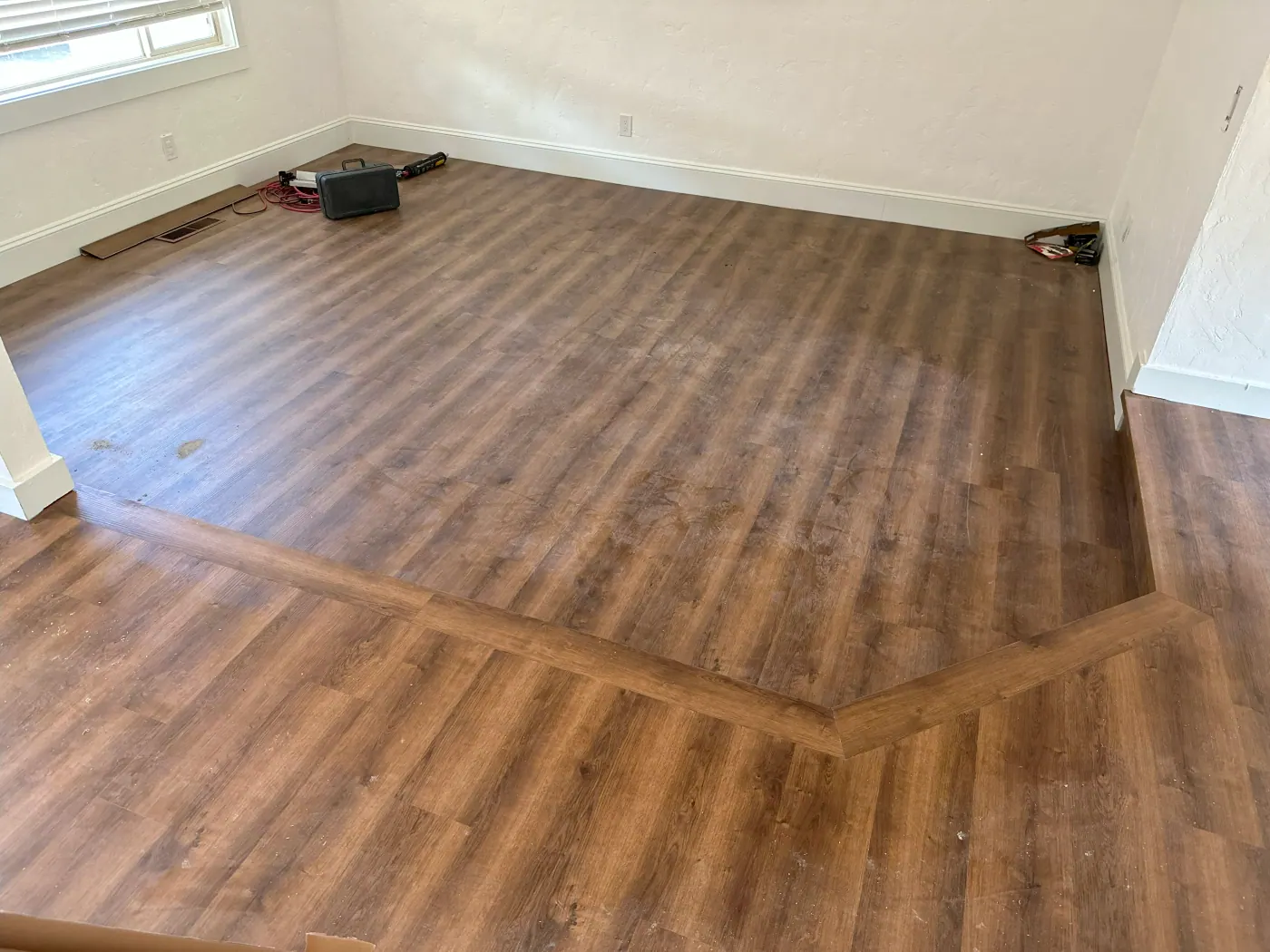
Old hardwood. Some older homes have original hardwood under the carpet. Sometimes it is worth keeping. Often it has been damaged by tack strip nails, staples and stains around the edges, which is usually why it was carpeted in the first place.
Older flooring. Occasionally there is old sheet vinyl or tile under the carpet, which changes what needs to come up.
The things that have to be dealt with before the new floor
This is where a carpet replacement either goes smoothly or does not, and it is why we look at the floor before quoting rather than after.
Tack strip and staples. Every one comes out. A single staple left under a floating floor will eventually show through as a bump.
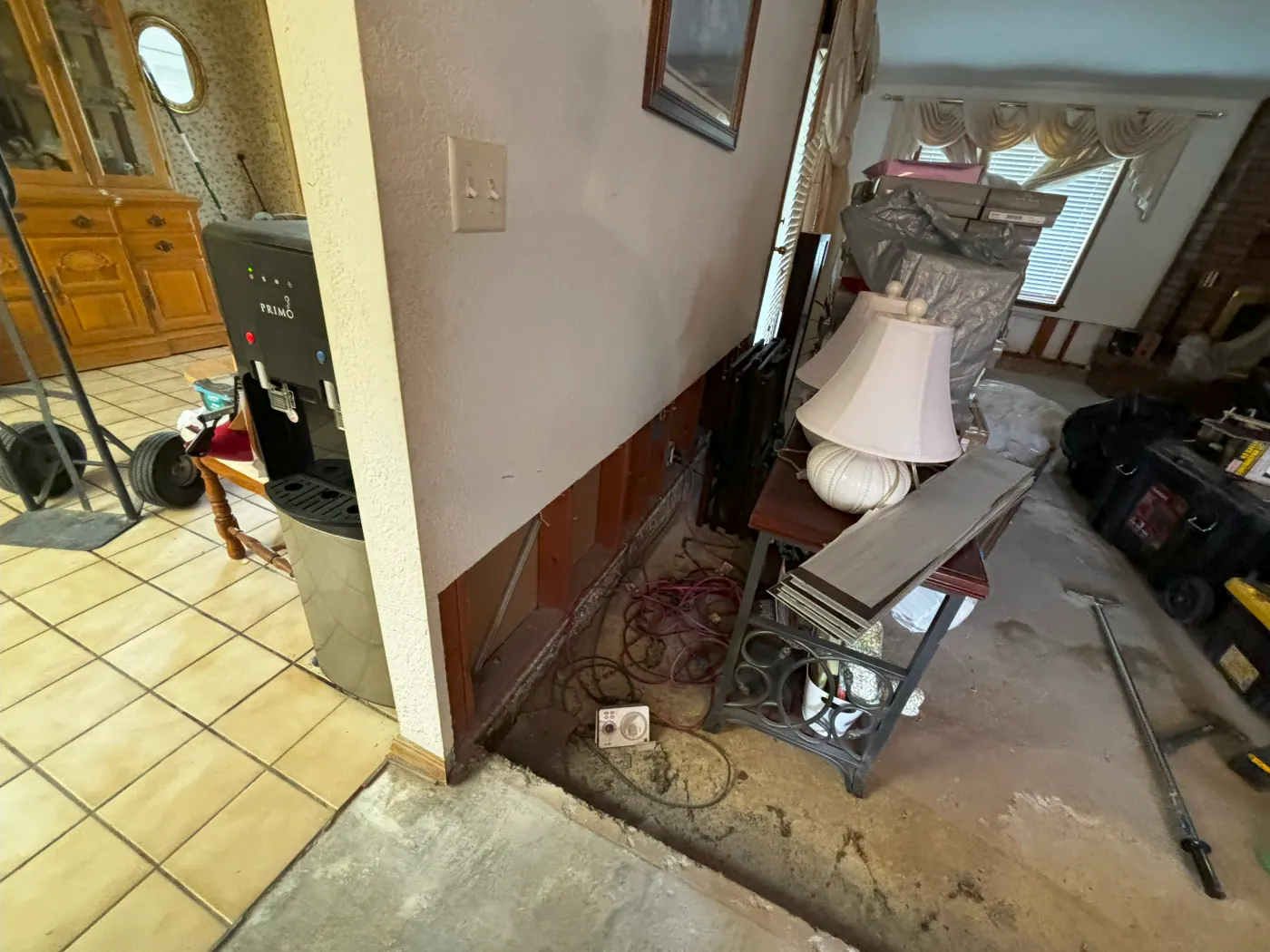
Pet stains and odor. Years of pet accidents soak through the pad and into the slab or subfloor. A waterproof floor laid on top does not fix the smell, it just covers it. The affected areas need to be cleaned and sealed first.
Cracks and high spots in the slab. Most hairline cracks are harmless. A floor that dips or humps is not, because a floating floor spanning a dip flexes with every step until the joints work loose. That is the clicking and separating covered in our guide to LVP flooring problems.
Moisture. A slab can look dry and still be releasing moisture. We take a reading at the estimate, because that decides the underlayment and whether the slab is ready at all.
Glued down carpet. Less common in homes, but when carpet is glued straight to concrete, the glue has to come off before a new floor goes on.
All of that is subfloor prep. We quote it after seeing it, never as a guess, and our guide to subfloor prep explains what it involves.
Should you pull the carpet yourself?
You can, and on a big area it saves real money. A few things worth knowing first:
Wear gloves and eye protection. Tack strip pins and staples are sharp, and old carpet is dusty.
Plan the disposal. Rolled carpet and pad are heavy and bulky.
Stop at removal. Pull the carpet and pad, and leave the rest. Do not try to patch, level or seal anything you find. Leave that for the estimate, so it is measured and priced properly rather than half done.
Tell us at the estimate. If you are removing it yourself, say so, and that line comes off the quote.
The short version
Cost: $1 per square foot to tear out carpet, plus $50 to $150 to haul away the waste.
Who does it: us, as its own line on the quote, or you, to save that cost.
What is underneath: usually a concrete slab on single story homes, a wood subfloor upstairs or over a crawlspace, and occasionally old hardwood.
What matters most: tack strip, staples, stains, flatness and moisture, all dealt with before the new floor goes down.
If you want a straight read on what is under your carpet and what the whole job will cost, we will come look. We measure the rooms, check the floor for flatness and moisture, and give you a written line item quote. Call (918) 219-4848 or request a free estimate. No job is too small, and one room is fine.