- Process
- Buying Advice
What Is Actually Included in a Flooring Quote
Two quotes for the same house can differ by thousands and both be honest. The gap is almost always in the lines nobody itemizes.

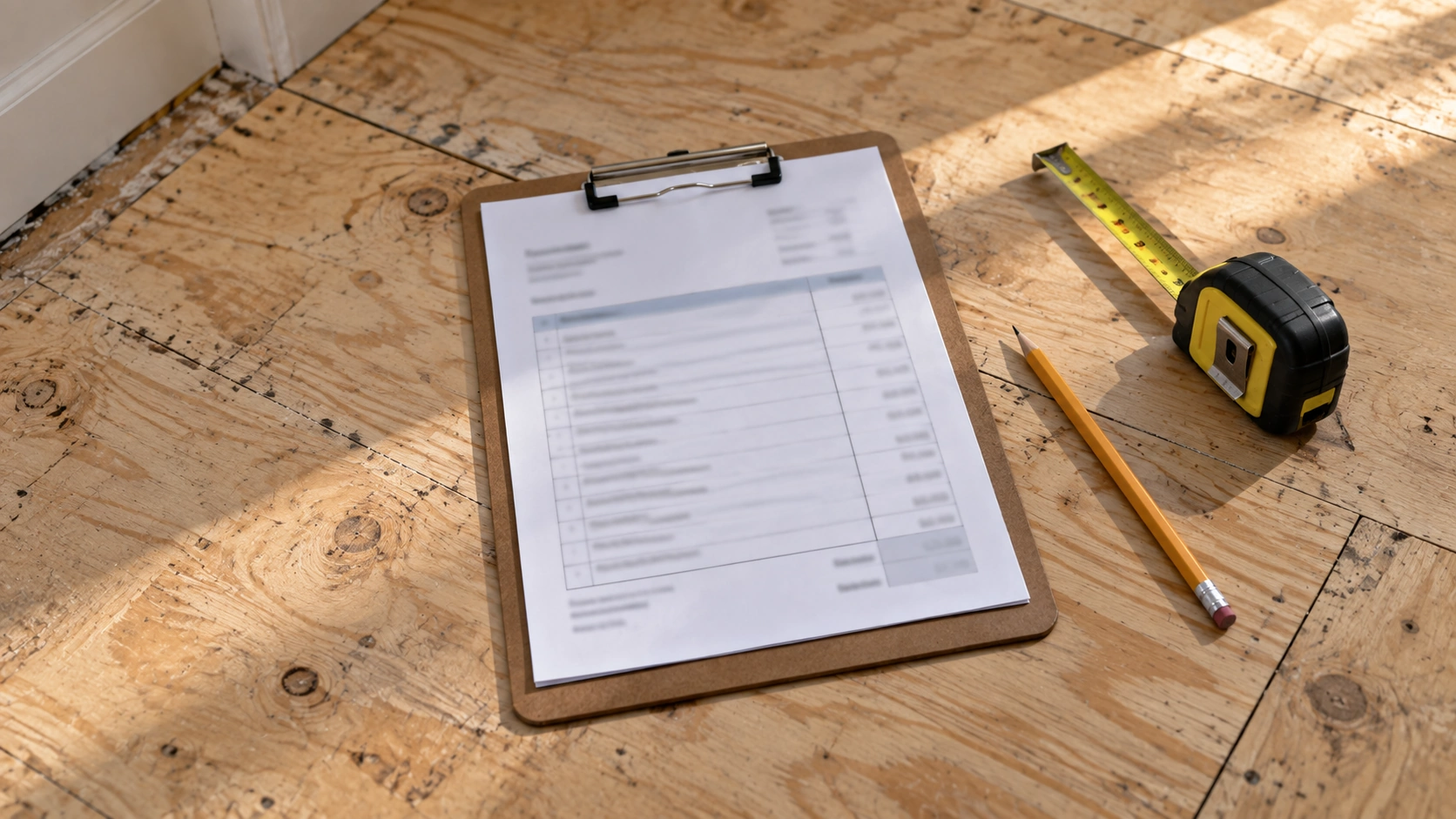
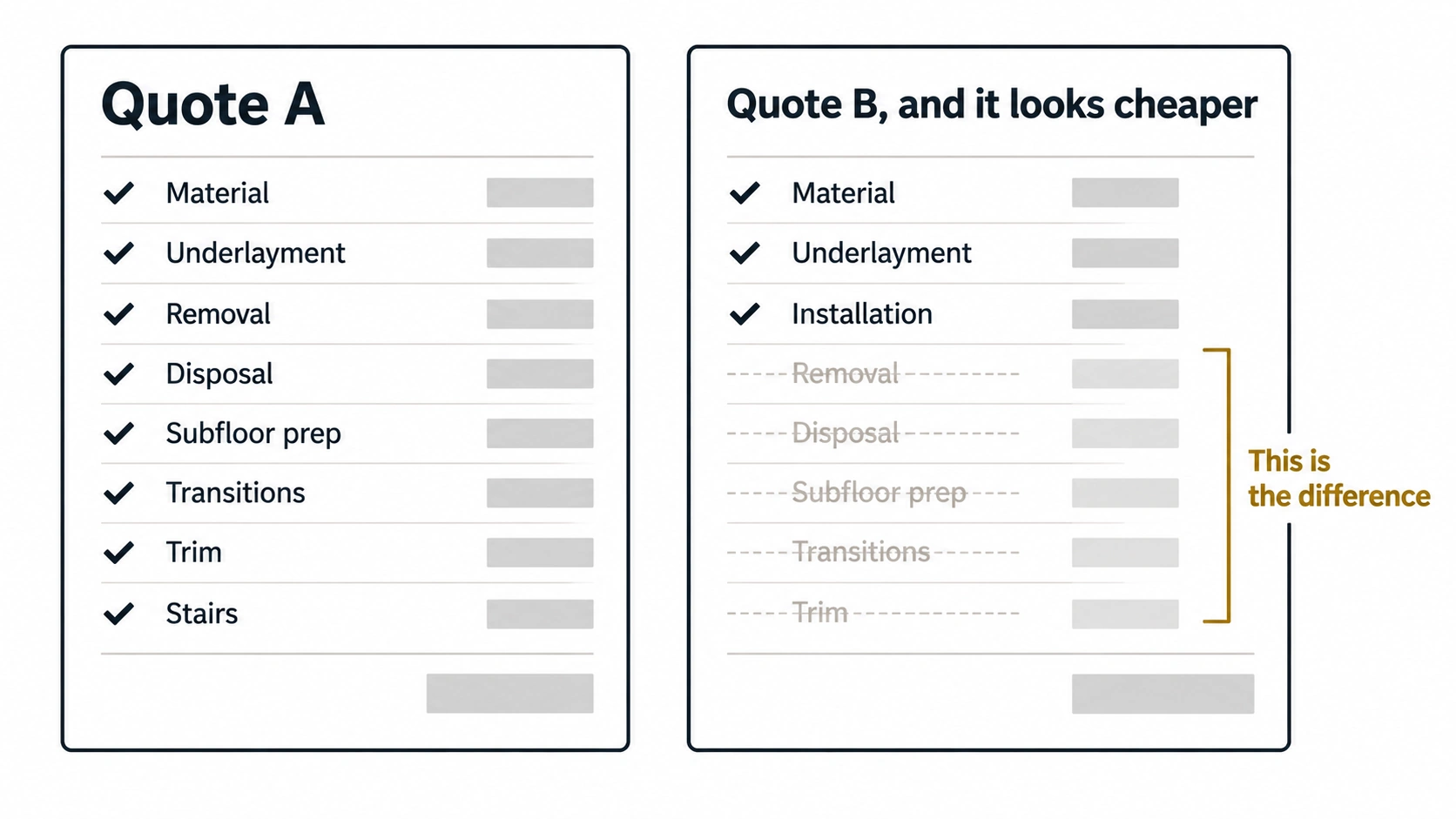
Two flooring quotes for the same house can differ by thousands of dollars and both be completely honest.
The difference is almost never the material. It is what each quote assumes somebody else is doing.
Here is every line that belongs on a flooring quote, what a low bid typically leaves out, and the questions that surface the gap before you sign rather than after.
The lines that should be on it
| Line item | What it covers | Commonly left off? |
|---|---|---|
| Material | The flooring itself, plus waste allowance for cuts and pattern | No |
| Underlayment or membrane | Moisture barrier, uncoupling membrane, acoustic pad | Sometimes |
| Removal of existing floor | Pulling up what is there now | Often |
| Disposal and haul away | Getting it off your property | Often |
| Subfloor prep | Flattening, refastening, moisture remediation | Most common omission |
| Installation labor | The install itself | No |
| Transitions | Thresholds where materials or rooms meet | Often |
| Trim | Baseboard pull and reset, shoe moulding, or new trim | Often |
| Stairs | Treads, risers, nosings, landings | Sometimes priced vaguely |
| Furniture moving | Who moves what, and what you handle | Rarely stated |
| Timeline | Realistic working days, not a best case | Rarely stated |
A quote that gives you one number for the whole job is not necessarily dishonest. It is just impossible to compare against anything, which conveniently means you cannot tell what is missing.
The five that actually explain a price gap
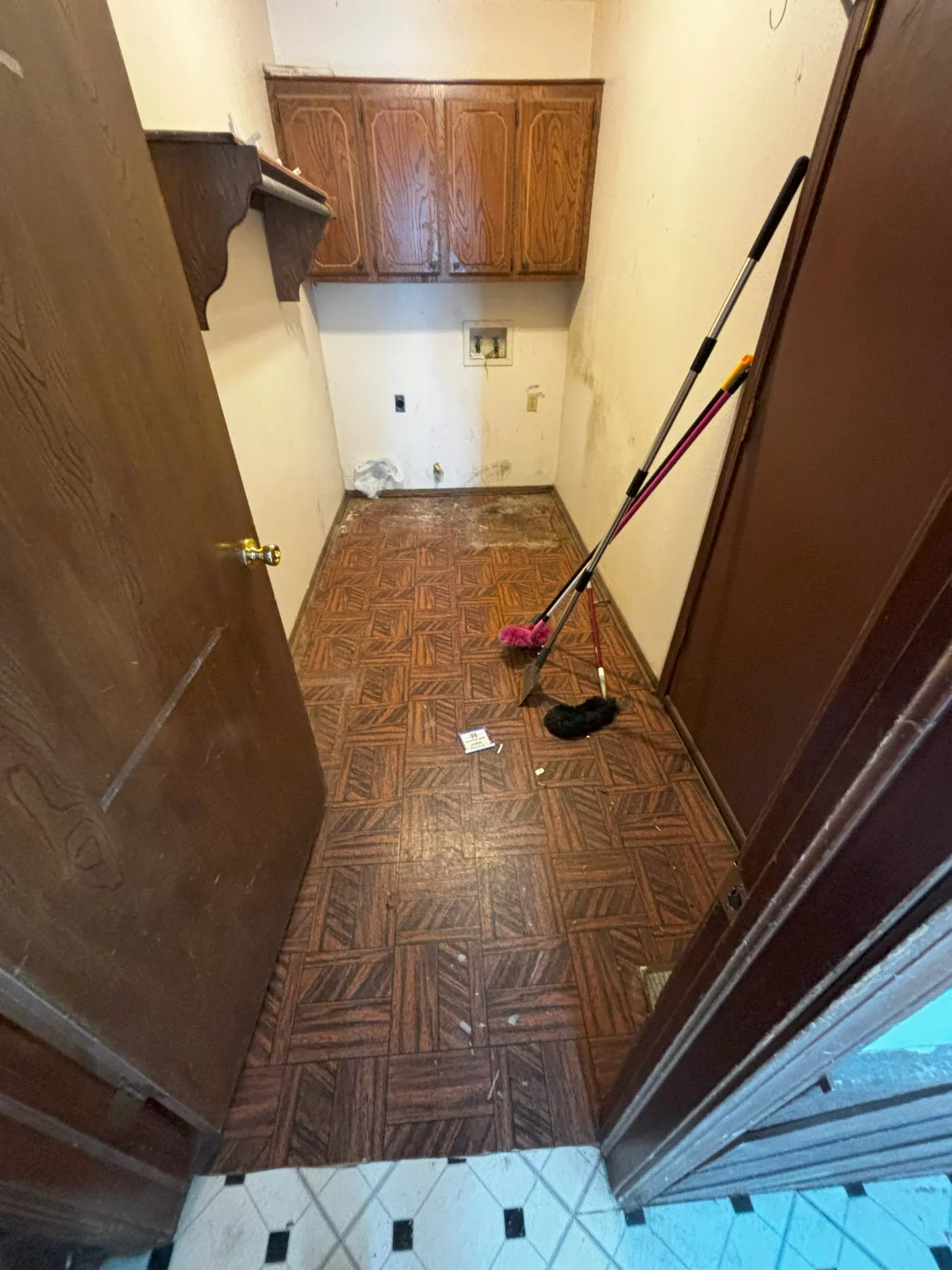
Subfloor prep. This is the big one. A slab that needs self leveler is real material and real labor. A plank deck that squeaks needs refastening while it is exposed, which takes minutes at that stage and is impractical afterward. A crawlspace with a moisture problem needs addressing before anything goes on top. None of this is visible when someone walks the room with the old carpet still down, which is exactly why it gets left out. We check flatness and take moisture readings at the estimate for this reason, and our subfloor prep guide covers what we are looking for.
Removal and disposal. Carpet comes up fast. Tile set in mortar does not. Two or three layers of old flooring stacked on each other take a day nobody budgeted. And the material has to physically leave your property, which is a dumpster or a trailer and a landfill fee.
Transitions. Every doorway and every material change needs a threshold. In an open plan there might be three. In a 1970s ranch with a doorway into every room there might be fourteen. They are small individually and they add up.
Trim. Three legitimate approaches, three different prices, and they look different from each other. Pull and reinstall the existing baseboard gives the cleanest result and risks breaking old trim. Leaving the baseboard and adding shoe moulding is faster and cheaper and reads slightly differently. Replacing the trim entirely is the most expensive and the best looking. A quote that does not say which one it assumes has left the decision, and the cost, unresolved.
Stairs. Disproportionately slow work. If your job has a staircase and the quote does not price it separately, ask.
What we do not publish, and why
We do not put per square foot pricing on this website, and it is worth explaining rather than leaving it looking evasive.
The honest reason is that the number would be wrong for most of the houses we quote. Two homes on the same street with identical square footage can land far apart because one has a flat slab and the other needs leveling, or because one is open plan and the other has fourteen transitions and a staircase.
A published rate would either be low enough to be misleading or high enough to scare off jobs that would actually come in under it. So we measure, check what is underneath, and put it in writing broken out by line. What we can tell you before we visit is what moves the number, which is everything in the table above.
The questions that surface the gaps
If you are comparing bids, these five questions do more than anything else. Ask every bidder the same ones.
“What does your quote assume about the subfloor?” The answer you want involves having looked at it. If nobody has checked flatness or taken a moisture reading, the prep line is a guess.
“Is removal and disposal included, and is it itemized?” Both halves matter. Included but not itemized means you cannot see what it cost.
“What happens to the baseboards?” Pull and reset, shoe moulding, or replace. This one question tells you a lot about how carefully the quote was built.
“What is not included?” The most useful question on the list, and the one people never ask. A good contractor has a ready answer.
“What happens if you find something once the old floor is up?” You want to hear that you get told that day, with the cost attached, before the work happens. Not a change order at the end.
What our quotes look like
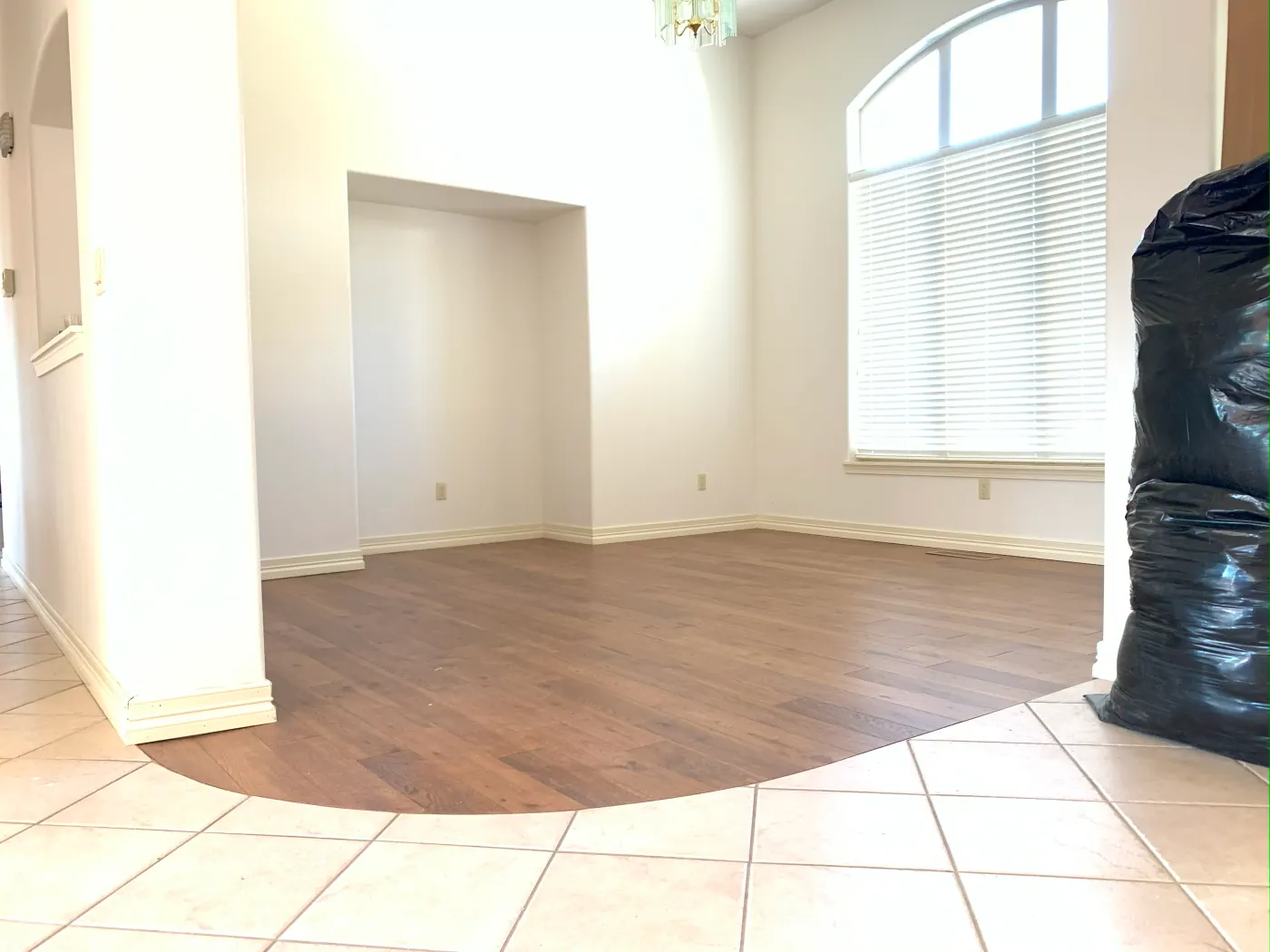
Written, itemized, and given to you after we have measured the rooms and checked what is under the existing floor.
Material, prep, removal, disposal, transitions, trim and stairs are separate lines. That is deliberate: it means you can compare our number honestly against somebody else’s, and it means if you want to change the scope you can see exactly which line moves. Plenty of people use a line item quote to decide to do the bedrooms this year and the living room next year, and that is a perfectly sensible way to work.
You also get a realistic timeline rather than an optimistic one, which we get into in how long flooring installation actually takes.
Our own crew does the work. That matters here because the person who wrote your quote is the person accountable for it, rather than a salesperson who hands the job to whichever subcontractor is free that week.
The one thing worth more than a cheaper bid
If two quotes are close and you cannot separate them, pick the one that has been specific about the subfloor.
A better material on an unprepared substrate still fails at the joints, and it fails in year two or three when nobody is thinking about the install any more. A mid grade floor on a properly prepared subfloor outlasts it comfortably. That is the trade we would make with our own money, and it is why we quote the prep honestly even when it makes our number look higher than the one next to it.
The short version
A single lump sum is not a quote you can evaluate. Ask for line items.
The five lines that explain most price gaps: subfloor prep, removal and disposal, transitions, trim, stairs.
Ask what is not included. It is the fastest question and nobody asks it.
A cheaper bid usually is not cheaper. It is a smaller scope, and the difference arrives later.
If you want a written line item quote for your house, we will come measure it, check the subfloor for flatness and moisture, and tell you what the job actually involves. Call (918) 219-4848 or request a free estimate. No obligation, and if we think you should spend less than you were planning to, we will say so. You can see the materials we install on our flooring services pages and read what other homeowners have said on our testimonials page.