- Tile
- Comparisons
Porcelain vs Ceramic Tile: What Actually Matters on a Floor
Both are fired clay. The difference is density, and density only matters in some rooms.

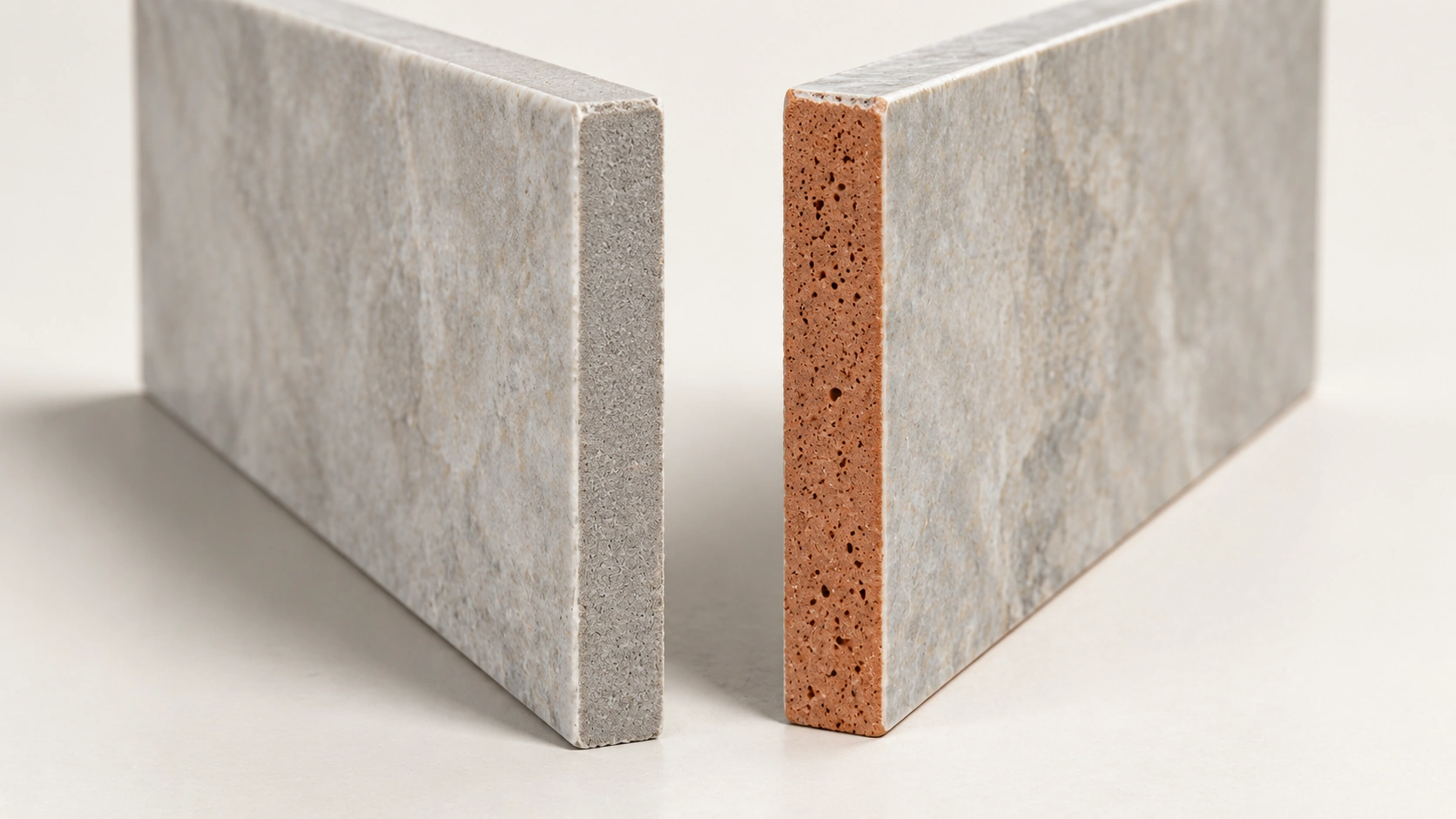
Porcelain and ceramic are both fired clay with a glazed surface. The difference between them is density, and density only matters in some rooms.
Porcelain is denser, absorbs almost no water, and resists chipping better. Ceramic costs less, cuts easier, and is perfectly adequate in a room that stays dry.
Most advice on this stops at “porcelain is better,” which is true and not very useful when you are trying to floor a whole house. The more helpful question is where the difference is worth paying for.
What actually separates them
Porcelain is made from a finer clay, pressed harder, and fired hotter and longer. That produces a tighter body with very little air in it. The industry definition is a water absorption rate of 0.5 percent or less by weight, and that single number drives almost every practical difference.
Ceramic is fired less aggressively. The body stays more porous and softer, which makes it lighter, cheaper and much easier to cut cleanly.
Everything else people say about the two follows from that.
| Porcelain | Ceramic | |
|---|---|---|
| Water absorption | 0.5 percent or less | Higher, varies by product |
| Body under the glaze | Dense, often color through | Softer, usually red or white |
| Chip visibility | Lower, especially through body | Higher, chip contrasts with glaze |
| Traffic tolerance | Better in entries and kitchens | Fine in bedrooms and low traffic rooms |
| Cutting on site | Slower, needs the right blade | Faster, cleaner |
| Cost of material | Higher | Lower |
| Outdoor or unheated spaces | Suitable if rated | Not suitable, absorbed water freezes |
| Large format availability | Wider range | More limited |
Where the difference genuinely matters
Bathrooms. Standing water arrives daily, not occasionally. Porcelain’s near zero absorption is doing real work here, and it is the one room where we push hard. It is also the room where the layer under the tile matters more than the tile itself, which we covered in tile vs luxury vinyl plank in a bathroom.
Entries and mud rooms. Grit tracked in from an Oklahoma driveway is abrasive, and wet boots are a weekly event. Porcelain takes it better.
Kitchens. Not for the water, for the impact. A cast iron pan off the counter is the most common source of tile damage we see, and a dense porcelain body survives it more often than ceramic does.
Laundry rooms. Appliance feet, occasional standing water, and a floor nobody looks at until something goes wrong.
Anywhere unheated. A garage, a sunroom that is not conditioned, a covered porch. Ceramic absorbs water, and absorbed water freezes and expands. Oklahoma gets enough hard freezes for this to matter. Use a rated porcelain or do not tile it.
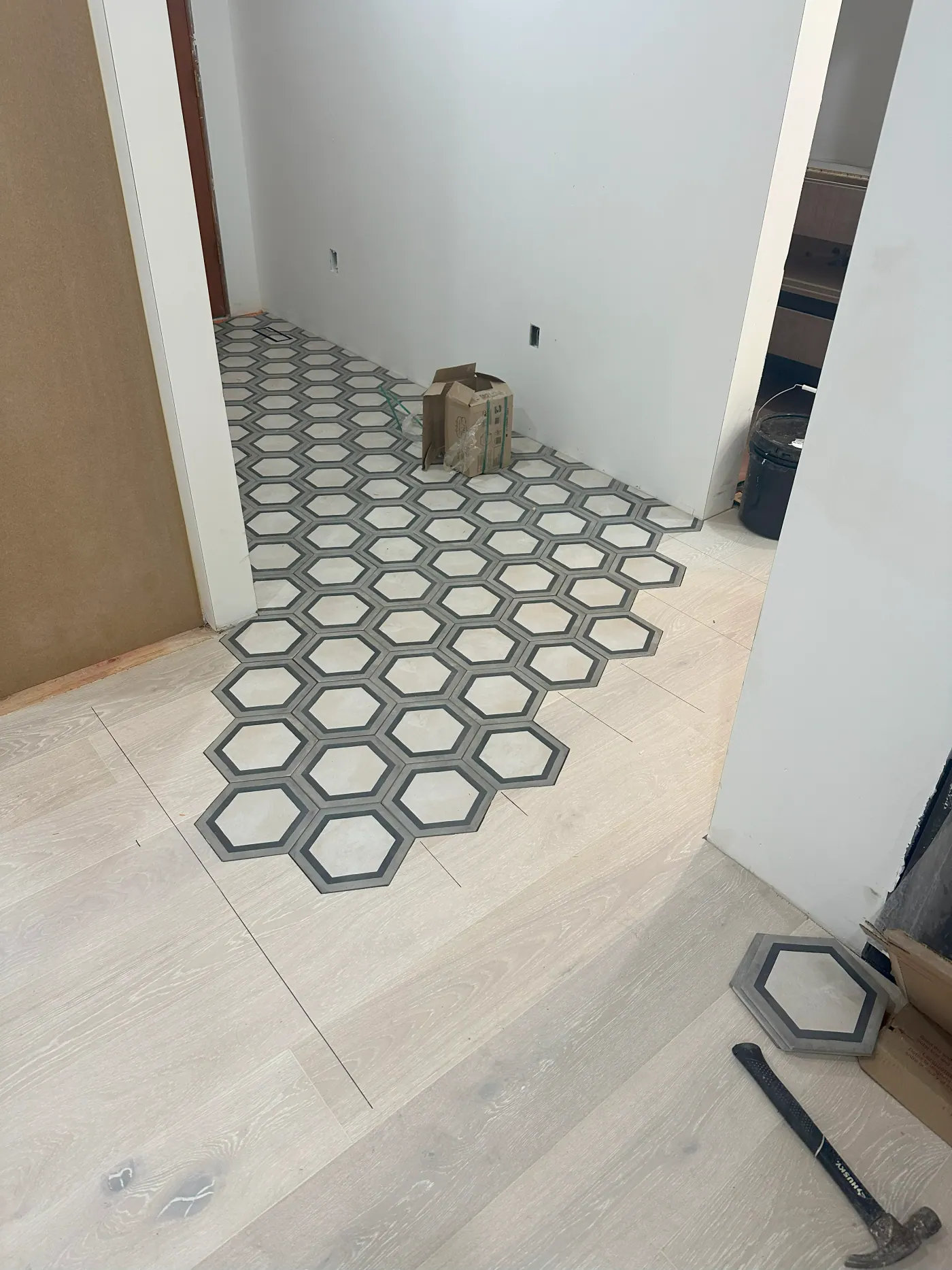
Where ceramic is genuinely fine
This is the part that costs us margin, so it is worth saying clearly.
A bedroom or a formal dining room. Low traffic, no water, no impact risk. Ceramic will look identical and last as long in that room. Paying the porcelain premium there buys you nothing you will ever notice.
A wall, anywhere. Walls take no traffic and no impact. Ceramic is lighter, which actually helps on a wall, and easier to cut around fixtures.
A rental or a flip where the budget is fixed. If the choice is ceramic now or porcelain in three years, take the ceramic. It is a real floor, not a compromise, provided it is in the right rooms.
Anywhere the money is better spent on prep. This is the honest one. A ceramic floor on a properly flattened substrate with the right membrane will outlast a porcelain floor laid over an unprepared slab. If your budget forces a choice between upgrading the tile and doing the prep properly, do the prep. Every time.
The sensible pattern in most houses is a mix: porcelain where the water and traffic are, ceramic in the dry bedrooms, and the savings put into the substrate.
The spec nobody reads
Two numbers on the box are worth more than the porcelain or ceramic label.
The PEI rating describes surface wear resistance on a scale from 1 to 5. For a residential floor you want 3 or higher. For an entry or a kitchen, 4 is comfortable. A tile rated PEI 1 or 2 is a wall tile, and it will look tired on a floor within a couple of years no matter what the body is made of.
The DCOF rating describes slip resistance when wet. This matters most in bathrooms and entries, and a matte or textured surface will always test better than a high gloss one. If a tile does not publish a DCOF figure, that itself tells you something about the product.
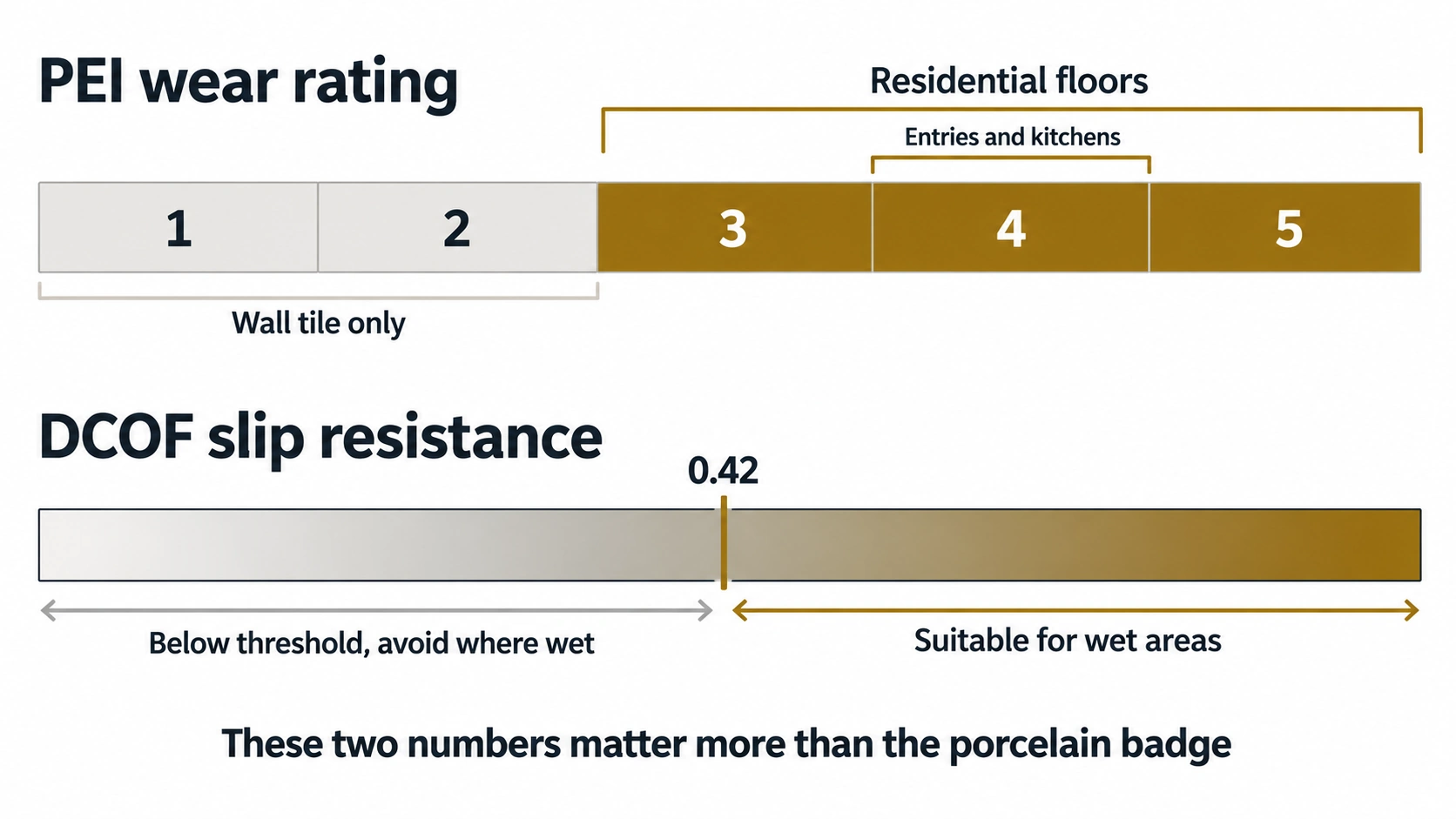
A PEI 4 ceramic is a better floor tile than a PEI 2 porcelain. The label on the front of the box is a poorer guide than the numbers on the back.
What changes at install
Porcelain needs a mortar rated for it. The dense body does not soak up moisture from the thinset the way porous ceramic does, so the bond forms differently. Using a basic mortar under porcelain is a real mistake and a common one.
Porcelain cuts slower. A dense body needs the right blade and a steadier hand, particularly on outside corners and around a toilet flange. Budget more time, not more people.
Both need the same flat substrate. This is the part that decides whether the floor lasts, and it does not care which tile you chose. Large format tile in particular is unforgiving of a wavy slab, because a long tile spans a dip and either sits proud at one edge or cracks later.
Both need the membrane where it is warranted. An uncoupling or waterproofing membrane handles movement and water, and it is invisible once the floor is finished. That makes it the first thing a cheap bid removes. When two tile quotes differ noticeably, this is usually where.
The Ceramic Tile Education Foundation publishes the installation standards this all sits on, and it is worth a look if you want to check what a quote should include.
The short version
Bathrooms, entries, kitchens, laundry, anywhere unheated: porcelain. The density is doing real work.
Bedrooms, formal rooms, walls, tight budgets: ceramic is genuinely fine and we will tell you so.
Check PEI 3 or higher for any floor, and DCOF for anything that gets wet. Those two numbers matter more than the porcelain badge.
If the budget forces a choice, spend it on the substrate, not on upgrading the tile. A well prepared ceramic floor beats a poorly prepared porcelain one, and it is not close.
If you want a straight recommendation for your rooms, we will come measure and tell you where the porcelain is worth it and where it is not. Call (918) 219-4848 or request a free estimate. You can see the tile work we do on our tile flooring installation page.