- Luxury Vinyl Plank
- Care
How to Clean and Maintain LVP Floors
Vinyl plank is easy to clean. It is also easy to clean in ways that slowly wear it out, and the floor cannot be refinished when that happens.

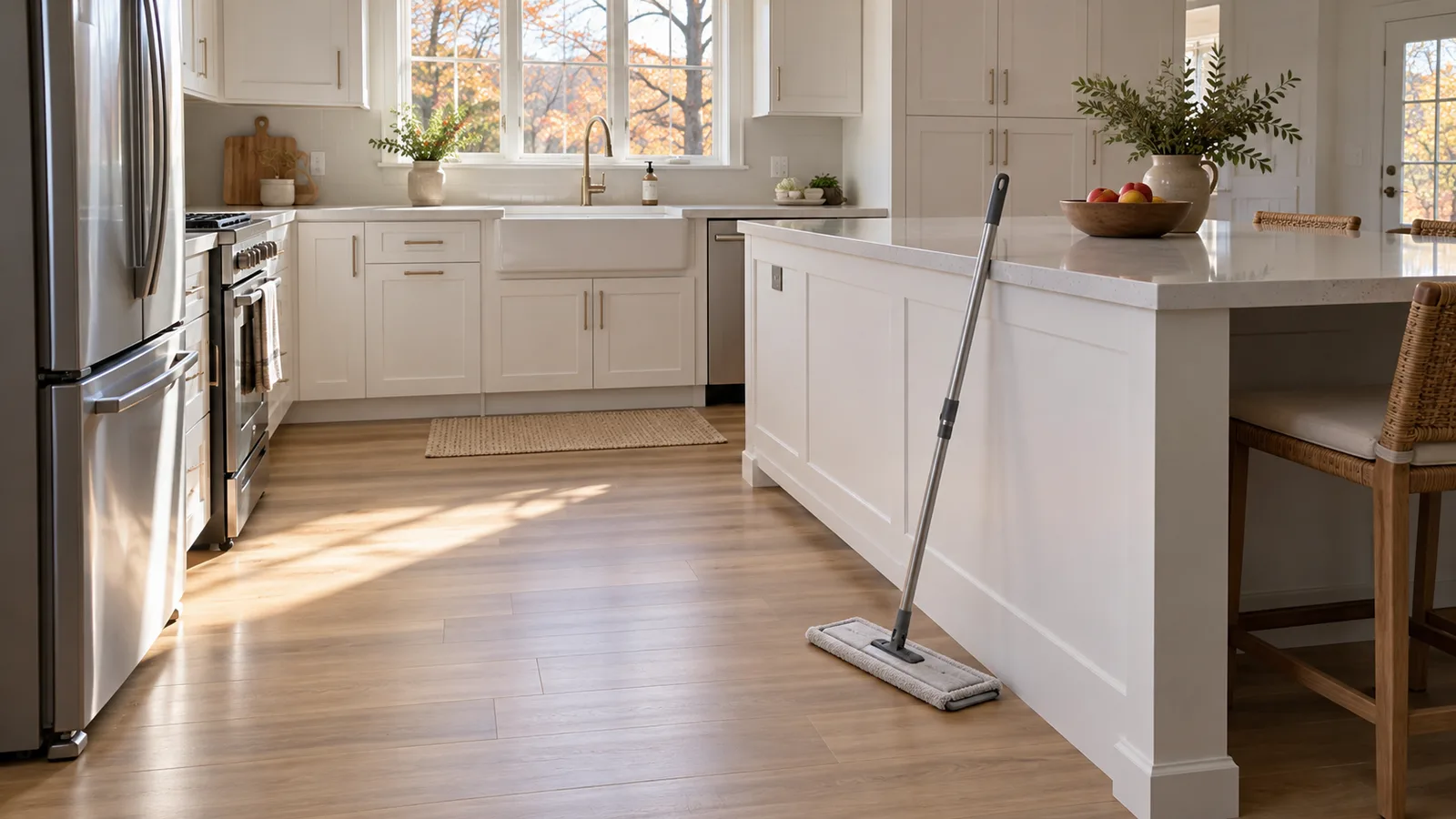
Sweep, then damp mop with a pH neutral cleaner. That is most of it, and it is why luxury vinyl plank is one of the easiest floors there is to live with.
The part worth reading is what quietly shortens its life. Vinyl plank cannot be sanded and refinished like hardwood. Its whole lifespan is the clear wear layer on top, and every cleaning habit either protects that layer or slowly uses it up.
The routine that actually works
Every few days: get the grit off. A soft broom, a dry microfiber mop, or a vacuum on its hard floor setting with the beater bar turned off. A spinning beater bar flings grit across the floor and can mark the surface.
Weekly, or when it needs it: damp mop. Use a pH neutral cleaner made for vinyl floors, or about an ounce of mild dish soap in a gallon of warm water. Wring the microfiber pad until it is barely damp. You are lifting dirt, not washing the floor.
If you used soap: rinse. A second pass with plain water and a clean pad stops a film from building up.
Spills: wipe them when you see them. The plank is waterproof. What sits around it may not be, which is the next section.
That is genuinely all a vinyl plank floor needs. Most cleaning damage comes from doing more than this, not less.
Grit is the real enemy, not spills
People worry about spills on LVP. They should worry about dirt.
Fine grit tracked in on shoes acts like sandpaper under every footstep, and it slowly dulls and scratches the wear layer. In the Tulsa metro that grit is often our red clay soil, which tracks in easily and is gritty enough to matter. A kitchen with a dull path from the back door to the sink is not a worn out floor. It is a floor that has been walked over with grit on it.
The cheapest protection you can buy is a good mat at every exterior door, inside and out, so the grit stays at the threshold. Choose mats labelled safe for vinyl floors, because some rubber and latex backings react with vinyl and leave a yellow or brown stain that does not come out. We cover that and the other owner caused problems in our guide to LVP flooring problems.
Why a soaking mop is a bad idea on a waterproof floor
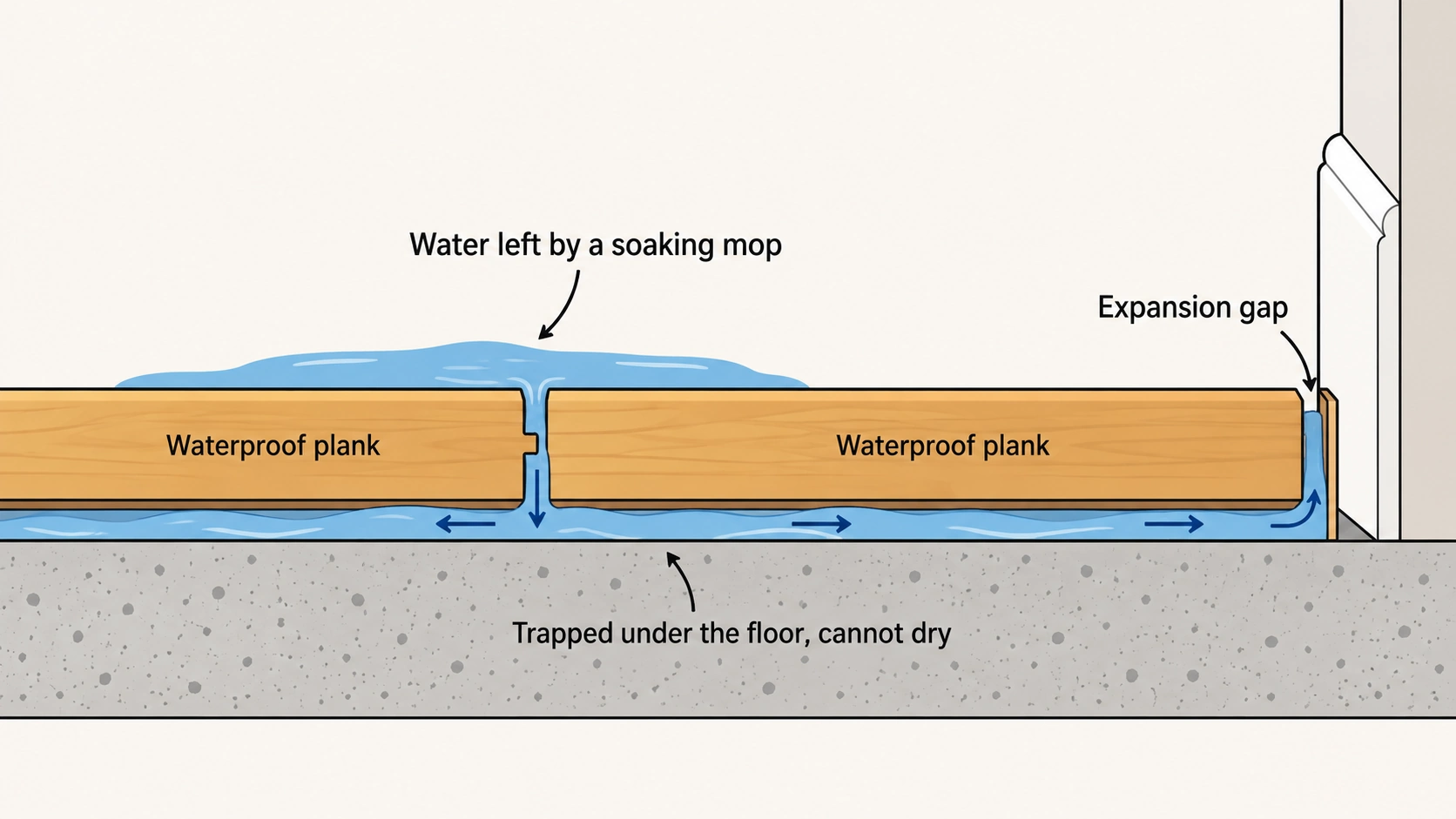
Here is the part the label leaves out. Luxury vinyl plank is waterproof. A floating floor is not a sealed floor.
Most LVP is installed as a floating floor: the planks lock to each other and sit loose over the subfloor, with an expansion gap all the way around the room under the baseboard. Water that sits on the surface finds the seams and the edges. It does not hurt the plank, but it can run underneath, where it sits against the subfloor with nowhere to dry. On a concrete slab that means trapped moisture under the floor. On a wood subfloor it means the subfloor can swell.
So a dripping mop or a flooding wet clean is the wrong habit on any floating floor, however waterproof the plank is. A well wrung microfiber pad cleans just as well and leaves nothing to soak in.
What not to use
Wax, oil soaps, and mop and shine products. Vinyl plank does not need wax and cannot absorb oil. These products sit on top as a film that dulls over time and attracts dirt, and getting it off later is more work than the shine was worth.
Bleach, ammonia and harsh cleaners. They can damage the surface. Mild is enough.
Abrasive pads, scouring powder and steel wool. They scratch the wear layer, which is the one part of the floor that cannot be renewed.
Steam mops, unless your product’s care guide specifically allows them. Most manufacturers advise against steam because it pushes heat and moisture into the seams, and using one can void the warranty.
Rubber or latex backed rugs and mats. Use pads and mats labelled safe for vinyl.
The vinegar question
This is where the internet argues, and the honest answer is that manufacturers disagree. Some list a diluted vinegar solution as acceptable. Others say not to use vinegar at all, because it is acidic.
So check your floor’s care guide. If you do not know the brand or cannot find it, use a pH neutral cleaner and skip the vinegar. It is not worth risking a finish that cannot be restored to save a few dollars on cleaner. Full strength vinegar is never a good idea.
Streaks, scuffs and grooves
Streaks are residue. Too much cleaner, a dirty pad, or a shine product leaves a film. Mop once with plain warm water and a clean microfiber pad, then use less cleaner next time.
Scuffs from shoes usually come up with a soft cloth and a little of your normal cleaner. Do not reach for an abrasive pad. If you try anything stronger, test it in a closet first.
Grooves and textured planks. Many wood look planks have a textured surface or bevelled edges that hold dirt. A soft bristle brush or the vacuum’s brush attachment, run along the length of the planks, lifts it far better than a flat mop.
Cleaning a new floor after construction or a remodel
If other trades worked in the house after the floor went down, the dust they leave is fine and abrasive, and drywall dust is the worst of it. Do not mop it first. Vacuum or dry mop thoroughly, then damp mop. Mopping dust first turns it into a gritty paste you push around the floor.
Paint and drywall mud drips can usually be lifted with a plastic scraper once dry, never a metal blade. Keeping job sites clean is part of how we work, with floor and doorway protection and a tidy handoff, but the trades that come after us do not always do the same.
Protecting it between cleanings
Felt pads on furniture legs, checked and replaced when they wear through or pick up grit.
A chair mat under rolling office chairs. Hard casters wear a pattern into any floor surprisingly quickly.
Blinds or shades in front of south and west facing windows during the hottest part of an Oklahoma summer afternoon, which protects against fading and heat movement.
Lift, do not drag, when moving appliances and heavy furniture.
Keep a leftover box. If a plank is ever damaged, a floating floor can usually be repaired with a matching plank, and planks from the same production run match best.
The short version
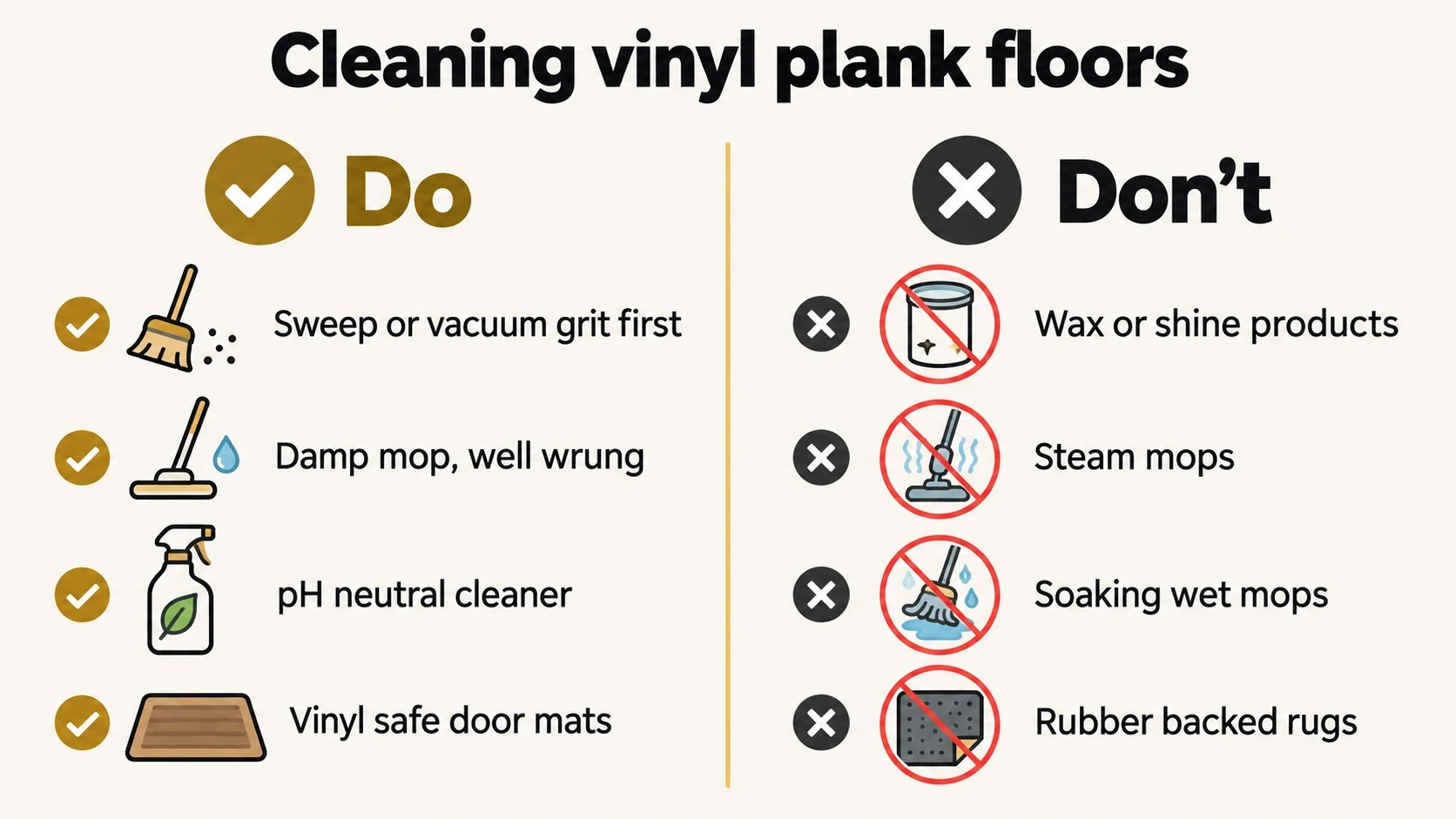
Do: remove grit often, damp mop with a pH neutral cleaner and a well wrung microfiber pad, rinse if you used soap, use vinyl safe mats at every door.
Do not: wax, oil soap, shine products, harsh chemicals, abrasives, soaking mops, steam unless your product allows it, rubber backed mats.
When in doubt: your floor’s care guide is the final word, because it is also what the warranty is judged against.
If you are choosing a floor and want something that holds up to a busy house, our luxury vinyl plank page explains how to read a wear layer rating. And if you are ready to replace an old floor, call (918) 219-4848 or request a free estimate, and we will check the subfloor for flatness and moisture before anything goes down.