- Durability
- Buying Advice
The Best Flooring for Homes With Dogs
Scratches, accidents, and traction are three separate problems. Most buying guides only solve the first one.

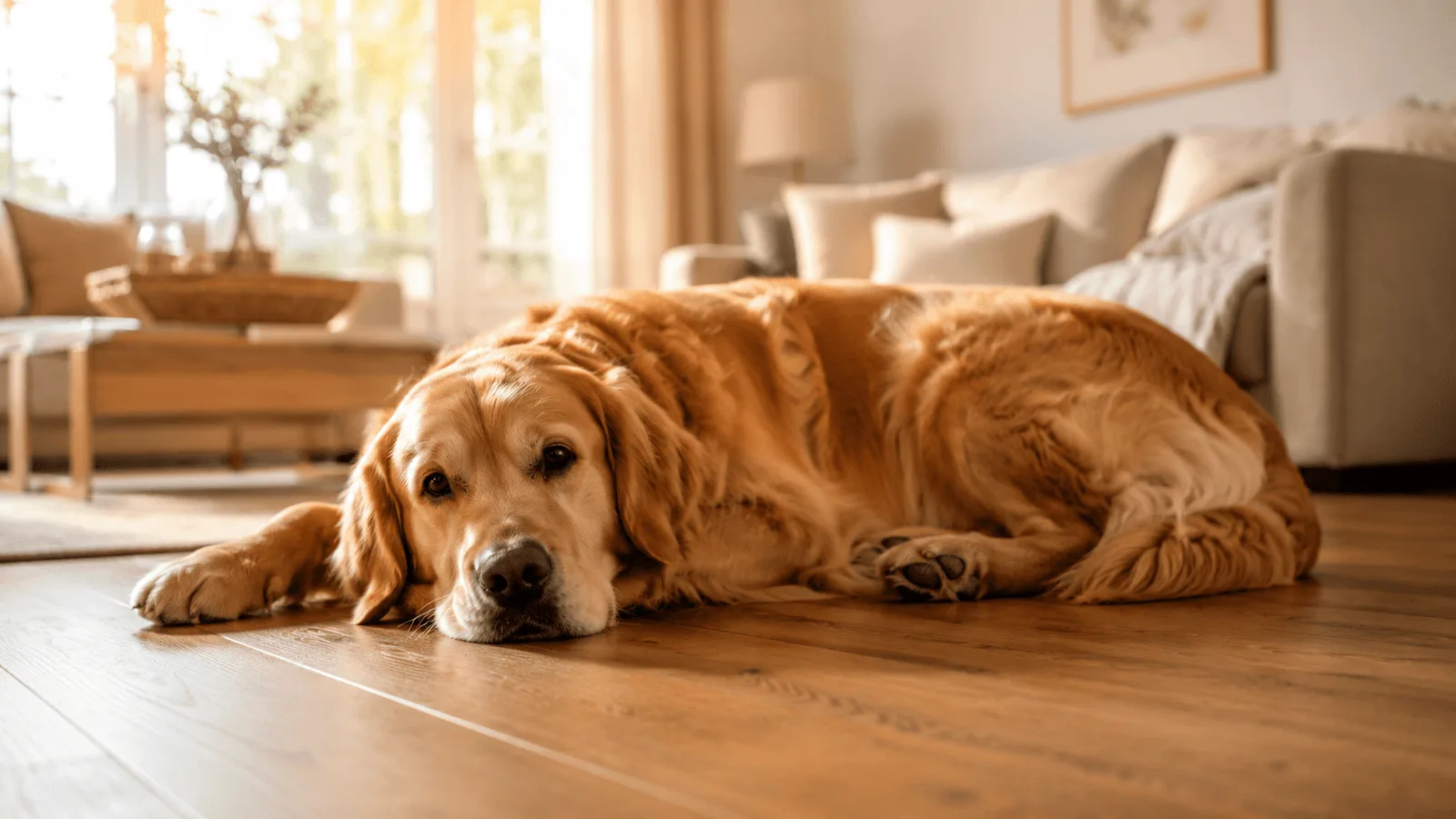
A dog does three different things to a floor, and almost every buying guide only covers the first.
Nails scratch the surface. Accidents soak into the material. Hard slick floors take away traction, which matters enormously for a big dog or an old one.
No single floor wins all three. Tile is nearly immune to claws and is the hardest surface to lie on. Laminate resists scratches better than luxury vinyl plank and cannot survive an accident that sits overnight. LVP handles the accidents and scratches slightly more easily. Hardwood loses on all three and is the only floor you can sand back to new.
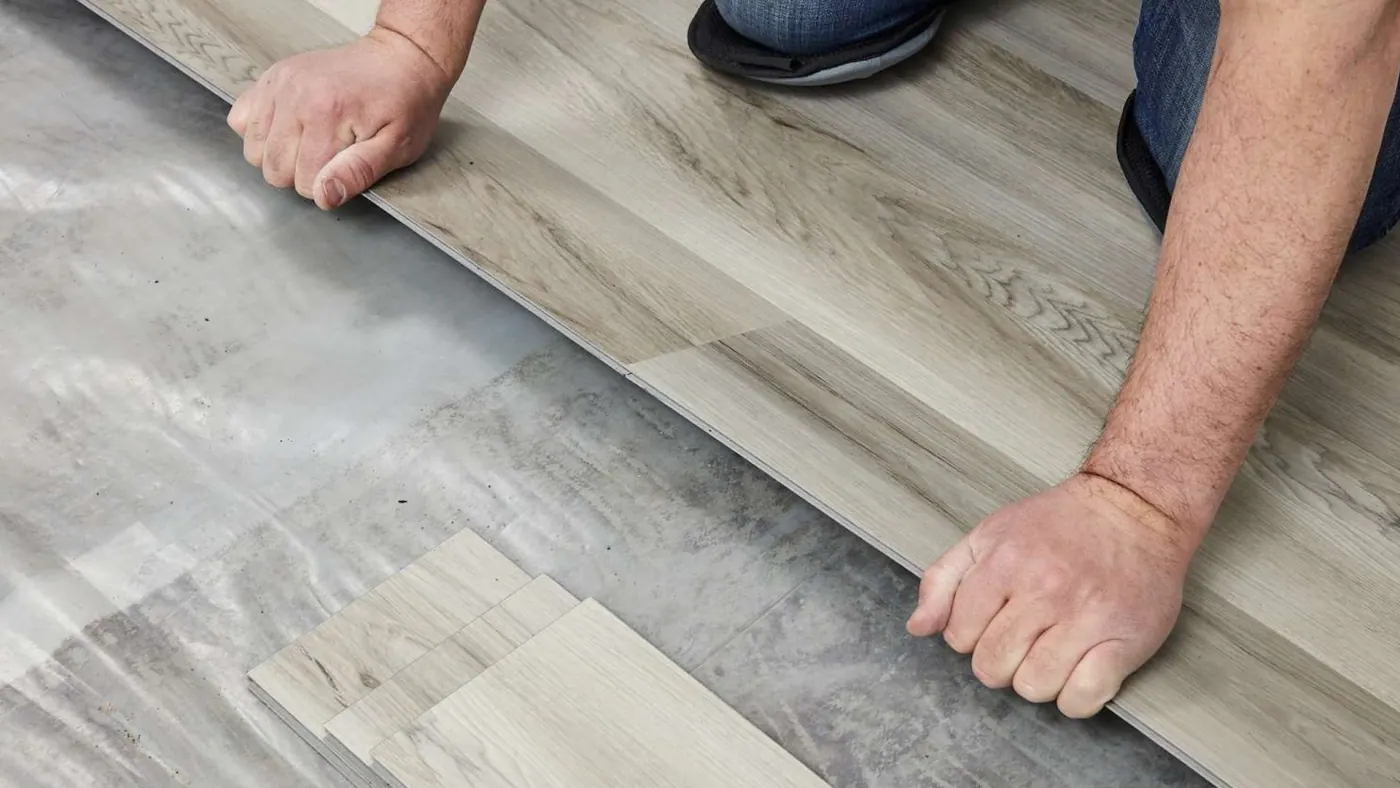
For most Tulsa homes with dogs, we install luxury vinyl plank at a 20 mil wear layer, in a matte or textured finish. That is the answer if you want one. The rest of this explains when it is the wrong one.
Problem one: nails
Every step a dog takes puts a small hard point on your floor. Over years, that shows up as fine scratching that runs in the traffic paths, most visibly in a hallway or the route between the door and the food bowl.
What matters here is the hardness of the surface layer, not the toughness of the product overall.
Laminate genuinely wins this. Its wear layer is melamine hardened with aluminium oxide, and at AC4 or AC5 it is harder than the urethane surface on most LVP at a comparable price. This is worth saying clearly because LVP is the bigger sale for us and laminate is not.
LVP holds up well at 20 mil and above. Below that, a busy dog household will start marking it up within a couple of years. Six and twelve mil wear layers are not the right product here.
Tile does not scratch. A glazed porcelain floor at PEI 4 will outlive the dog and probably the kitchen.
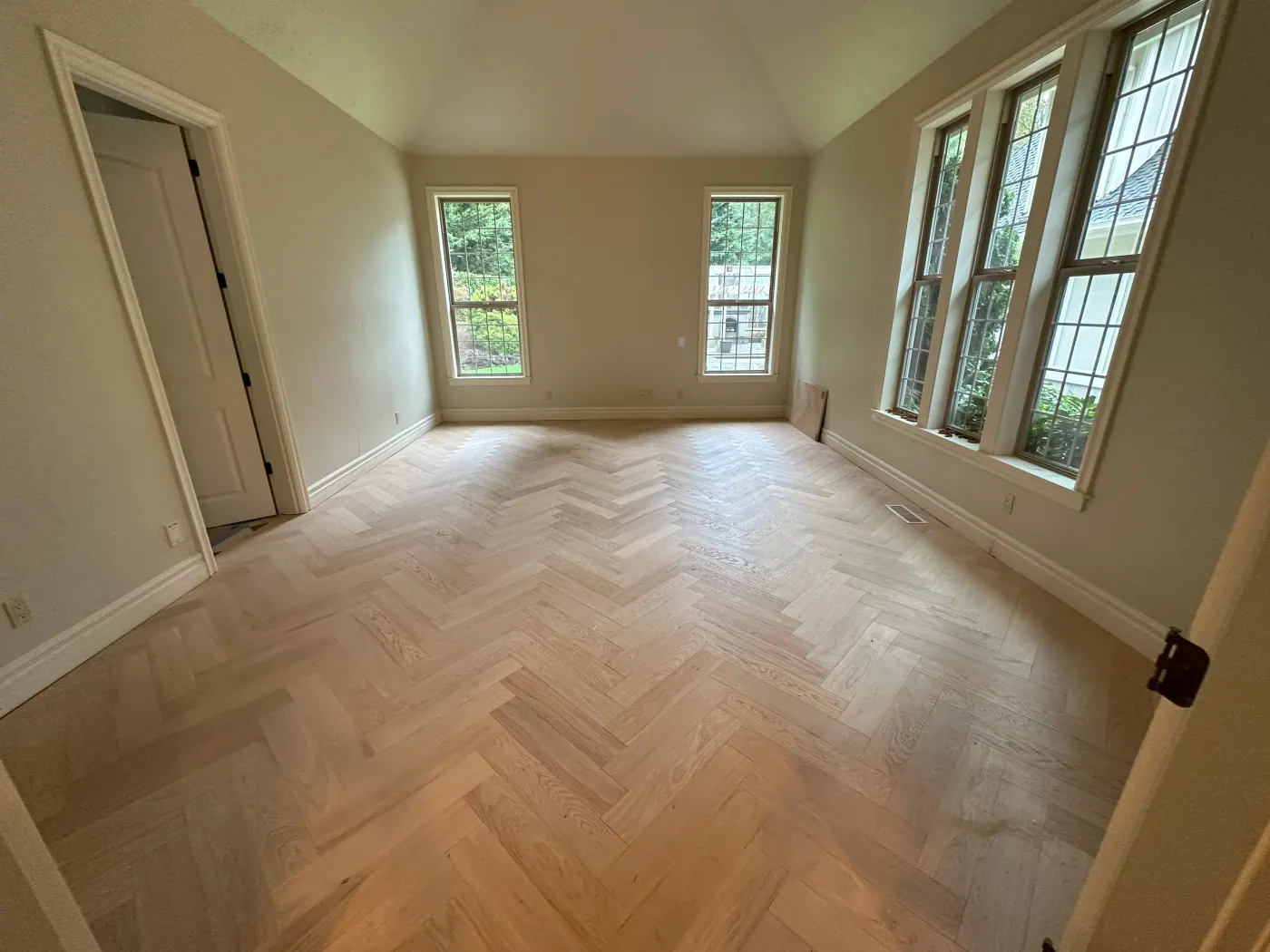
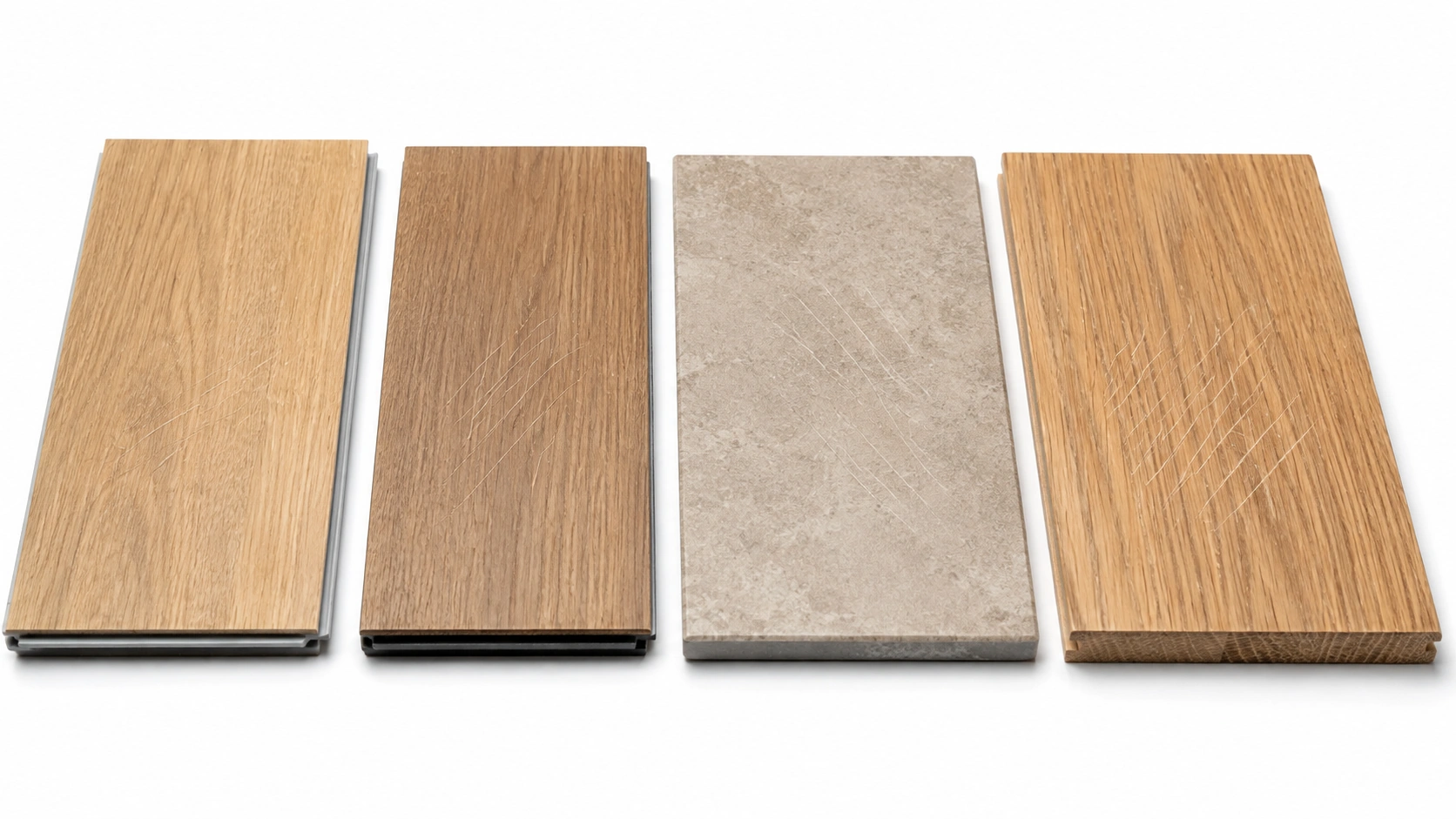
Hardwood scratches, visibly. A wood floor in a house with a large dog will look lived in within a year. Some people genuinely like that patina. If you do not, hardwood is the wrong choice unless you are prepared to refinish it eventually, which is a real option that no other floor here offers.
Problem two: accidents
This is the one that actually destroys floors, and it is the reason we get called out.
Urine is worse than water. It soaks in, and unlike water it leaves a smell after the stain is dealt with. Once it reaches a material that holds odour, cleaning the surface does nothing, and the only fix is replacing the floor and sometimes the subfloor underneath.
Carpet fails immediately. It reaches the pad and then the subfloor, and the smell wins.
Laminate fails slowly and permanently. The core is compressed wood fibre. Liquid that sits in a seam long enough swells the core from the inside and lifts the edge. Water resistant laminate buys you hours, which covers a puddle you find in the morning. It does not cover one that happened on Friday in a room you did not open until Sunday. We go through what those hour ratings actually mean in Waterproof vs Water Resistant Flooring.
LVP does not care. The core is plastic. Nothing soaks in.
Tile does not care either, though grout can stain and hold odour if it is unsealed cement grout and the accident sits in a joint. Sealed grout or epoxy grout removes that concern.
There is one honest caveat on LVP. The plank is waterproof, but a floating floor has seams, and enough liquid will eventually find its way through to the subfloor. It does not hurt the LVP. It can still sit on plywood underneath with nowhere to evaporate. For a dog that has regular accidents in a known spot, that spot deserves tile.
Problem three: traction
This one gets skipped and it is the one with real consequences.
A dog that cannot get purchase on a floor braces and scrambles, especially on the turn out of a hallway or getting up from lying down. For a puppy that is comic. For a nine year old labrador with hip issues it is genuinely damaging, and vets see it often enough that it has a name in the literature.
The variable is finish, not material. A high gloss floor of any type is slick. A matte or textured embossed finish gives a dog something to grip.
Three practical rules:
- Choose matte or low sheen in any room your dog moves through at speed
- Choose embossed in register texture if the product offers it, because the texture follows the printed grain and adds real surface grip
- Put runners on the actual routes, which is almost always the hallway and the path to the back door, not the middle of the living room where you would put a rug for looks
Keeping nails trimmed helps more than any flooring choice, because an overgrown nail puts the dog on its toenails rather than its pads.
The comparison
| Nails | Accidents | Traction | Comfort to lie on | Repairable | |
|---|---|---|---|---|---|
| LVP, 20 mil, matte | Good | Excellent | Good | Good | Plank swap, awkward mid floor |
| Laminate, AC4 or AC5 | Excellent | Poor | Good | Fair | No |
| Tile, PEI 4 porcelain | Excellent | Excellent | Good if textured | Poor | Single tile can be cut out |
| Hardwood | Poor | Poor | Poor if glossy | Good | Yes, sands back to new |
| Carpet | Fair | Very poor | Excellent | Excellent | No |
What we actually quote for dog households
The most common plan is not one floor throughout.
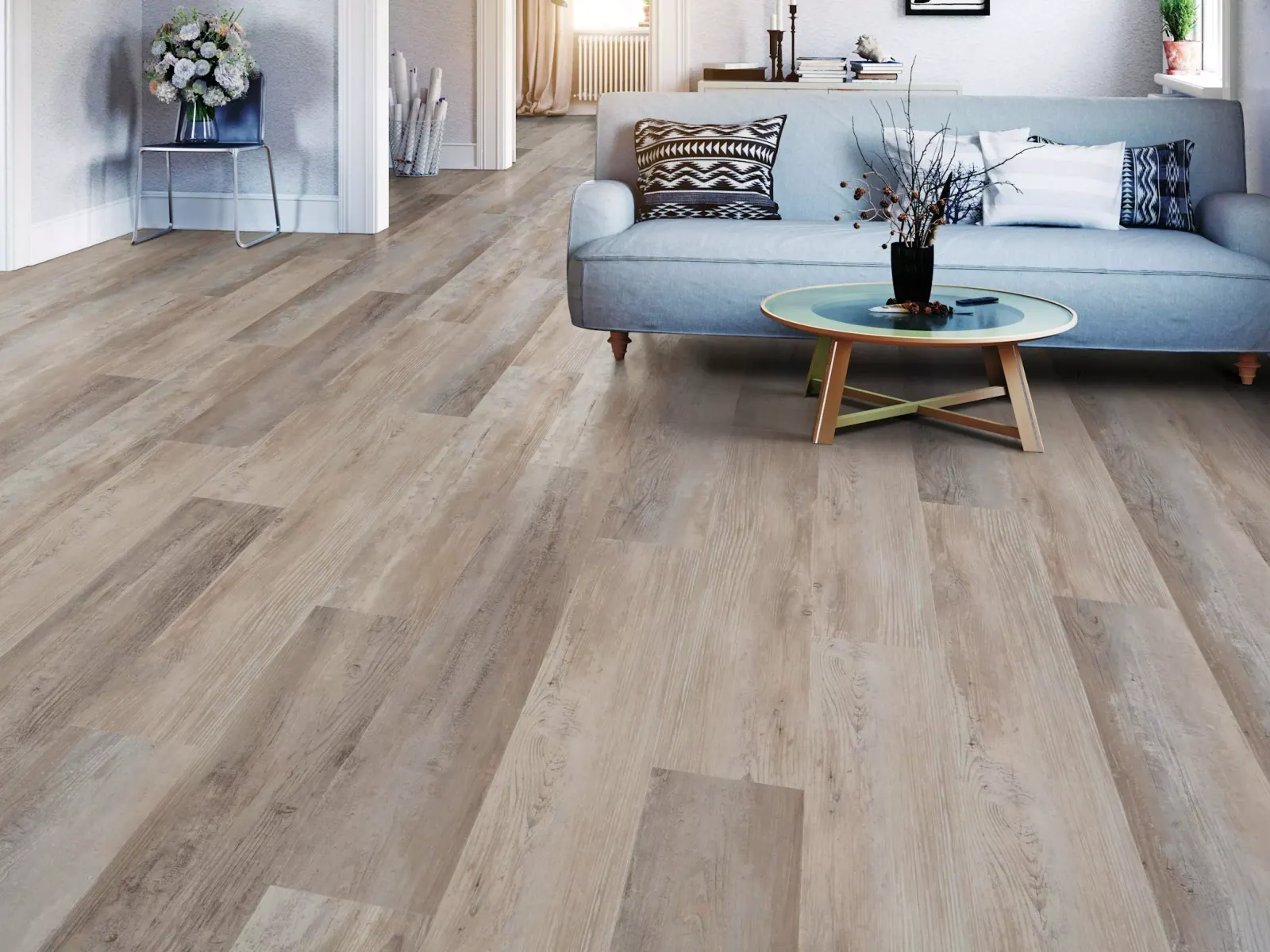
- LVP at 20 mil, matte finish, through the main living areas, kitchen, and hallways
- Tile in the laundry, mudroom, and the bathroom, and in the specific corner where an older dog has a habit
- Laminate at AC4 in bedrooms the dog does not sleep in, if you want to bring the budget down
- Carpet only in bedrooms, if at all
That plan puts the waterproof surface where the accidents happen and the scratch resistant surface where the traffic is, and it usually costs less than running the premium product everywhere.
Two things that are not worth paying for
“Pet proof” as a marketing term. It is not a rated standard. There is no test behind it. Ask for the wear layer in mil or the AC rating instead, which are real numbers you can compare between products.
Maximum durability in rooms with no dog traffic. A guest bedroom does not need the same floor as the hallway. Spend the difference on tile in the laundry room instead.
The short version
Get LVP at 20 mil in a matte finish if you want one floor that handles everything reasonably well.
Get laminate at AC4 in dry rooms if scratch resistance is your main concern and your dog is reliably house trained, and put the savings toward tile in the wet rooms.
Get tile anywhere accidents are a known pattern rather than an occasional surprise.
Skip hardwood unless you actively want a floor that shows its history and you are willing to refinish it one day.
We will walk your house, ask about your dog rather than just your square footage, and put the room by room recommendation in writing. Request a free in home estimate.
More detail on the materials: luxury vinyl plank, laminate, and tile. Related reading: Waterproof vs Water Resistant Flooring: What the Labels Actually Mean