- Installation
- Buying Advice
Can You Install Luxury Vinyl Plank Over Existing Tile or Vinyl?
Sometimes yes, and it saves real money. Here are the four checks that decide it, and the one that catches people out.

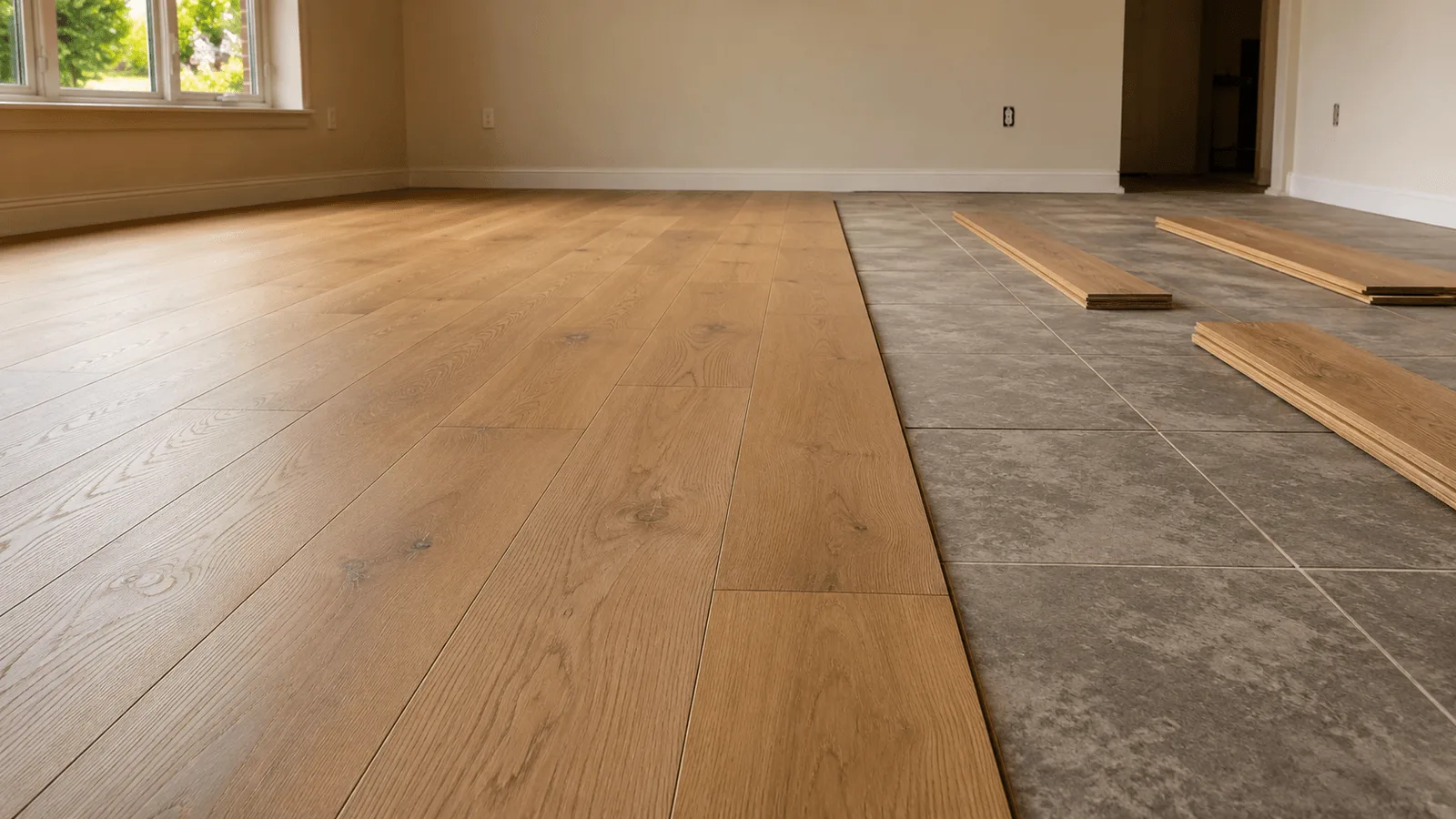
Yes, in most cases luxury vinyl plank can go directly over existing ceramic tile or sheet vinyl, and doing it removes demolition, debris haul away, and a day of labour from the job. It is one of the few genuine shortcuts in flooring that does not cost you quality later.
It is also the shortcut we talk homeowners out of more often than any other, and almost never for the reason they expect. The problem is rarely the tile. It is the doorways.
The four checks that decide it
We run all four at the estimate, in this order.
1. Is the tile well bonded?
Tap across the floor with a knuckle or the handle of a screwdriver. A solid tile sounds solid. A tile that has lost its bond to the substrate sounds hollow, like tapping a cardboard box.
Any tile that sounds hollow is already failing. Cover it with LVP and it keeps failing underneath, and eventually you get movement, a cracked grout line spreading, and a soft spot in a floor that is only two years old. Those tiles have to come up and the substrate has to be made good first.
If more than a small handful sound hollow, the whole floor is coming out. That is not us upselling demolition. It is that the layer under your new floor is not stable, and nothing we lay on top will fix it.
2. Is it flat?
Rigid core LVP bridges minor variation well, which is one of its real advantages over laminate. It does not bridge a dip.
We check with a long straightedge across the room in several directions. Manufacturers typically specify flatness within about 3mm over a 3 foot span, sometimes tighter. Where the floor fails that, we skim with a levelling compound before anything goes down.
Grout lines matter here too. A standard narrow joint is fine. Wide or deep joints, the kind you get with a rustic or hand made tile, need filling. If you leave them, the plank slowly dishes into each joint under foot traffic and after a year you can feel the grid of your old tile through your new floor.
3. Is anything moving?
Walk the floor and listen. Squeaks, deflection underfoot, a bounce in the middle of a span. Tile is rigid, so if the tile floor was set over a subfloor that flexes, the grout lines are probably already cracked and you will see them.
Movement underneath is the one thing that makes going over the top a bad idea regardless of everything else, because LVP is a floating floor and it will not stabilise anything.
4. How much height can you afford?
This is the one that catches people.
The doorway problem
Every layer you add raises the finished floor. Rigid core LVP plus underlayment typically adds somewhere between 6mm and 12mm, and you are adding it on top of a tile floor that already sits proud of the subfloor.
That height has to go somewhere, and there are four places it causes trouble:
Interior doors. A door with a 10mm gap at the bottom does not clear a floor that just came up 8mm. Doors can be taken off and trimmed, which is normal work, but it is work, and hollow core doors can only lose so much before you hit the frame inside the bottom rail.
Exterior doors. These are far worse. An exterior door swings over a threshold that is part of a weather seal, and you generally cannot trim it without compromising that seal. If the floor rises past the threshold, the door stops closing and there is no tidy fix.
Appliances. A dishwasher lives in a fixed opening under the counter. Raise the kitchen floor and the dishwasher may not slide back out for servicing without lifting the counter, and in a tight opening it may not go back in at all. Same for a slide in range with a lower drawer.
Transitions to other rooms. If the new floor is 10mm higher than the carpet or wood in the next room, that step has to be managed with a reducer strip. Small steps are fine. Big ones are a trip hazard and they look like exactly what they are.
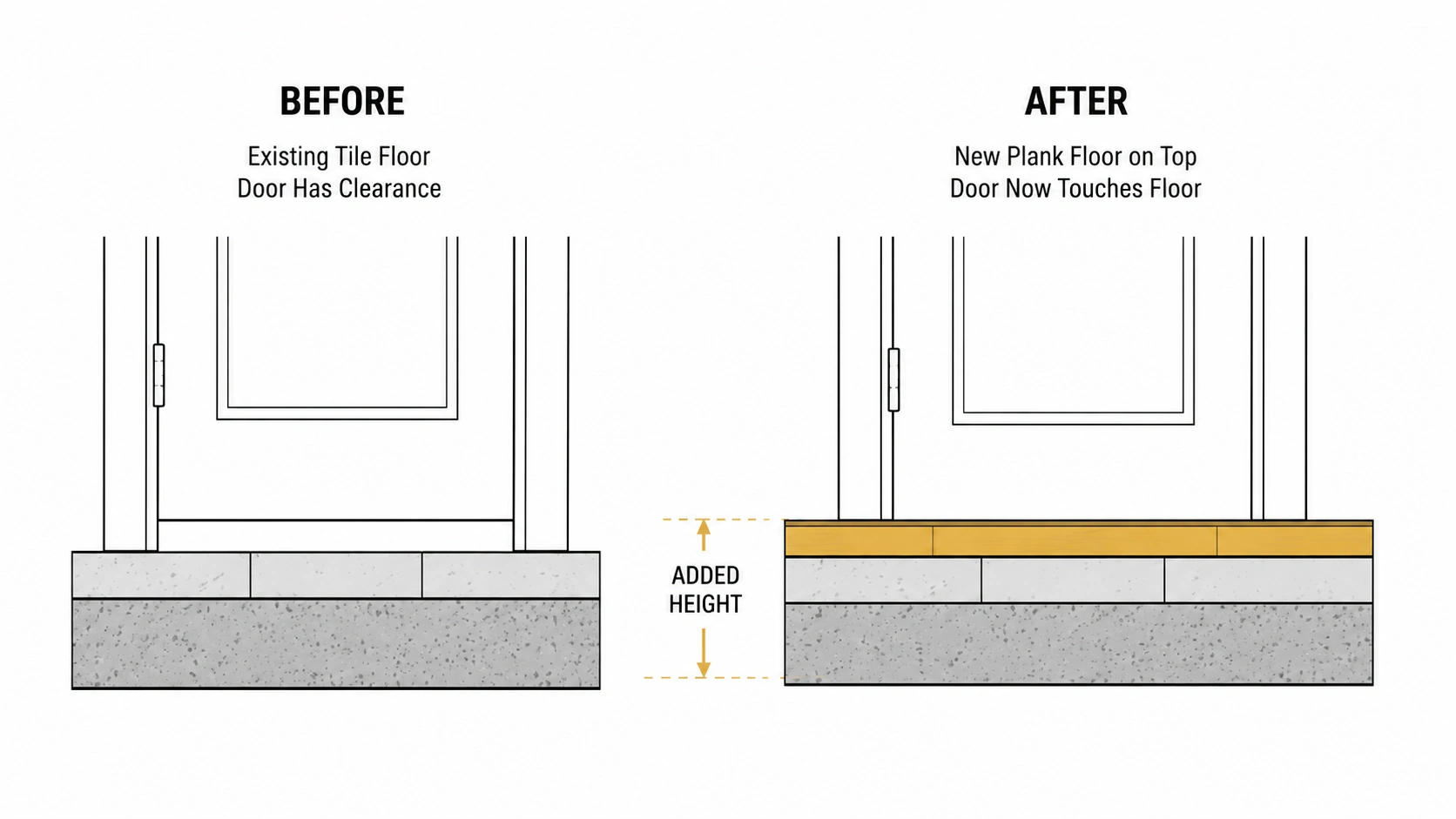
We measure every doorway and appliance opening before recommending a go-over. It takes ten minutes at the estimate and it is the difference between saving money and creating a problem you live with daily.
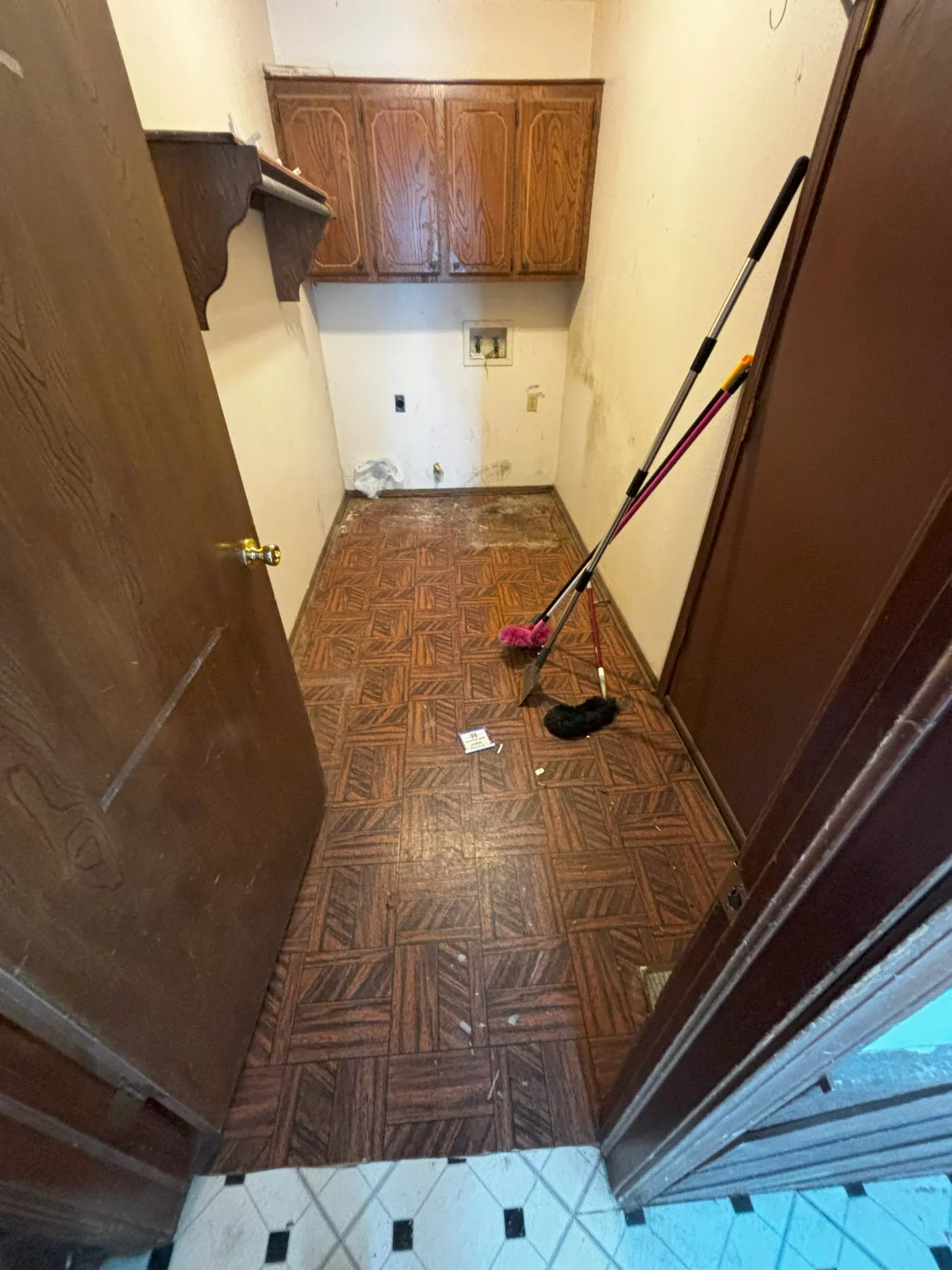
Over sheet vinyl and older floors
Sheet vinyl: usually fine if it is a single layer, fully bonded, and not cushioned. Cushioned or padded vinyl has to come up, because the give underneath will let the locking joints in your new floor work loose over time.
Multiple layers of vinyl: it comes up. Two layers of anything is already a stack of unknowns, and older sheet vinyl and its adhesive can contain asbestos, which is a testing and abatement question rather than a flooring one.
Carpet: never. It comes up every time. There is no version of a floating rigid floor over a soft cushioned base that works.
Original parquet or older glued wood: case by case. Usually it comes up, because these tend to have loose blocks and adhesive ridges that are more work to fill than to remove.
When we tell people to take it out anyway
Even when all four checks pass, there are two situations where we recommend removing the old floor:
The bathroom toilet flange. The flange should sit level with or slightly above the finished floor for the wax seal to work properly. Raise the floor around it and the flange is now recessed, which needs an extender to seal reliably. It is a solvable problem, and it is also a leak waiting to happen if somebody skips it.
You are already at the height limit. If the existing tile is thick and the doors are already close, going over the top spends your entire height budget on a floor you did not want to keep. Take it out and you get the clearance back plus a clean substrate.
What it looks like when it is done right
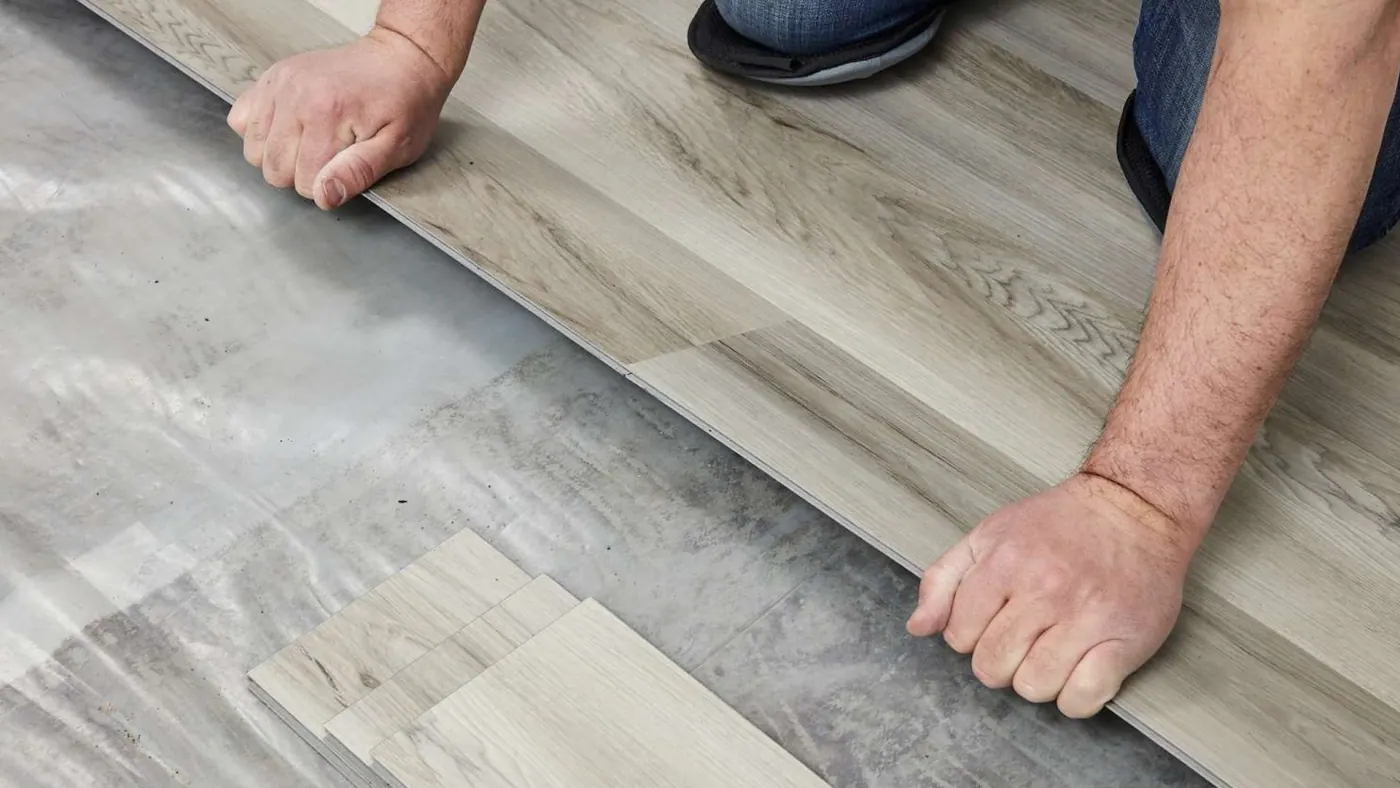
The tile stays, the surface gets checked and skimmed where it needs it, the underlayment goes down, and the plank floats over the top with proper expansion gaps at every wall and fixed object.
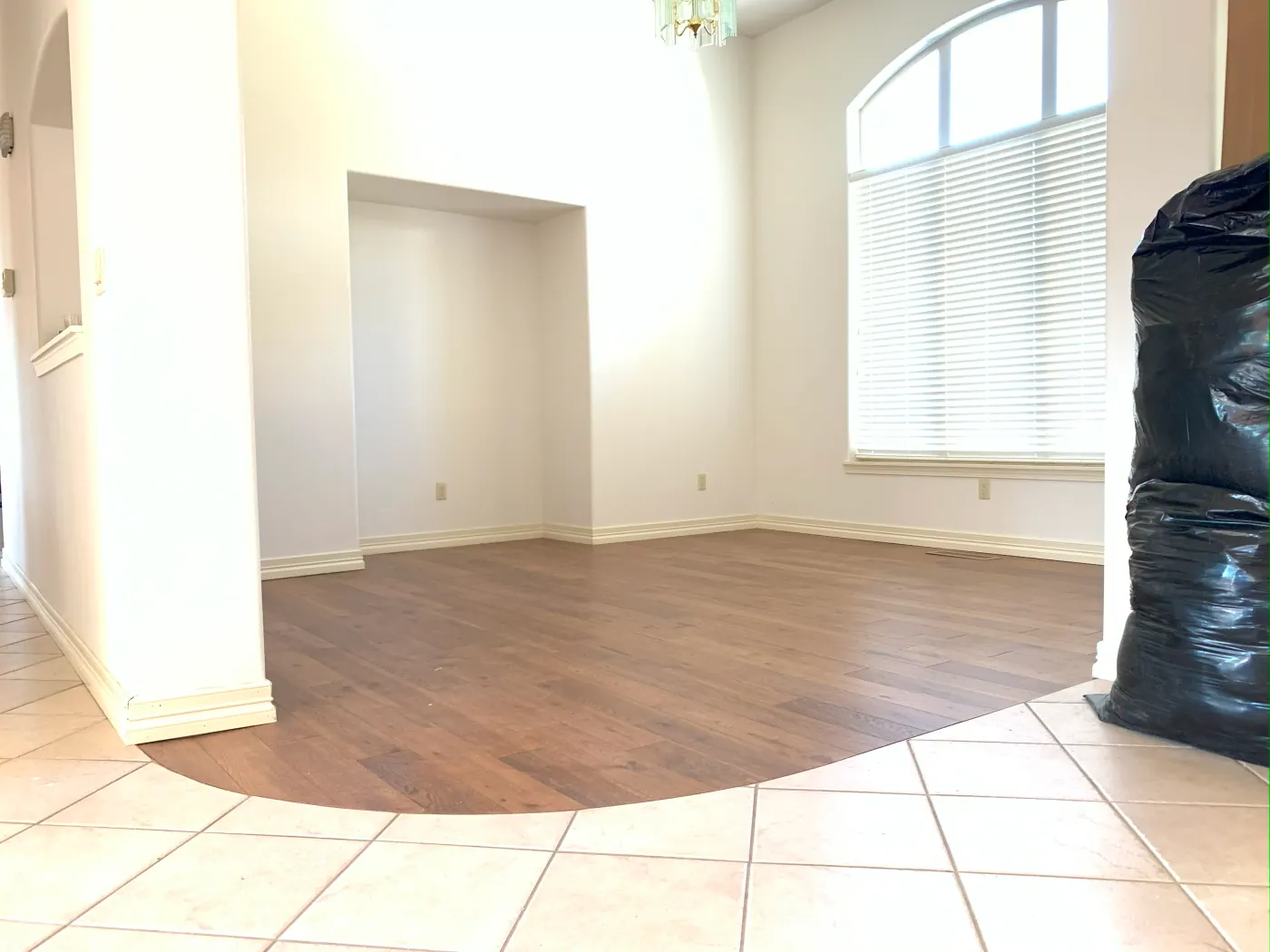
Where the new floor meets a room we are not touching, the transition gets cut to sit flush rather than dropped in as a chunky strip.
The honest summary
Going over existing tile is a legitimate way to save money, and we do it regularly across Tulsa, Broken Arrow, and Bixby. It is the right call when the tile is solid, flat, and low enough that your doors and appliances still work.
It is the wrong call when the tile is loose, when the room is a full bathroom, or when the height genuinely does not exist. In those cases the demolition line on the quote is buying you something real.
The only way to know which one you have is for someone to knuckle the floor, run a straightedge over it, and measure your doorways. That is what the free estimate is for. Book one here and we will give you both options in writing, with the height figures, so you can decide with the numbers in front of you.
More on the material itself: luxury vinyl plank installation. Related reading: LVP vs Laminate: Which Holds Up Better in an Oklahoma Home?